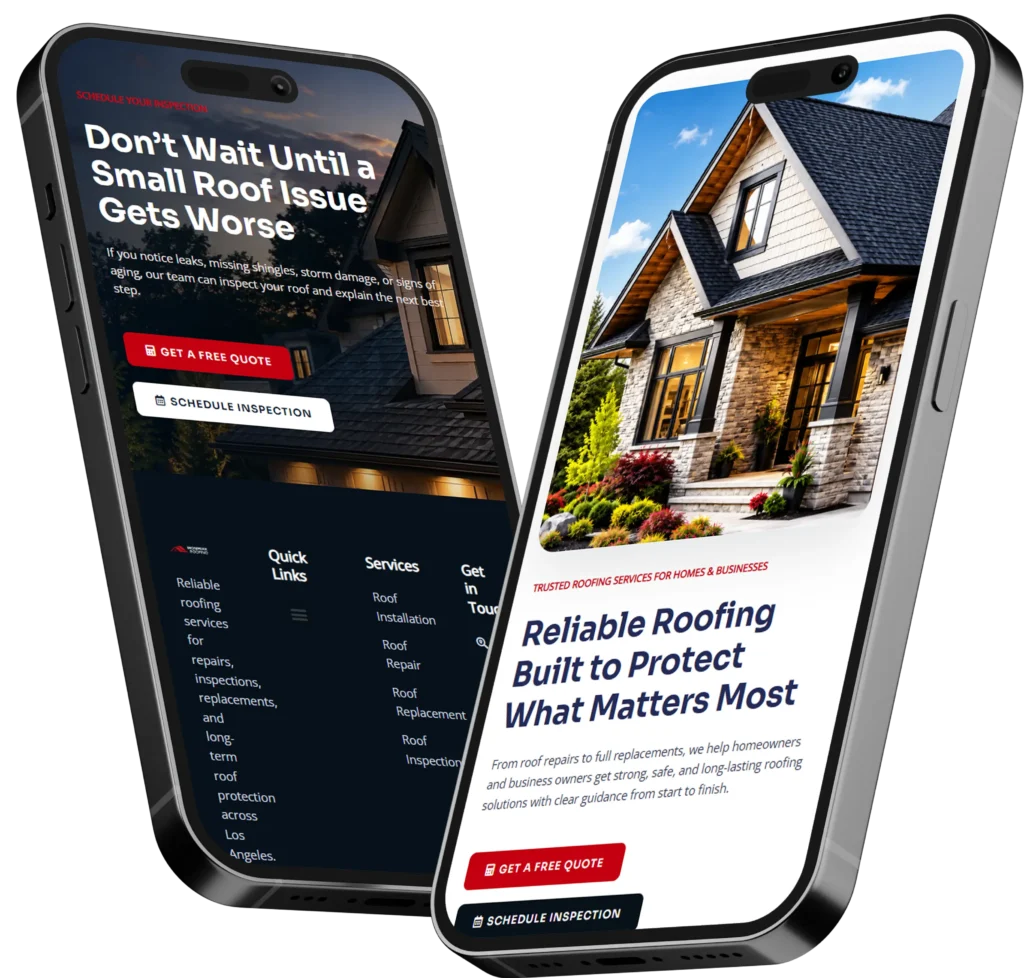
How to get leads from website starts with clear messaging, a focused offer, and an easy next step. The best results usually come from stronger headlines, focused landing pages, simple forms, trust signals, and consistent testing.
If your site gets traffic but not enough inquiries, the issue is often not visibility alone. It is usually friction. Visitors are landing on pages, scanning quickly, and leaving before they clearly understand what you do, why they should trust you, and what to do next.
For most small businesses, the fastest way to improve results is to treat the website like a sales tool instead of an online brochure. That means every important page should answer three questions right away:
- What do you offer?
- Who is it for?
- Why should someone contact you now?
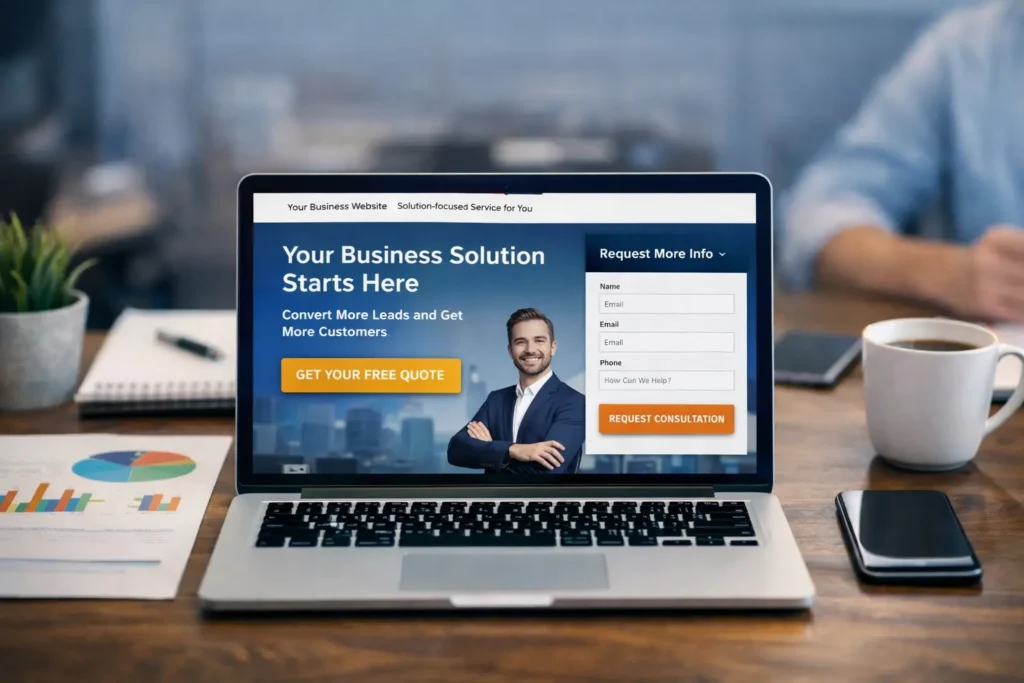
Why websites fail to generate leads
Many websites look polished but still underperform because they are built to inform, not convert. A homepage may talk too broadly, a services page may be too vague, and the contact page may ask for too much effort too soon.
A visitor does not need more options. They need more clarity.
The most common reasons that lead flow to stay low include weak headlines, scattered calls to action, poor mobile layout, generic service descriptions, and not enough proof. Even a strong design can lose conversions when the page does not connect the offer to a real business problem.
This is also where many business owners overlook intent. Someone reading a blog post may not be ready to buy, but they may be ready to download a checklist, request a review, or compare solutions. A lead strategy works better when each page matches the stage of the visitor.
If your current site feels too passive, reviewing a lead generation landing page can help you see how a page should move a visitor from interest to action.
What actually makes a website generate leads
A lead-generating website usually does five things well. It attracts relevant traffic, presents a focused offer, builds trust quickly, makes action easy, and follows up after the click.
That may sound simple, but many sites weaken one or more of those stages.
Here is a useful way to look at it:
| Website Element | What It Should Do | Why It Matters |
|---|---|---|
| Headline and above-the-fold copy | Explain the offer quickly | Visitors decide in seconds whether to stay |
| Call to action | Give one clear next step | Too many choices reduce action |
| Form or contact path | Remove friction | Shorter, easier paths improve lead capture |
| Trust signals | Reduce doubt | Reviews, results, and samples support decisions |
| Follow-up system | Convert interest into conversation | Lost leads often come from slow or weak follow-up |
The strongest option for most service businesses is not adding more pages right away. It is improving the pages already getting attention.
That is why businesses often start with their homepage, top service page, and one focused landing page. If those three work together, lead quality usually improves before traffic even increases.
For inspiration on how stronger positioning affects conversions, look at examples from a project gallery and compare how a clearer structure supports better decision-making.
Start with the offer before the form
A lot of people think lead generation starts with a form. It usually starts with the offer.
If your form says “Contact us,” but the page does not explain the value of contacting you, people delay the decision. A better approach is to give the visitor a reason to act. That might be a free consultation, a quote request, a website audit, a pricing review, or a customized recommendation.
The offer should match the service and the visitor’s level of intent.
For example, if someone is comparing web design options, asking them to “book a strategy call” might work. If they are still learning, an educational next step, such as a guide, checklist, or sample review, may convert better.
This is why service pages should not feel generic. Each one should speak to a specific problem, explain the process, and connect the next step to a useful outcome.
A focused service section, such as website design & development services works best when it reduces uncertainty instead of simply listing features.
Build pages around search intent, not just keywords
Ranking matters, but ranking alone does not create leads. A page has to match what the searcher wanted when they clicked.
Someone searching for pricing wants transparency. Someone searching for examples wants proof. Someone searching for “best website for leads” wants guidance and confidence. If you send all those users to the same generic page, conversions drop.
This is where content strategy becomes practical. Your site should have pages for high-intent service searches, supporting blog content for mid-intent readers, and a strong internal linking path between them.
That structure helps both readers and search engines. Google’s guidance emphasizes helpful, people-first content and also recommends using words people actually search for in prominent locations and descriptive link text that search engines can crawl.
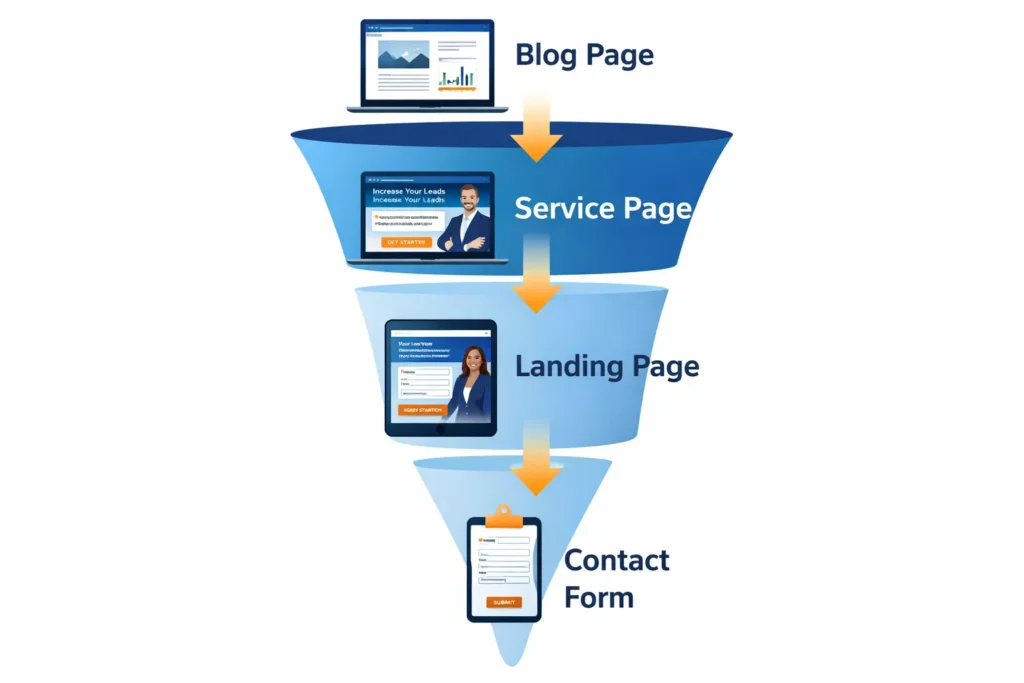
A smart internal path could look like this:
- The blog post explains a problem
- Internal link points to a service page
- The service page offers a clear CTA
- Contact or landing page captures the lead
That is why related content matters. If someone is still learning what makes a site convert, a blog-like website that converts visitors gives context before asking for action.
The homepage should guide, not overwhelm
Your homepage does not need to say everything. It needs to guide the right visitor to the right page.
One of the best homepage improvements is reducing clutter. Keep the top section focused on one main outcome. Then use the rest of the page to support that promise through service highlights, proof, FAQs, and a clear CTA.
A homepage that tries to serve every audience equally often converts poorly. A homepage that clearly speaks to the primary buyer usually performs better.
This is where positioning matters. Are you the budget option, the premium option, the fast-turnaround option, or the strategy-led option? If the answer is unclear, the visitor has to do extra work. Extra work lowers conversion.
For service businesses, the best homepage format is often:
- Clear value proposition
- Brief explanation of who you help
- Proof or credibility section
- Core services preview
- CTA to a focused page
A well-structured homepage can do this without feeling salesy. It simply removes confusion.
Landing pages are often the fastest win
If you want a focused answer to how to get leads from website, landing pages are often the most practical place to start.
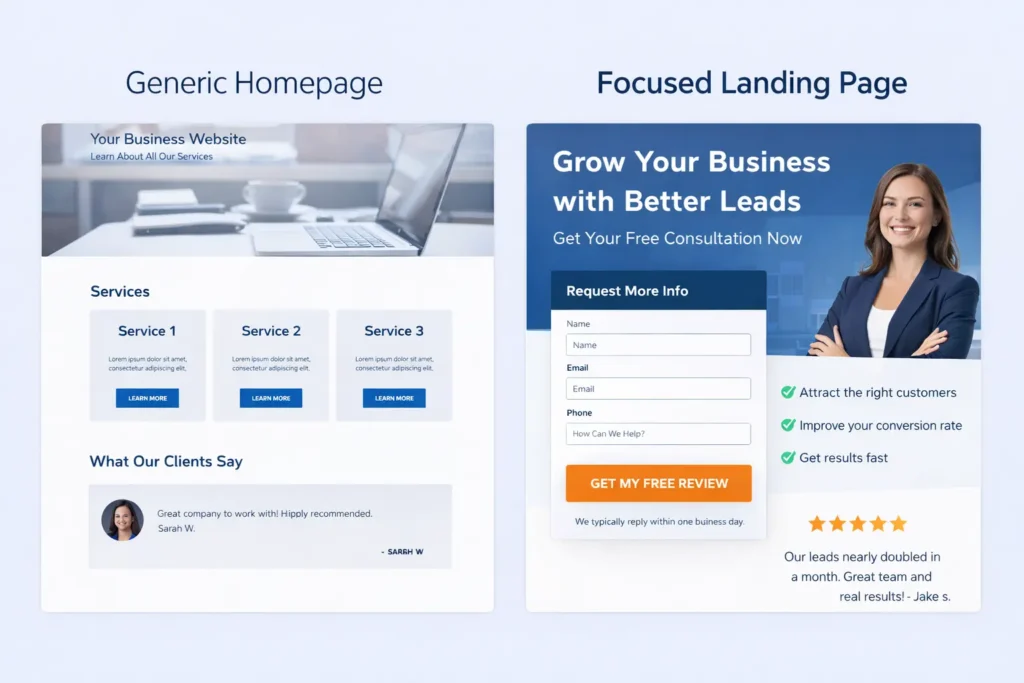
A landing page performs best when it is built for one audience, one offer, and one action. Instead of sending paid traffic, email traffic, or local intent traffic to a broad homepage, you send visitors to a page built around the exact promise they clicked on.
That usually means:
- One headline
- One audience problem
- One offer
- One form or CTA
- One supporting proof section
Pages with fewer distractions tend to guide attention better. HubSpot’s lead generation guidance and form optimization materials both emphasize focused landing pages and reducing friction around the conversion form.
If you want to compare structure ideas, this landing page for small business topic is naturally aligned with readers looking for a more conversion-focused build.
Forms should feel easy, not demanding
Many businesses lose leads because they ask for too much information too early. Unless the inquiry requires more detail, a simpler form usually works better.
Most service businesses can start with:
- Name
- Website or business name
- Short message
That is enough to start a conversation.
Long forms can work when the lead is high value and the visitor expects qualification. But on most websites, a shorter form lowers friction and increases response volume. The goal is to start the right conversation, not build a wall before one begins.
Placement matters too. A form should not feel hidden. It should be easy to find on desktop and mobile, and the CTA above it should explain the benefit of submitting.
| Form Choice | Best Use Case | Main Advantage |
|---|---|---|
| Short inquiry form | Homepages and service pages | Lowest friction |
| Quote request form | High-intent service pages | Better lead detail |
| Audit or review form | Conversion-focused offers | Strong value exchange |
| Multi-step form | More complex offers | Feels easier in stages |
A practical tip here is to test button language. “Get a Quote,” “Request a Website Review,” and “See My Options” often feel more specific than “Submit.”
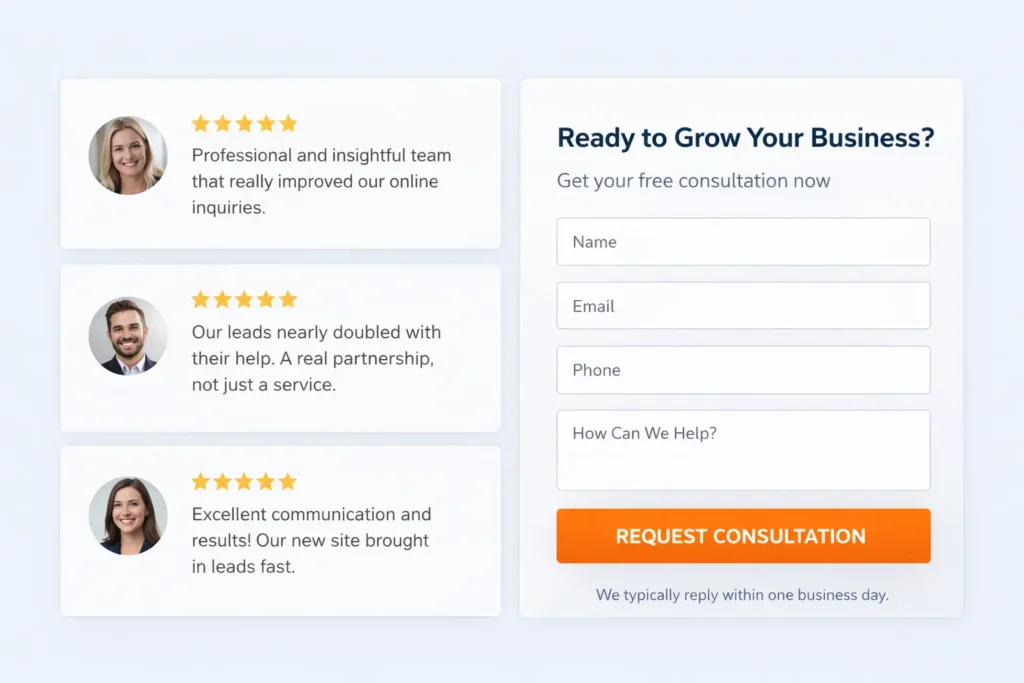
Add trust where hesitation happens
Trust should appear right before the visitor feels risk.
That means testimonials near calls to action, examples near service explanations, and process clarity where buyers might hesitate. A wall of reviews at the bottom of the homepage is not enough if the rest of the page feels uncertain.
Strong trust builders include:
✅ real project examples
✅ specific testimonials
✅ simple process breakdowns
✅ turnaround expectations
✅ niche or industry relevance
You do not need hundreds of reviews. You need believable proof placed where it supports the decision.
Even a short section that says what happens after someone fills out the form can improve confidence. When people know what to expect, they are more willing to click.
Make mobile conversion a priority
A surprising number of websites still treat mobile as a smaller desktop version. That usually hurts leads.
Mobile visitors need faster clarity, tighter sections, readable text, and tap-friendly buttons. If your form is too long, your CTA is buried, or your trust signals are hard to scan, you will lose mobile inquiries first.
Good mobile lead generation usually means:
- one clear CTA near the top
- fewer large text blocks
- visible contact options
- easy form spacing
- faster-loading images and sections
If your site gets traffic but few leads, check the mobile path before doing anything complicated. Sometimes a business does not have a traffic problem. It has a usability problem.
Use supporting content to warm up colder visitors
Not every visitor is ready to inquire today. Good blog content turns colder traffic into future leads by answering real questions and connecting them to next steps.
This is one of the most overlooked parts of website lead generation. A helpful article can attract a visitor early, build trust, and move them deeper into your site with the right internal links.
The best blog content does not stop at education. It bridges into action naturally.
For example, a blog can explain why a landing page matters, show what is commonly broken, and then link to a service page or audit offer. That makes the blog useful for search and useful for sales.
Google’s guidance continues to emphasize people-first content that is genuinely helpful to visitors, rather than content made mainly to chase rankings.
For added depth, you can also reference authoritative outside resources naturally, such as Google’s guide on creating helpful, reliable, people-first content and HubSpot’s resource on optimizing landing pages for lead generation. These help support the article without pulling attention away from your own offer.
Which lead generation option is best for most businesses?
The best option depends on the traffic source and sales cycle, but for most local and service-based businesses, this order works best:
First, improve the core website pages that already get traffic.
Second, create one strong landing page for a focused offer.
Third, publish supporting content that answers buying-stage questions.
Fourth, tighten follow-up so inquiries do not go cold.
That sequence works because it builds on what already exists. Many businesses try to scale traffic before fixing the conversion path. That creates more visitors but not always more revenue.
If your traffic is low, SEO content and local visibility matter more. If your traffic is healthy but inquiries are weak, conversion work matters more. If leads come in but close rates are low, the issue may be messaging or qualification rather than traffic at all.
So which option is best?
For most businesses, the strongest choice is a conversion-focused service page plus one dedicated landing page tied to a specific offer. That gives you a solid foundation for SEO, paid traffic, and internal linking at the same time.
Final Take on How to Get Leads From a Website
The clearest path to better results is to make your website easier to understand, easier to trust, and easier to act on. When the message is sharper, the offer is stronger, and the path is simpler, more of your visitors turn into real opportunities.
A website does not need more noise to produce leads. It needs better alignment between traffic, intent, page structure, and follow-up. Fix that well, and the site starts working like a business asset instead of just an online presence.
Frequently Asked Questions
How to extract leads from a website?
The best way to extract leads from a website is to capture visitor intent before it disappears. In practice, that means using forms, quote requests, audit offers, newsletter signups, and booking buttons tied to clear pages with a strong message. You also need proper tracking so you know which pages and offers are producing inquiries. A website should not just collect contact details. It should attract the right visitor, offer a relevant next step, and move that person into a follow-up process your team can actually manage.
How to get leads from your website?
The most effective way to get leads from your website is to reduce friction and increase clarity. Visitors need to know what you offer, who it is for, and why they should take action now. That usually means stronger headlines, tighter service copy, visible calls to action, trust signals, and a simple contact form. Supporting blog content also helps because it brings in search traffic and warms up visitors before sending them to higher-intent pages where they are more likely to inquire.
How to get 100 leads a day?
Getting 100 leads a day usually requires a system, not a single tactic. Most businesses need a combination of search traffic, paid traffic, high-converting landing pages, irresistible offers, and fast follow-up. If the traffic is there but conversions are low, improve the page experience first. If the page converts well but volume is low, expand promotion and content. Reaching that level consistently also means tracking channel performance, testing offers, and refining the sales process so lead quality stays strong as volume grows.
Can ChatGPT generate leads?
ChatGPT can support lead generation, but it works best as a tool inside a larger strategy. It can help create landing page drafts, email sequences, FAQ content, lead magnets, ad copy ideas, and follow-up scripts. It can also speed up keyword clustering and content planning. What it cannot do on its own is replace positioning, proof, offer quality, or human sales judgment. The best use of ChatGPT is to make your marketing faster and more consistent while your website, offer, and follow-up system do the real conversion work.