Vet website design helps a clinic look trustworthy, guides pet owners fast, and turns search traffic into booked appointments. For most U.S. practices, the best setup is a mobile-first website with clear services, location signals, strong calls to action, and simple paths to request care.
A veterinary website should do more than look clean. It should answer urgent questions, support local visibility, and make it easy for a pet owner to take the next step. That could mean calling the clinic, requesting an appointment, checking hours, or learning whether the practice is the right fit for their pet.
That is why the strongest clinic websites are built around both trust and conversion. They need to feel caring, professional, and easy to use on a phone. They also need the right technical foundation. Google says Business Profiles help businesses show up on Maps and Search, while PageSpeed Insights reports on real-world and lab performance across mobile and desktop. In practical terms, that means a clinic site should connect brand credibility with local search visibility and page experience.
A good example is how a practice website supports the real relationship between the clinic and the client. The AVMA explains that the veterinarian-client-patient relationship is foundational in veterinary care. When a website clearly explains services, policies, location, and appointment paths, it helps pet owners understand how the clinic operates before they even call.
If your goal is more inquiries and a cleaner growth path, working with a local website design team can help shape the site around conversion, not just appearance. Clinics that want to compare execution styles can also review portfolio highlights to see what persuasive layouts, service pages, and lead-focused sections look like in practice.
Why veterinary clinics in the USA need a stronger website
The U.S. veterinary market is competitive, and pet owners compare options quickly. Many first impressions now happen on search results, map listings, and mobile websites before a phone call ever happens. Google states that a verified Business Profile helps customers find a business, trust it, and click through to the website and booking links.
That matters for clinics because pet owners are often making decisions under pressure. They may be searching for wellness visits, vaccinations, dental services, surgery information, or urgent care guidance. If the site feels outdated, loads slowly, or hides key information, that trust drops fast. If the site is clear and easy to use, the clinic earns an advantage before the conversation even starts.
This is where design affects revenue. A modern clinic website does not simply explain services. It reduces friction. It answers common questions early. It shows location, hours, and contact options right away. It gives pet owners a reason to stay on the page instead of bouncing back to search results.
It also strengthens the marketing you already do. Paid traffic, local SEO, referrals, social media, and Google Business Profile clicks all work harder when they land on pages built to convert. If you want to tighten that journey, these two related reads are worth blending into your internal link structure: high-converting website design and small business sales funnel website.
What a high-performing clinic website should include
The best clinic websites are not overloaded. They are organized around what pet owners want to know first and what the clinic wants them to do next.
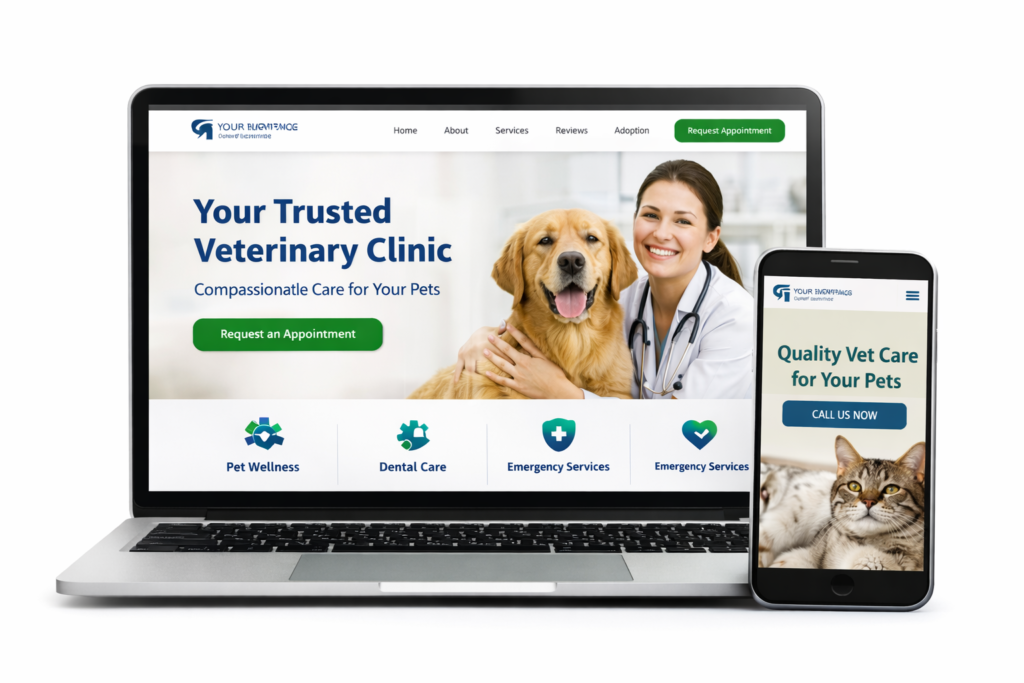
A strong homepage usually opens with a simple promise, a warm image, and a clear call to action. Instead of vague copy, it should say who the clinic serves, where it is located, and what kind of care is available. From there, the site should guide visitors to service pages, credibility signals, FAQs, and contact paths.
Here is what matters most:
| Website Element | Why It Matters for a Veterinary Clinic |
| Clear hero section | Tells pet owners what the clinic offers and where to go next |
| Mobile-first layout | Helps users on phones find answers fast |
| Dedicated service pages | Improves SEO relevance and supports conversion |
| Trust signals | Reviews, staff bios, awards, and photos reduce hesitation |
| Local contact details | Makes it easier to call, visit, or request an appointment |
| Fast page experience | Improves usability and supports better engagement |
Google’s PageSpeed Insights documentation explains that PSI measures real-user experience and evaluates signals such as LCP, CLS, and INP, which directly affect how usable a page feels.
For clinics, that translates into practical decisions like compressed images, lighter page builders, cleaner navigation, and fewer distracting popups. A beautiful site is helpful. A beautiful site that loads cleanly and guides action is better.
The best page structure for service-led clinic growth
For ranking and conversion, the most effective option is a service-led website structure. That means separate pages for the major categories a pet owner might search for, rather than hiding everything inside one general services page.
A smarter structure often looks like this:
- Home
- About
- Veterinary Services overview
- Wellness Exams
- Pet Vaccinations
- Dental Care
- Surgery
- Diagnostics
- Emergency or Urgent Care details
- New Patient page
- Contact / Request Appointment
- Blog
This structure works because it matches search intent. A pet owner searching for dog vaccinations is more likely to convert on a page specifically about vaccinations than on a generic homepage. It also lets the clinic build stronger internal relevance, which supports local SEO and on-page clarity.
For practices planning a redesign, website design & development services can help map pages around actual search demand and conversion flow rather than just visual preference.
What content should each key page contain
A veterinary website earns better results when each page has a job.
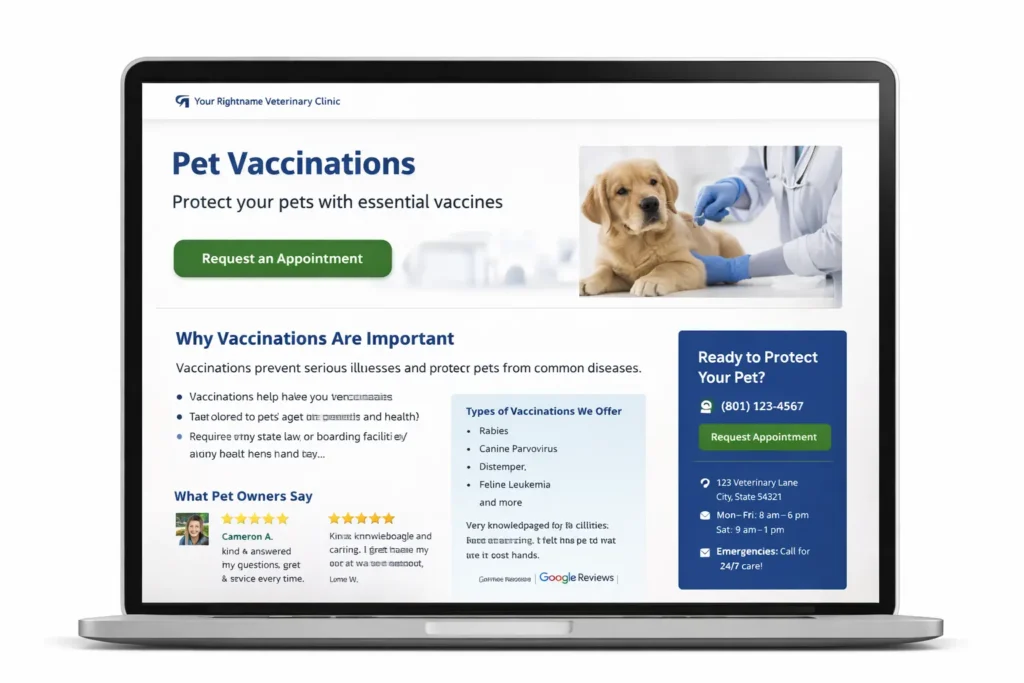
The homepage should introduce the clinic, location, main services, and the primary next action. The service pages should explain what the treatment is, which pets it helps, why owners choose the clinic, and how to book. The about page should show the people behind the care. The contact page should remove every last excuse not to call or request an appointment.
Homepage essentials
The homepage should include a short value proposition, location mention, appointment CTA, service highlights, review proof, and a simple path to call. Avoid long blocks of generic copy. The message should be easy to scan and easy to trust.
Service page essentials
Each service page should answer:
✅ What the service is
✅ Why a pet may need it
✅ What symptoms or concerns relate to it
✅ What the clinic offers
✅ How to book or ask a question
This style works well because it supports both search engines and real users. It also gives AI systems cleaner, extractable answers, which helps with AEO visibility.
About page essentials
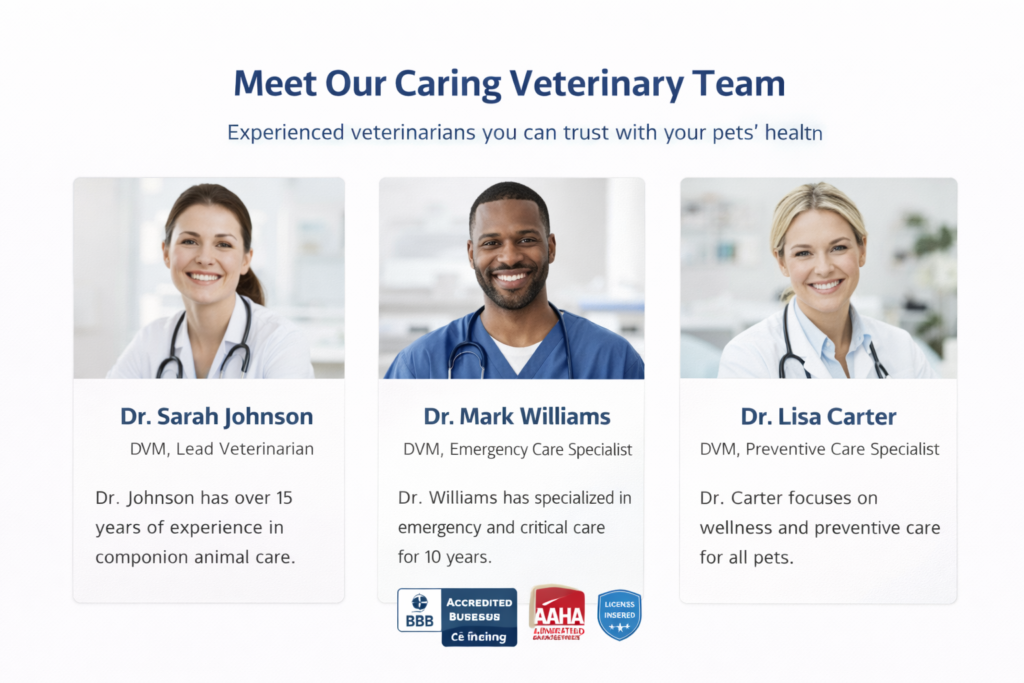
Pet owners want reassurance. A strong about page includes veterinarian bios, credentials, clinic philosophy, team photos, and a short explanation of how the practice approaches care. This is especially useful for first-time visitors comparing providers.
Contact page essentials
This page should include phone number, address, hours, map, service area, and one visible conversion action, such as Request Appointment. Google notes that businesses can manage public information like hours, website, phone number, and location through Business Profile, which shows how important consistency is across your website and Google presence.
Why local SEO and design should work together
A clinic site should never treat SEO and design as separate projects. The design affects usability, but it also affects how clearly search engines understand the clinic’s content and how easily local visitors take action.
Local SEO for a veterinary clinic becomes much stronger when the website includes:
✅ city and service area signals
✅ unique service pages
✅ schema-ready business details
✅ consistent NAP information
✅ visible reviews and trust elements
✅ pages that load cleanly on mobile
Google states that Business Profiles help businesses appear on Search and Maps and direct customers to their website and booking links. That makes the website a critical conversion layer, not just a digital brochure.
This is one reason many clinics underperform online. They may have a nice-looking site, but the page layout does not support local intent. Or they may have useful content, but the design makes it hard to navigate. The best results come when both sides work together.
Cost expectations in the USA
Pricing depends on the clinic’s size, the number of pages, whether copywriting is included, and how custom the build needs to be. Forbes Advisor notes that informational small business websites can range from DIY costs up to professional design starting at $1,500 and up, with monthly hosting and app costs often in the $15 to $150 range.
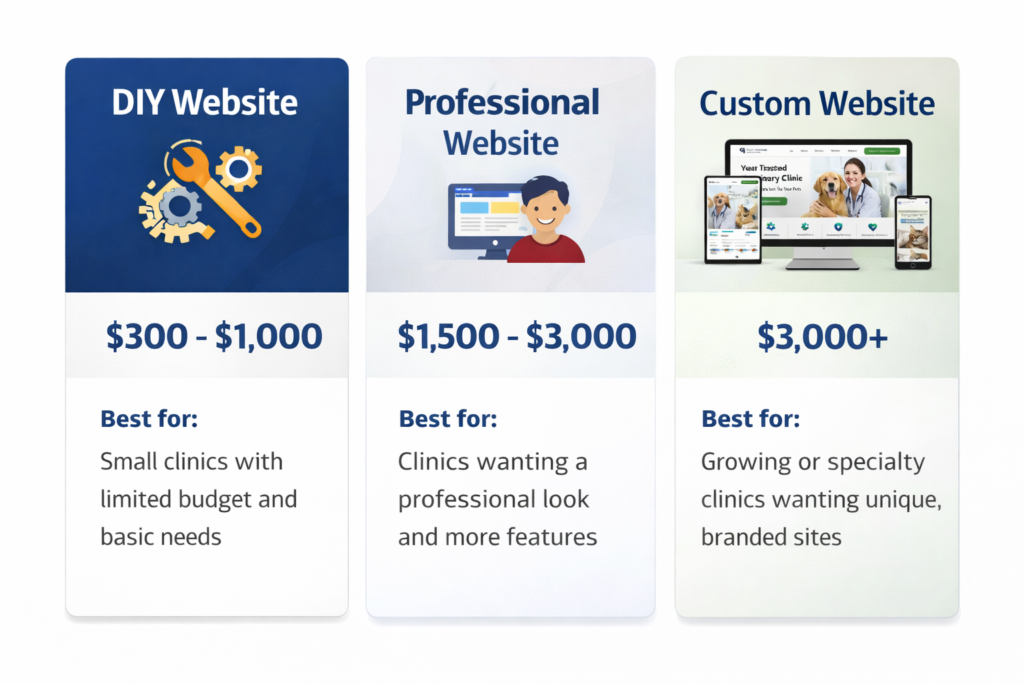
For a veterinary clinic, the realistic range usually falls into three tiers:
| Website Type | Typical USA Cost Range | Best Fit |
| DIY starter site | $0 to $450 setup plus platform fees | New or solo clinics testing basic presence |
| Professional brochure-style site | $1,500 to $5,000+ | Clinics needing a cleaner, credible web presence |
| Custom conversion-focused clinic site | $5,000 to $15,000+ | Clinics focused on SEO, lead quality, and growth |
The cheapest option is not always the most affordable in the long run. A low-cost site may still need rewritten copy, SEO cleanup, layout fixes, and better conversion paths later. A stronger build tends to save time because it is planned around the clinic’s actual goals from the start.
That is why the best option depends on the practice stage:
- A new clinic may only need a lean but well-structured launch site
- An established practice usually benefits more from a conversion-focused redesign
- A multi-location group often needs scalable templates, local landing pages, and deeper technical planning
How to choose the right design direction
The right direction is the one that matches how your clinic acquires clients.
If referrals and word of mouth already bring steady traffic, then the site should focus on trust, education, and friction-free booking. If the clinic wants stronger local visibility, then service pages, technical SEO, and city relevance should be built in from the beginning. If the clinic is competing in a busy metro area, then the website needs clearer positioning and sharper conversion flow.
A simple way to think about it is this:
Why redesign now?
Because the current site is not helping enough visitors become inquiries.
How should it be redesigned?
By aligning content, local search intent, mobile experience, and clear CTAs on every major page.
Which option is best?
For most U.S. clinics, the best option is a professional custom site with focused service pages, local SEO foundations, and conversion-first copy.
That middle-to-premium range usually delivers the strongest return because it balances trust, usability, and growth potential without forcing the clinic into enterprise-level complexity.
Practical tips that improve results fast
Small upgrades can make a visible difference even before a full redesign.
Use real clinic photography instead of generic stock images. Add the city and state naturally in page titles and key sections. Keep appointment buttons visible on mobile. Break long text into short, readable sections. Add a short FAQ under major services. Show the veterinarian and team on the about page. Make sure every important page ends with one clear next step.
Clinics can review the AVMA explanation of the veterinarian-client-patient relationship to better frame trust and care standards, and they can test site performance with Google PageSpeed Insights, which reports on page experience and offers optimization guidance.
A better way forward for clinic growth
A strong clinic website is not just a design project. It is a business asset. It should support discovery, trust, and action in one smooth experience. When the layout is built around what pet owners actually need, the clinic gets better-qualified leads and a stronger digital brand.
That is why vet website design should be approached as part of a full growth system, not an isolated visual update. The clinics that win online are usually the ones that make their websites easier to understand, easier to trust, and easier to act on.
Frequently Asked Questions
1. What does veterinary website design mean?
Veterinary website design means building a website specifically for a clinic’s patient journey, local visibility, and conversion needs. It is not the same as a generic small business website because veterinary practices need service pages, trust signals, location clarity, and simple appointment paths. A good setup helps pet owners understand the clinic quickly, feel confident about the care offered, and take action without getting lost in the layout.
2. Why does it matter so much for clinics in the USA?
It matters because U.S. pet owners often compare clinics online before they ever call or visit. A website shapes that first impression by showing services, reviews, hours, and contact options in one place. It also supports local SEO, mobile usability, and trust. In competitive markets, a weak website can lose inquiries fast, while a clear, modern site can turn nearby searchers into real appointment requests.
3. What should a strong clinic website include?
A strong clinic website should include service pages, a mobile-friendly layout, clear calls to action, trust-building content, and accurate local business details. It should also feature veterinarian bios, reviews, a well-structured contact page, and pages that load quickly on mobile devices. The best websites guide pet owners step by step, so they do not have to guess where to click, what the clinic offers, or how to get help.
4. How much does a clinic website usually cost in the USA?
Costs vary based on scope, content needs, and how custom the website is. A basic DIY site can be very cheap upfront, but a professionally built clinic website often starts around the lower thousands and rises as strategy, copywriting, SEO, and custom design are added. For most practices, the best investment is a site that is easy to manage, built for conversion, and structured to support long-term local growth rather than just launch-day looks.