
A small business sales funnel website is built to guide visitors from the first click to inquiry, booking, or purchase with less friction and more clarity. Instead of acting like a digital brochure, it moves people through a clear path so they know what to do next.
For many USA small businesses, that means fewer lost leads, better-qualified inquiries, and a website that supports revenue instead of just sitting online. When your pages, calls to action, and messaging are aligned, your site becomes a conversion tool instead of just an online placeholder.
A lot of business owners invest in traffic before they fix the path people take after they land on the site. That is usually where conversions get stuck. You can run ads, post on social media, show up in local search, and still struggle to get leads if your website does not guide visitors toward a specific next step.
That is why funnel-based design matters. It gives each page a job. One page earns attention. Another builds trust. Another removes objections. Another captures the lead. That structure is especially important for service businesses, local businesses, and growing brands that need their website to support sales every day.
If you want to see how this works in real page flow, review this guide on the best landing page layout and compare it with your current website journey. You can also explore high-converting website design to see how design choices affect lead generation in practical terms.
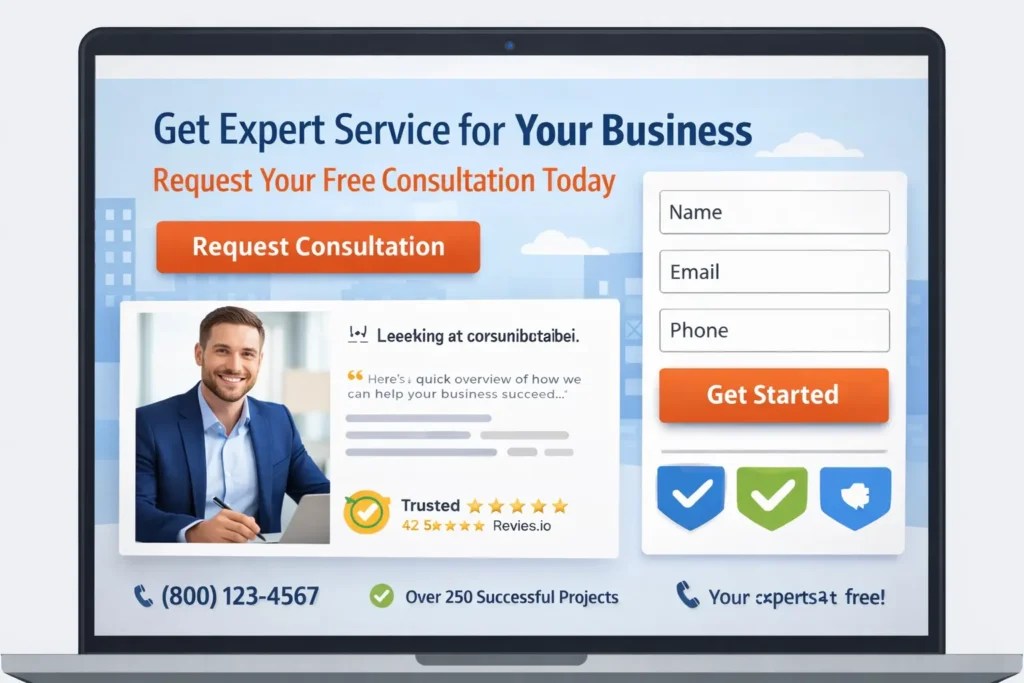
What a Sales Funnel Website Actually Does
A funnel website is not only about design. It is about movement. It helps a visitor move from curiosity to trust, then from trust to action.
A traditional website often gives equal weight to every page. The visitor lands, sees a menu with many options, clicks around, and leaves without doing anything meaningful. A funnel-based website is more intentional. It reduces confusion and makes the next step obvious.
For example, a local service business may want a visitor to do one of three things:
- Book a call
- Request a quote
- Fill out a lead form
Everything on the page should support one of those outcomes. That includes the headline, layout, testimonials, offer, service explanation, FAQ, and button copy.
This is also why conversion-focused websites often outperform generic small business websites. When the path is clearer, users do not have to guess. That matters because even small delays and friction points can hurt results. Research from Portent has shown that faster site performance is associated with stronger conversion rates, and Google has long published guidance showing mobile speed affects bounce and conversion behavior.
In simple terms, a good funnel website answers four things fast:
Who are you?
What do you offer?
Why should I trust you?
What should I do next?
If your site does that well, conversions usually improve.
Why USA Small Businesses Need This Type of Website
Many USA small businesses compete in crowded local and regional markets. Prospects compare multiple providers quickly, often on mobile, and usually make fast judgments about trust, professionalism, and ease. That makes structure just as important as aesthetics.
A visitor may find you through Google, a referral, a Facebook ad, or a directory listing. No matter how they arrive, they need a smooth next step. If your website is slow, vague, or overloaded with choices, you lose momentum. If your website is clear, focused, and trust-building, you increase your chances of winning the lead. For practical guidance on what pages matter most, the U.S. Small Business Administration explains the essential website pages small businesses should include.
The U.S. Small Business Administration emphasizes that business websites should clearly communicate what you sell and make it easy for visitors to contact you. That fits directly with funnel design because a funnel site reduces ambiguity and supports action.
Here is where many small businesses go wrong:
| Common Website Problem | Funnel-Based Fix |
| Too many menu options | Fewer priority paths and stronger CTA placement |
| Generic homepage copy | Clear value proposition tied to one audience |
| Weak trust signals | Testimonials, proof, process, and sample work |
| No lead capture strategy | Quote form, consultation form, or booking CTA |
| Service pages that only describe | Service pages that persuade and convert |
A USA small business also needs a funnel website because buying behavior has changed. People want answers quickly. They want reassurance before reaching out. They want to know pricing expectations, process, turnaround, and whether you are the right fit.
That means your site should not just “look nice.” It should remove hesitation.
This is where working with growth-driven web design can make a real difference. A strategic website can help your business attract better leads, reduce drop-off, and support your long-term marketing rather than needing a redesign every time results stall.
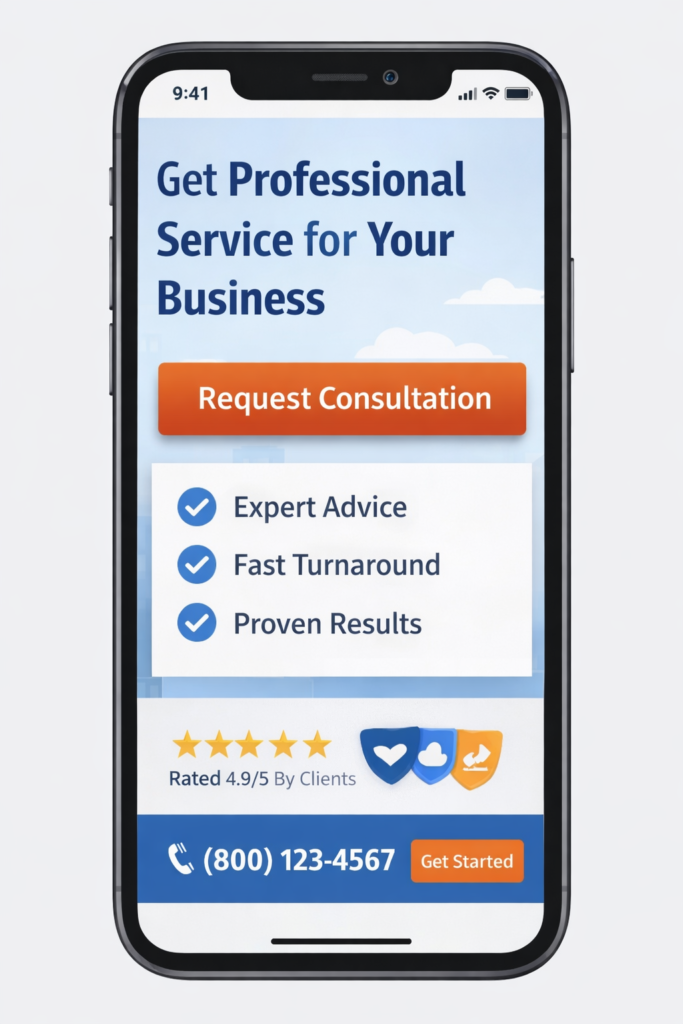
Which Option Is Best for Your Business
Not every business needs the exact same setup. The best option depends on how you sell, how complex your service is, and how warm or cold your traffic tends to be.
Option 1: Home Page Plus Core Service Pages
This works best for local service providers, solo professionals, and small agencies. Your homepage introduces the offer and points users to the right service page. Each service page then handles benefits, proof, objections, and CTA.
This is usually the best choice if you offer a few core services and want to rank for multiple service-related keywords.
Option 2: Dedicated Landing Pages for Campaign Traffic
This is ideal when you run paid ads, email campaigns, or targeted promotions. Instead of sending traffic to a general page, you send visitors to a tailored landing page with one offer and one goal.
This option usually performs best when speed, message match, and direct action matter most.
Option 3: Full Multi-Step Funnel Website
This is best for businesses that need a more structured buyer journey, such as higher-ticket services, custom project work, or businesses with multiple decision stages. In this case, the homepage, service pages, case studies, and lead capture pages all work together as one system.
For most small businesses, this is the strongest long-term option because it supports SEO, trust-building, paid traffic, and conversion at the same time.
Here is a simple comparison:
| Website Option | Best For | Main Strength | Best CTA Type |
| Home + service pages | Local service businesses | Strong SEO foundation | Contact or quote form |
| Dedicated landing page | Ads and promotions | Higher message match | Book now or claim the offer |
| Full funnel website | Growth-focused businesses | End-to-end conversion path | Consultation or qualified lead form |
For most businesses trying to improve rankings and conversions together, the third option is the best fit. It gives you enough structure to support search visibility while still guiding users toward action. It is also more scalable because you can add pages, proof, and campaigns without breaking the core flow.
If you are comparing design strategies, this article on conversion-focused website is useful for understanding how to build pages around action instead of decoration.
What Pages Your Funnel Website Should Include
A strong funnel site does not need dozens of pages. It needs the right pages with the right job.
Your homepage should lead with a clear promise, explain who you help, and direct people toward the next logical step. It should not feel like a placeholder. It should work as the top of the funnel.
Your service pages should go deeper. These are where many small businesses either win or lose leads. Instead of simply listing what you do, explain the result, the process, the timeline, the fit, and the reason to trust your business.
A high-performing funnel website usually includes these pages:
Homepage
Your main value proposition, quick proof, key services, and CTA.
Service Pages
One page per core service, each built around intent and conversion.
About Page
This is not just your story. It is your credibility page. It should explain why your business is qualified, who you serve, and how you work.
Portfolio or Sample Work Page
Proof matters. Visuals, before-and-after examples, or project breakdowns help visitors picture the result. A page like portfolio highlights can be one of the most persuasive parts of your site.
Contact or Lead Capture Page
Make the next step easy. The form should feel simple, relevant, and worth completing.
Trust Pages or Supporting Content
Testimonials, reviews, FAQs, case studies, pricing guidance, and process pages all help reduce hesitation.
The SBA recommends including essential pages that clearly explain your business and make contacting you easy, which aligns closely with this structure.
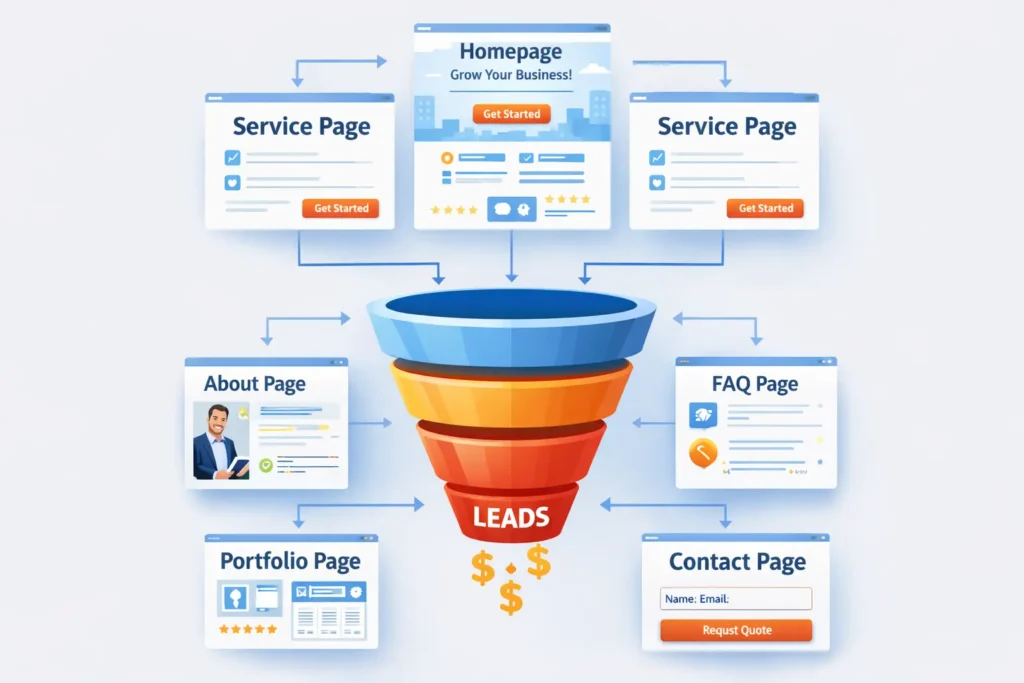
How To Build the Funnel So It Converts
The best funnel websites do not rely on tricks. They rely on clarity, trust, and momentum.
Start with a strong headline. It should tell the visitor what you do and who it is for. Avoid vague phrases that sound polished but do not say anything useful.
Next, tighten the offer. If you want someone to book a call, request a quote, or ask for an audit, say so early and repeat it naturally across the page. Many landing page best-practice resources emphasize message match, focused design, and clear calls to action because those elements reduce drop-off and improve lead quality.
Then add proof. Reviews, outcomes, project examples, and process snapshots make your claims believable. Visitors often need reassurance before they reach out, especially when the service is custom or high-value.
You should also remove friction in the form itself. Ask only what you need to qualify the lead. A short, relevant form usually works better than a long one unless your goal is to pre-qualify higher-ticket prospects.
Finally, make sure the site works well on mobile. A large share of small business traffic comes from phones, and mobile users are less patient with clutter and delay. Google’s mobile speed research has repeatedly connected faster experiences with better user outcomes. Site performance also matters because even small delays can hurt conversions, and this site speed and conversion rate study from Portent shows how page speed can affect revenue.
A simple funnel page flow often looks like this:
Visitor lands on page
They understand the offer
They see trust signals
They understand the process
They click the CTA
They complete the form
That is the whole job.
Practical Tips To Increase Conversions Without a Full Rebuild
You do not always need to start from zero. Sometimes the fastest gains come from improving what is already there.
Move your main CTA higher on the homepage. Add one clear offer instead of several competing actions. Rewrite service page openings so they lead with a benefit instead of a description. Add proof near the form, not only at the bottom of the page. Tighten your navigation so users have fewer off-ramps.
You should also audit whether each page has a purpose. If a page gets traffic but never supports a next step, it may be wasting attention.
Here are the upgrades that often make the biggest difference:
| Conversion Upgrade | Why It Helps |
| Clear headline above the fold | Reduces confusion immediately |
| One primary CTA per page | Prevents split attention |
| Trust proof near action points | Reassures users before they commit |
| Shorter forms | Lowers friction for inquiries |
| Faster mobile experience | Improves engagement and reduces drop-off |
If your current website feels scattered, your best next move may be to review your structure and service positioning through website design & development services. That gives you a more strategic starting point than only changing colors, fonts, or images.
For external references that support the article naturally, you can also blend in the U.S. Small Business Administration’s guide to essential website pages and Portent’s site speed research as supporting reads for users who want more depth.
Final Take
A small business sales funnel website gives your business a clearer path from visitor to lead by combining focused messaging, trust-building pages, and intentional calls to action. For USA small businesses that want stronger rankings and more conversions, it is often the most practical way to turn a website into a real sales asset.
The best setup is usually not the flashiest one. It is the one that answers the right questions fast, guides users to the next step, and supports your long-term marketing strategy. When your homepage, service pages, proof, and contact flow work together, your site becomes easier to rank, easier to use, and easier to convert.
Frequently Asked Questions
1. What is a small business sales funnel website?
A small business sales funnel website is a website structured to move visitors through a clear decision-making path instead of leaving them to browse without direction. It usually starts by introducing the offer, then builds trust with proof, explains the service, removes objections, and leads the visitor toward one main action such as booking a call, requesting a quote, or filling out a lead form. The goal is not just traffic. The goal is measurable conversion.
2. Why does a USA small business need a sales funnel website?
A sales funnel website helps a USA small business compete more effectively because it gives visitors a clear next step and reduces the confusion that often causes lost leads. Many local businesses get traffic from search, social media, or referrals, but that traffic does not convert well when the website is vague or overloaded. A funnel structure improves clarity, highlights trust signals, and supports inquiries from people who are ready to take action.
3. What pages should a small business sales funnel website include?
A strong sales funnel website should include pages with distinct jobs such as a homepage, focused service pages, an about page, proof-based portfolio or case study pages, and a contact or lead capture page. Some businesses also benefit from FAQ, pricing guidance, and process pages. The key is not having the most pages. It has the right pages arranged in a way that supports trust, relevance, and a smooth move toward conversion.
4. How can a small business sales funnel website increase conversions?
A sales funnel website increases conversions by removing friction and guiding attention toward one primary action. It does that through stronger headlines, better CTA placement, clearer service explanations, visible trust signals, and simpler forms. It also improves results when the site loads quickly and works well on mobile. When visitors understand what you offer, why they should trust you, and how to take the next step, they are far more likely to convert.