
Web design cost for small biz ranges from $1,800 to $10,000. Your final price depends on pages, features, content, and who builds it.
You are investing in planning, brand-specific design, conversion-focused copy, clean development, quality assurance, and a smooth launch. A credible, fast, and easy-to-use site increases inquiries and sales, which is the real outcome you are buying. If you need a booking flow, product catalog, or CRM integration, the scope and time expand, so the budget follows.
To understand typical deliverables and how scope is shaped, review the structure and inclusions on the Salt Web Designer web design services page. It shows how strategy, design systems, content, and technical tasks add up to a predictable package.
Web Design Cost Small Biz: Price Ranges You Can Actually Use
A realistic way to budget is to match your scenario with a typical page count and feature set. Your market, timeline, and content readiness will nudge the range up or down.
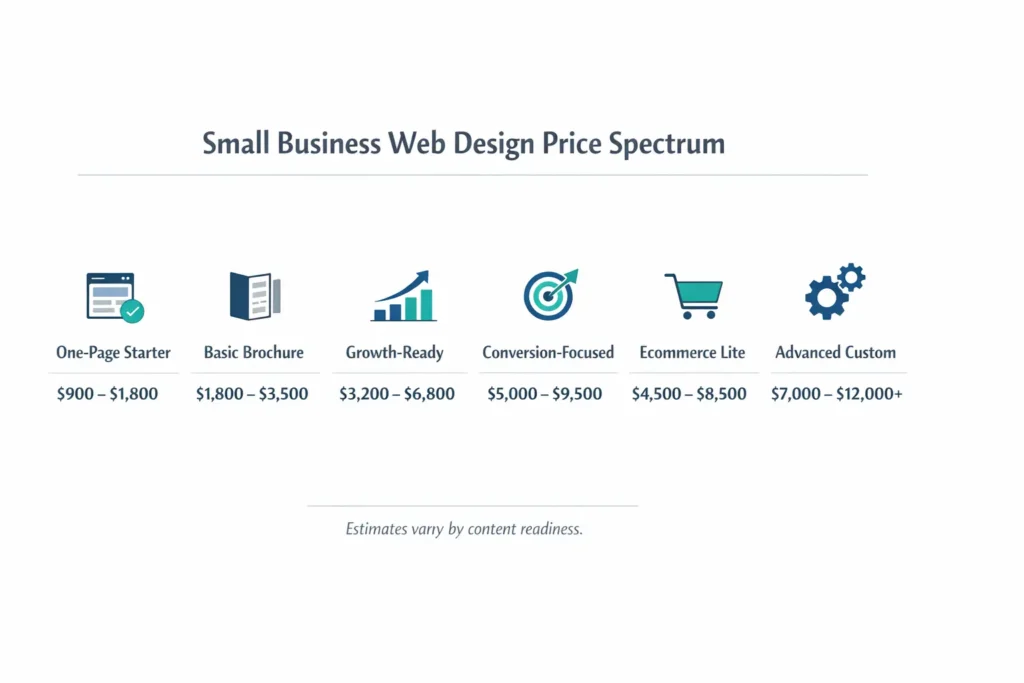
Table 1: Small Business Website Cost Snapshot
| Scenario | Typical Pages | Core Features | Estimated Range |
| One-page starter | 1 | Sections, contact form | $900–$1,800 |
| Basic brochure | 5–8 | Custom design, CMS, 1 form | $1,800–$3,500 |
| Growth-ready | 10–14 | Blog, analytics, event tracking, on-page SEO | $3,200–$6,800 |
| Conversion-focused | 12–20 | Landing page set, CRO testing plan, speed tuning | $5,000–$9,500 |
| Ecommerce lite | 6–10 | 10–50 products, payments, tax, and shipping rules | $4,500–$8,500 |
| Advanced custom | 15–30 | Integrations, bookings, custom blocks | $7,000–$12,000+ |
These bands assume a modern CMS, responsive components, and accessibility-minded development. The biggest wildcard is content: when copy, brand visuals, and page outlines are ready, the project stays efficient and closer to the lower range. When your partner must research, write, and art direct from scratch, plan for the upper band.
Why Prices Vary: Six Levers That Matter
1. Strategy and information architecture
Clear goals and a page map shrink revision loops. If your partner runs discovery workshops, audience research, and a content model, this adds time early but saves multiple cycles later.
2. Content creation
High-converting copy is one of the best multipliers on your budget. If you have drafts, plan for editing to improve flow and clarity. If you need full messaging and page copy, your scope grows, but so do results. For a helpful framework, study this guide to web design content strategy.
3. Visual design depth
A light, branded system using your palette and logo is cost-effective. Bespoke art direction with custom iconography and subtle motion sequences takes longer and requires additional QA.
4. Functionality and integrations
Bookings, multi-step forms, gated content, multilingual support, or e-commerce require planning, component design, and testing. Each adds to the estimate.
5. CMS and platform
WordPress, Webflow, and Shopify are all viable. Choose based on editing experience, plugin needs, and long-term maintenance. Your choice can reduce or add complexity.
6. Review cadence
Fast, consolidated feedback keeps momentum. Multiple stakeholder rounds add hours. Appoint one decision maker and time-box reviews for predictability.
How To Estimate Your Budget Without Guessing
Define outcomes first. Decide what success looks like in 90 days. Examples: 30 percent increase in qualified leads, 20 percent increase in bookings, or fewer sales calls spent clarifying basics because the site answers them.
Map a minimal sitemap. Home, Services, About, Contact, plus one top-of-funnel resource is a lean start for most small businesses. It is easier to add sections later than to carry every idea into version one.
Decide who owns the content. If you need conversion copy and visuals, include them. If you will provide drafts and photos, budget for editing and optimization so the message lands.
List must-have features. Items like conditional logic on forms, online booking, payments, or CRM sync should be prioritized. Capture nice-to-haves in a phase two list.
Request a line-item proposal. Ask for discovery, design, development, QA, and launch as separate rows. This lets you dial scope up or down while preserving the structure.
If you want inspiration for persuasive page sections, these practical landing page tips are a smart reference before you finalize the scope.
Which Option Is Best For You Right Now?
For most small businesses launching a new site or replacing an outdated one, a growth-ready build offers the best value. This approach uses a modular design system and targeted conversion copy for key pages, along with analytics events and on-page SEO. You get speed to value now and an easy path to expand later.
Choose template-custom when you need reliable UX patterns and tight timelines. Choose bespoke custom when you have unique brand requirements or complex flows that truly require custom components. Choose an e-commerce platform that builds when your revenue depends on product listings and checkout, and you want standard tax and shipping tools out of the box.
To benchmark polish and scope, browse the portfolio on sample work. Seeing module variety and page types helps you choose the right tier with confidence.
Practical Price Examples You Can Compare
Local trades company
A six-page site with a lead form, service area map, testimonials, and gallery. Copy provided but needs editing. A system of reusable sections delivers speed and consistency. Expect around $2,200 to $3,800.
Boutique wellness clinic
Twelve pages with provider bios, online booking, insurance FAQs, and a blog. Requires a schema for medical content and HIPAA-conscious forms. Expect $5,500 to $9,000, depending on copy and booking complexity.
Specialty retailer
Ten pages and thirty products on Shopify with shipping rules and POS sync. Expect $4,500 to $8,000 based on product options and photography.
Membership-based coaching
Ten core pages, gated resources, email automation, and member dashboard. Expect $6,000 to $10,000, including integration setup and content guidelines.
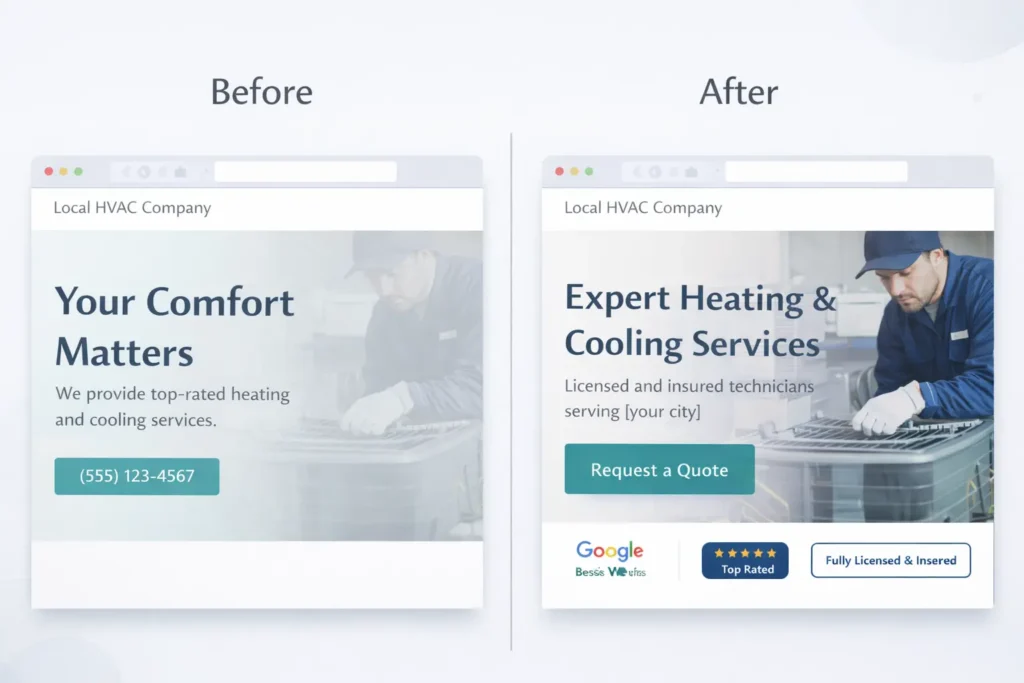
Table 2: Feature Add-ons And Typical One-time Fees
| Add-on | What It Covers | Typical One-time |
| Brand style refresh | Palette, type scale, UI motifs | $400–$1,200 |
| Conversion copy for 5 pages | Positioning, outlines, final drafts | $900–$2,200 |
| Booking integration | Calendar, reminders, logic | $450–$1,200 |
| CMS editor training | Walkthrough, short handbook | $150–$450 |
| On-page SEO setup | Meta, schema, redirects, IA | $500–$1,800 |
| Analytics events | GA4 events, dashboards | $200–$650 |
Each add-on exists to remove friction or increase clarity. The goal is not to collect features, but to fund items that move key metrics. When in doubt, invest in messaging and conversion copy first. Those upgrades compound.
What About ROI And Ongoing Value?
Small improvements to usability and clarity often deliver outsized gains. Industry research shows meaningful returns when teams fix friction, improve information hierarchy, and align pages to user tasks. For a neutral overview, see Nielsen Norman Group’s summary on the ROI of UX. Pair that thinking with a focus on speed and core web vitals, because slow pages lower conversions.
Local visibility also multiplies the value of a new design. If you sell to a city or region, combine a clear site structure with location signals. This short guide to local SEO web design tips explains how service area pages, reviews, and structured data work together.
Builder Types: Freelancer, Small Studio, Agency
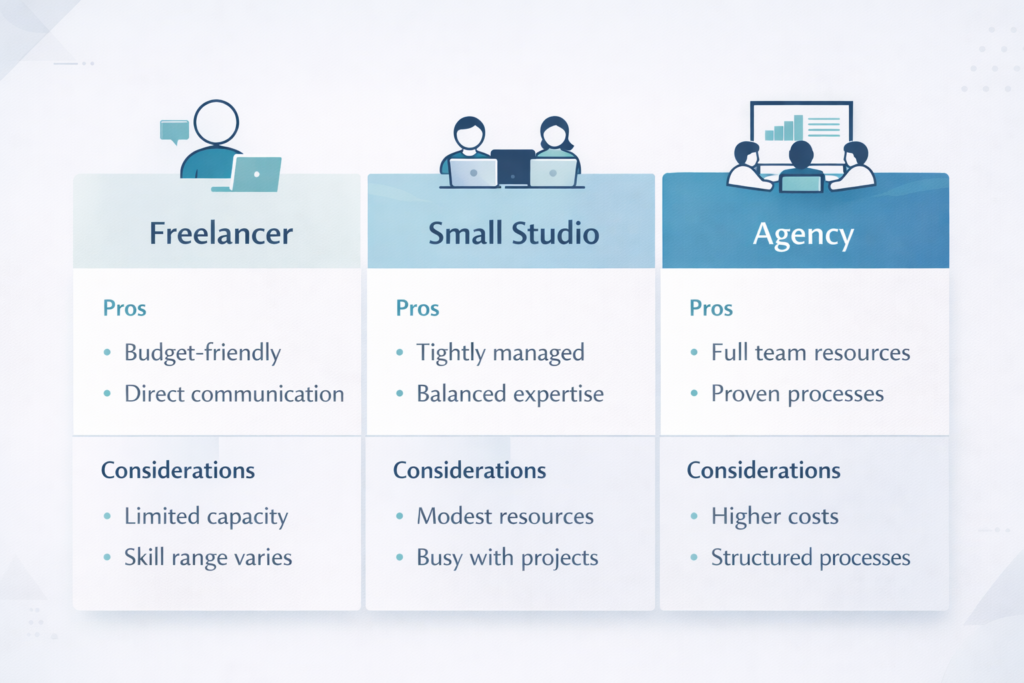
Freelancer
Pros: direct contact, budget-friendly, flexible.
Consider: availability, single point of dependency, narrower bench.
Small studio
Pros: balanced price with specialized roles for design, development, and content.
Consider: plan ahead to secure a spot in their sprint calendar.
Agency
Pros: deep bench, complex projects, full brand ecosystems.
Consider: higher rates aligned with multi-stakeholder and enterprise needs.
A quick way to gauge fit is to look at project flow and polish. The Salt Web Designer homepage outlines an approach that emphasizes clarity, conversion, and maintainability, which is what most small businesses want.
For independent usability benchmarks, see Nielsen Norman Group’s ROI of UX: https://www.nngroup.com/articles/ux-roi/
For market pricing data, see Clutch’s web design pricing overview: https://clutch.co/web-designers/cost
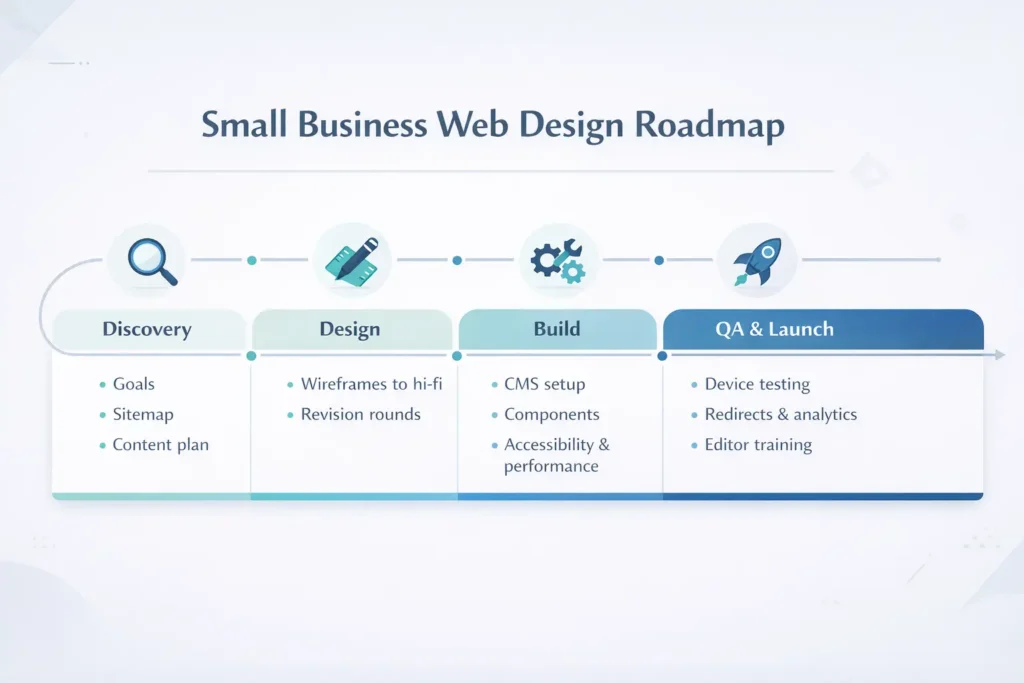
Timeline And Process You Can Expect
- Discovery
Goals, audience, sitemap, and content plan. This is where you align on outcomes and nail the information architecture. - Design
Wireframes to high-fidelity screens. One or two revision rounds keep momentum and prevent scope creep. - Build
CMS setup, modular components, accessibility, and performance. This is when content populates, and pages take shape. - QA and Launch
Device testing, redirects, analytics, and editor training. After launch, measure behavior and iterate with small improvements.
Keep the process efficient by assigning one decision maker, batching feedback, and delivering content early. Most missed budgets result from unclear goals, fragmented feedback, and late content.
Hidden Costs To Plan For
- Original photography or video when stock images are not enough.
- Accessibility fixes like alt text and focus states to support more users.
- Policy and consent tools for privacy pages and cookie banners.
- Content migrations to move old posts and set redirects.
- Monthly care for updates, uptime checks, and minor enhancements.
Smart cost control comes from shipping a lean version one and scheduling enhancements in short cycles. Use analytics and session recordings to guide improvements instead of guessing. Industry roundups like Clutch’s web design pricing offer additional context if you want to compare market data.
Action Plan: How To Lock Your Budget With Confidence
Step 1: Write three measurable outcomes. Examples: increase qualified inquiries by 25 percent, reduce bounce rate on Services by 15 percent, or increase booking starts by 20 percent.
Step 2: Choose your path. If you want the fastest path to results, shortlist a growth-ready build with a modular design system. If you must support custom logic or a distinctive brand experience, choose bespoke custom.
Step 3: Align scope with content reality. If your team can provide drafts and photos, great. If not, fund a copy and a small brand refresh. This produces a higher ROI than squeezing every feature into version one.
Step 4: Request a line-item proposal and a timeline. Expect discovery, design, build, QA, and launch rows. Ask for one resourcing note: who handles content editing, who implements analytics, and who owns post-launch care.
For live examples to calibrate expectations, browse sample work and look specifically at page variety, calls to action, and load speed.
Google Web Vitals — https://web.dev/vitals/
Nielsen Norman Group (IA) — https://www.nngroup.com/topic/information-architecture/
FAQs: Small Business Web Design Costs
How much does a website design cost for a small business?
Most small-business websites cost between $1,800 and $10,000, based on pages, features, and who builds it. A basic 5 to 8 page brochure site with a contact form and CMS usually falls between $1,800 and $3,500. If you include strategic messaging, custom components, analytics events, and on-page SEO, you will often land in the $3,200 to $6,800 range. Complex features can push beyond that.
How much should I pay someone to design a website?
Pay for a process and expertise that increase conversions, not just hours. For straightforward scopes, an experienced freelancer or small studio is cost-effective. Many prices by project to reduce risk on both sides. Look for clear milestones, a revision policy, and analytics setup. Paying a bit more for a stronger strategy and content usually delivers more leads than chasing the lowest quote.
How much should a 20-page website cost?
A 20-page website often falls between $5,000 and $9,500, assuming a modular system, consistent templates, and on-page SEO. The number rises if many pages require unique layouts, advanced forms, or custom integrations. If half the pages reuse master templates with minor variations, your cost can stay on the lower end without sacrificing quality or speed.
How much should I charge for a 10-page website?
A professional 10-page build commonly ranges from $3,200 to $6,000, when it includes research, information architecture, design, development, QA, and basic SEO. If the client provides complete copy and brand visuals, the price can sit at the lower end. If you are creating copy, photography direction, and custom components, plan for the upper end. Itemize the scope to maintain clarity.
Final Take: Choosing The Right Path For web design cost small biz
The smartest move is to start with outcomes, map a lean sitemap, and pick a builder aligned to your complexity. For most owners, a growth-ready build with focused copy and a modular system offers the best value in the first 90 days. Measure results, then iterate with small enhancements rather than overloading version one. When you approach budgeting this way, web design cost for small biz becomes an investment that compounds.
If you are ready to shape scope and pricing, explore web design services, and note your must-haves. Then review the Salt Web Designer approach to confirm fit and quality.
This guide helps you budget the web design cost small biz owners should expect.