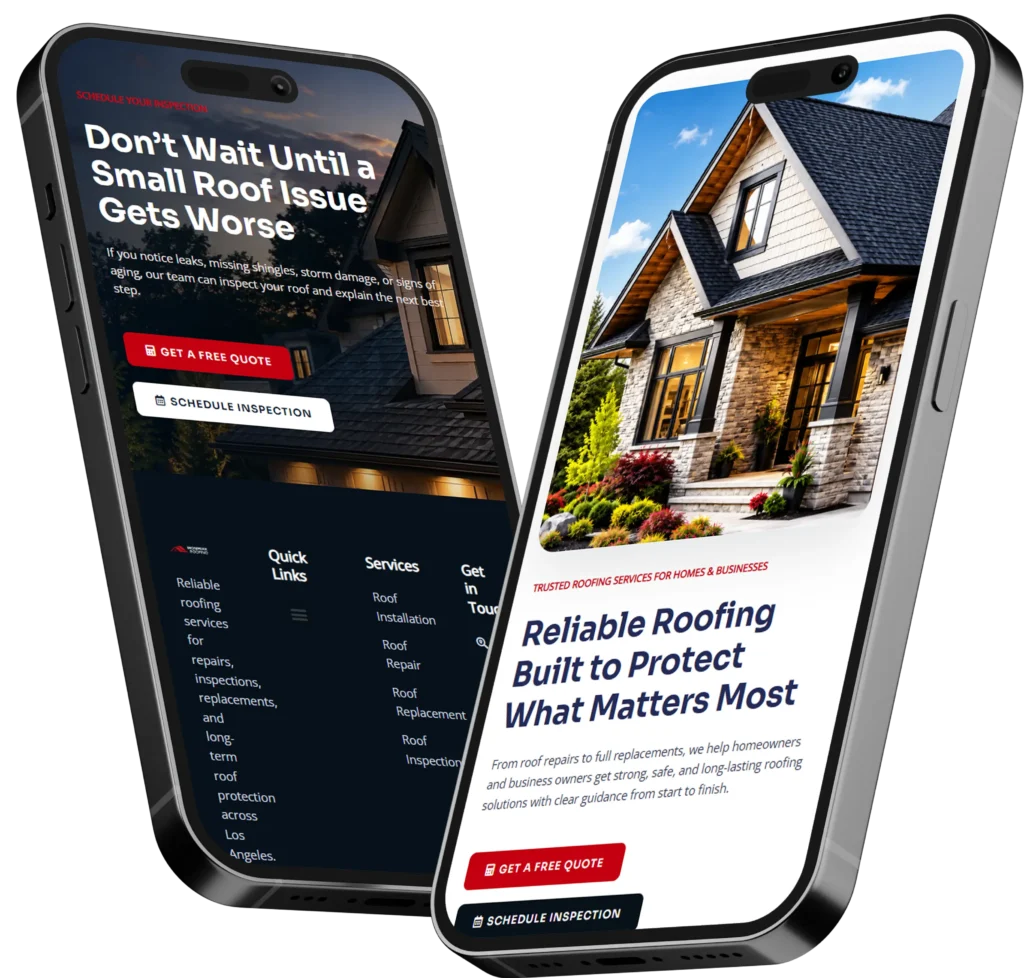
Roofing company website design should help contractors earn trust fast and turn local traffic into real leads. A strong site makes your services, proof, and next step clear within seconds, so more visitors call, book, or request an estimate.
A roofing site should make trust, service details, and next steps obvious within seconds. The strongest contractor sites help homeowners feel sure about who to call, what to expect, and how to request help right away.
When someone lands on a roofer’s site, they are usually not browsing for fun. They are comparing, checking credibility, or trying to solve a problem fast. That is why the build has to do more than look polished. It has to answer the questions a nervous homeowner is already asking in their head: Do you work in my area? Do you handle my type of roof? Can I trust you inside my home? How soon can I get an estimate? What happens if I file an insurance claim?
A good roofer site is not built around design trends first. It is built around proof, clarity, and friction-free action. That means visible contact options, service pages that match search intent, location cues that make the business feel local, and photos that look like real jobs instead of generic stock images. It also means the wording should sound like a contractor who understands urgency, weather damage, warranties, and what a homeowner worries about when money and property are on the line.
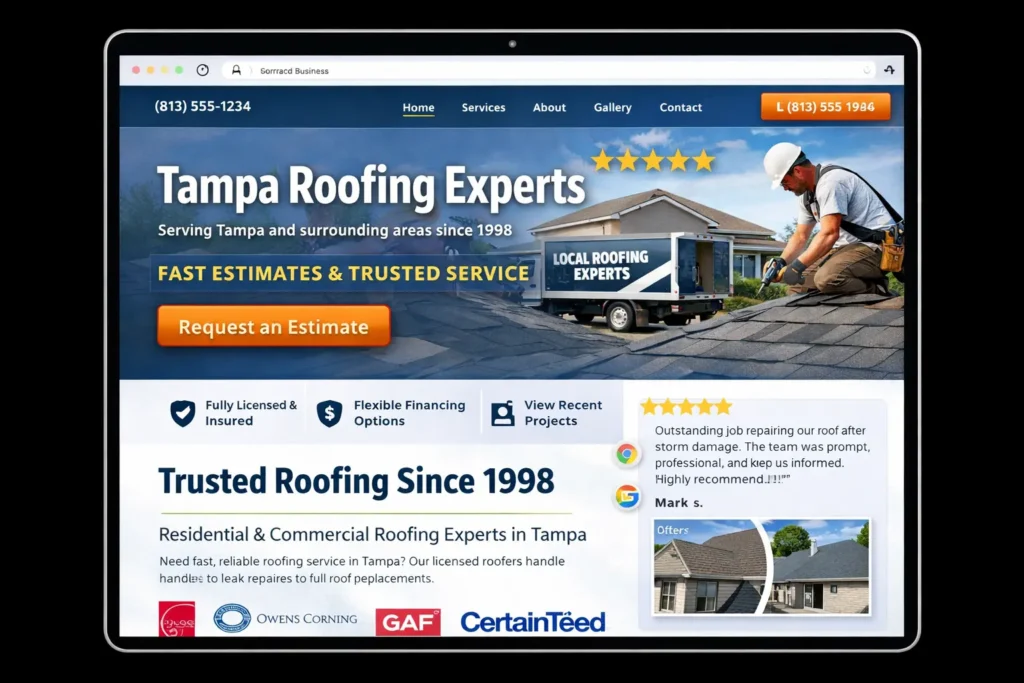
If you want the same conversion-first structure built professionally, this is where your website design & development services can support the entire funnel.
Why This Matters for Roofing Brands
Roofing is a high-trust service. People do not buy it casually, and they rarely make a decision from one detail alone. They look for stacked reassurance. A solid headline may get attention, but attention alone does not close the gap. They also want licenses, insurance language, service area confirmation, before-and-after proof, material options, financing details, review quality, and a clear way to contact the company without guessing which page to use.
This category is also shaped by timing. Some visitors are planning a full replacement in the next few weeks. Others just saw a leak stain, lifted shingles, or storm debris. The site has to support both. If every path leads to a generic contact form, the site loses momentum. If every page feels like sales copy with no useful detail, the visitor bounces. If the first impression is vague, the homeowner keeps comparing.
That is why the site should feel like a real local operator, not a template with the word “roofing” dropped in. A visitor should be able to scan the home page and understand the service area, roof types, process, and proof points with almost no effort. The goal is not to make them read everything. The goal is to make the right action feel safe enough to take.
What Homeowners Should See in the First 10 Seconds
The first screen does most of the heavy lifting. It does not need clever copy. It needs an accurate copy. A strong hero section usually includes the main service, city, or service area, a fast trust signal, and one clear primary action. In roofing, that action is often “Request an Estimate,” “Book an Inspection,” or “Call for Emergency Service.”
A weak hero says something broad like “Quality Roofing Solutions.” A stronger version says something closer to “Residential and Commercial Roofing in Tampa with Fast Inspections and Clear Estimates.” The second version tells visitors what you do, where you do it, and what happens next.
Just below that first screen, trust should deepen quickly. Instead of dumping long paragraphs, use short, believable sections: years in business, financing availability, manufacturer certifications, insurance claim support, warranty details, and recent project photos. These are the cues that reduce hesitation.
| First-screen element | Why it matters | What works best |
|---|---|---|
| Local headline | Confirms relevance fast | City or service area tied to service type |
| Primary CTA | Removes hesitation | Estimate, inspection, or emergency call button |
| Review proof | Builds confidence | Star rating, short testimonial, or review count |
| Contact options | Supports urgency | Tap-to-call phone number plus form CTA |
| Visual proof | Makes it feel real | Crew photo, completed roof, or branded truck |
A good rule is simple: if the first screen does not explain the offer, location, and next step, the visitor has to work too hard. And when homeowners are stressed, they do not work harder. They leave.
How to Structure the Pages So They Actually Convert
A roofer’s site should not rely on one general services page to carry everything. The better setup is a tight group of pages that match how people search and how they decide. Homeowners often search by service type, roof type, or location. If the site only has one broad page, it misses that intent.
Start with a focused home page that introduces the company and channels users into the right path. Then build out dedicated pages for roof repair, roof replacement, inspections, storm damage, commercial roofing, and any specialty service that matters to the business. If you serve multiple towns or neighborhoods, create useful local landing pages with real service relevance, not thin copy with swapped city names.
Your About page should not just tell a brand story. It should answer why your team is credible. Show the owner or leadership, explain how long the company has worked in the market, mention what kinds of roofs you specialize in, and include the standards or process your crew follows. This is one of the fastest ways to separate a real local team from a thin lead-gen site.
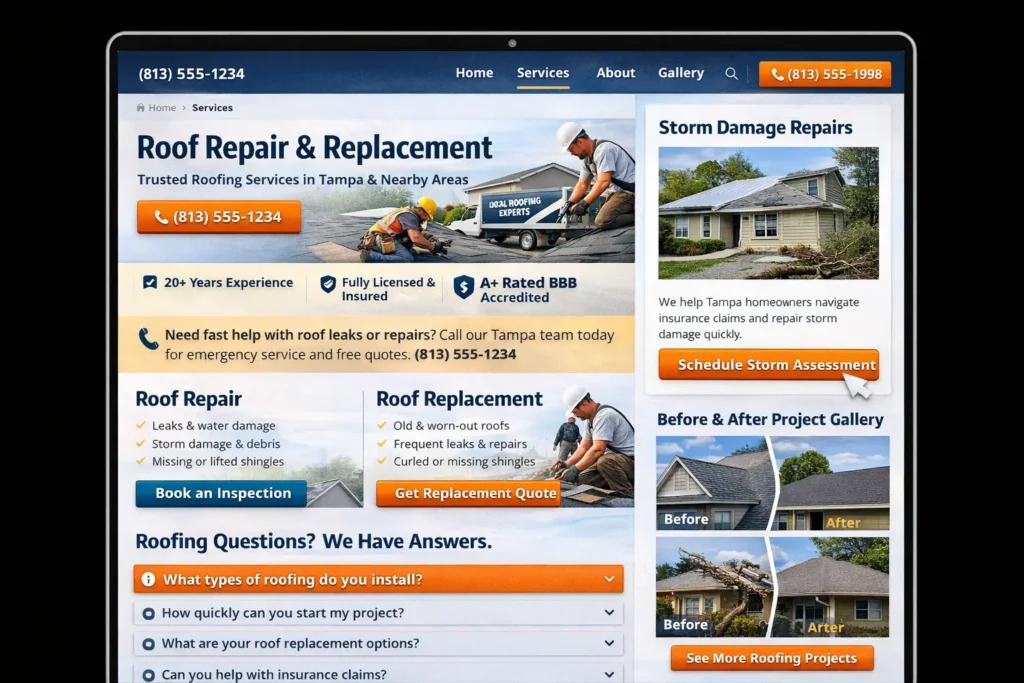
A project gallery matters more in roofing than in many other industries because the visual difference is obvious. Finished work, flashing details, material changes, steep-slope jobs, and clean jobsite photos all help. If you want ideas for how to lay those visuals out cleanly, your portfolio highlights are a natural internal reference point.
| Core page | Main job | Best CTA |
|---|---|---|
| Home | Establish trust and route traffic | Request estimate |
| Roof repair | Capture urgent fixes | Book inspection |
| Roof replacement | Educate and qualify high-value leads | Get a replacement quote |
| Storm damage | Support insurance-related intent | Schedule storm assessment |
| Commercial roofing | Speak to property managers and owners | Request consultation |
| About | Build credibility | Talk with our team |
| Reviews or gallery | Reinforce proof | See recent work/call now |
| Contact | Remove friction | Call, form, map, hours |
This structure also helps the copy stay specific. Specific pages sound more trustworthy because they answer narrower questions well. That usually converts better than trying to be everything on one page.
How Local SEO Should Support Sales, Not Just Traffic
A local roofing site should bring in the right visitors, not just more visitors. That starts with matching each page to a clear intent and then supporting that page with consistent local signals. Titles, headings, internal links, service area details, and contact information all need to pull in the same direction.
Your Google Business Profile matters because it is often part of the buying journey before or after the website visit. Keeping it complete and accurate helps local visibility and reinforces trust when someone compares map results with what they see on your site. For the official best-practice reference, use Google’s Business Profile ranking tips as a support link inside the article or content hub.
Technical clarity matters too. A site should load quickly, work smoothly on mobile, and make the main actions easy to tap. Roofing leads often come from people standing outside, checking damage, talking with a spouse, or researching from their phone between tasks. That is why performance and usability affect lead quality, not just rankings. If you want a clean supporting resource, Google’s Core Web Vitals guidance blends well here.
Schema can also help search engines understand what the business is, where it operates, and what pages represent. For local contractors, LocalBusiness markup can strengthen clarity around business details when implemented correctly. This should support real page content, not replace it. The main point is simple: local SEO works best when it reinforces a site that already makes sense to humans.
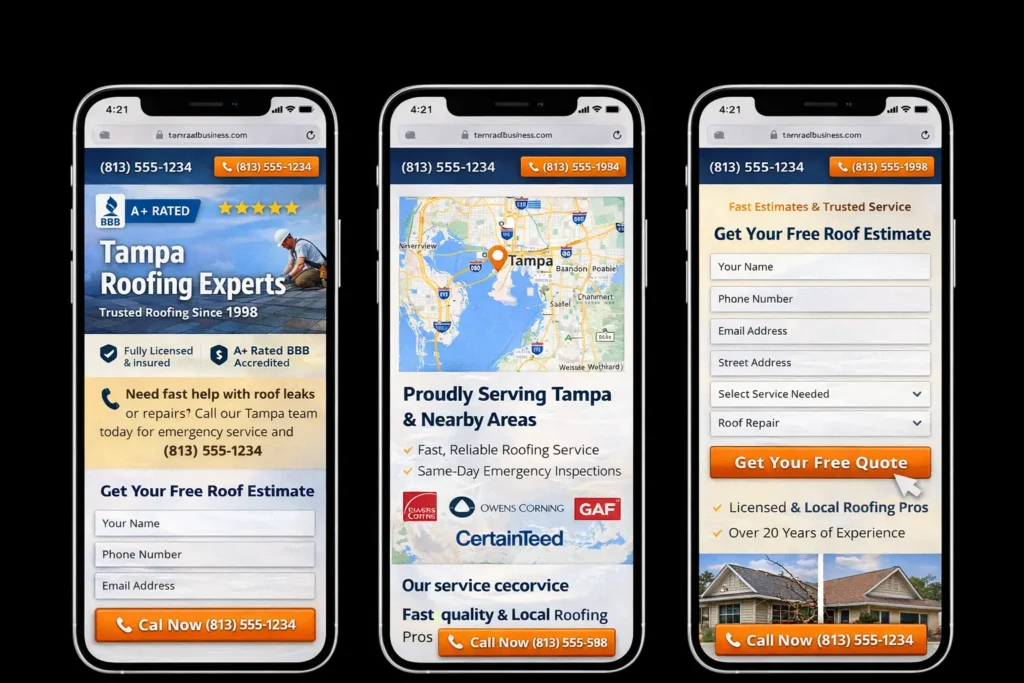
A practical tip here is to connect each location or service page with nearby proof. Add job photos from that area, short review snippets mentioning the city, or common roof issues in that market. That makes the page feel grounded instead of manufactured.
Which Setup Fits Best for Your Roofing Business
The best structure depends on how the company sells. A single-location residential roofer usually needs a straightforward lead-generation site with a strong home page, service pages, trust sections, local proof, and a clean quote flow. The priority is clarity and local visibility.
A multi-city roofer needs stronger page architecture. In that case, location pages matter much more, but they should still carry real value. Talk about roofing types, weather patterns, response times, neighborhoods, and examples that make each page different. Thin local pages rarely help for long because they feel replaceable.
A storm-response-focused roofer needs urgency built into the experience. That means a visible emergency line, fast inspection language, insurance claim guidance, and a tighter call-first layout. These visitors are not looking for a deep brand story on the first click. They want to know if your team can respond and what to do next.
A company that handles both residential and commercial projects usually does better with clearer separation. Different buyers, timelines, and proof points belong on different paths. Homeowners want reassurance and simplicity. Commercial leads want scope, capacity, materials, safety, scheduling, and project coordination.
So which option is best? The answer is the one that matches the way your leads arrive and the way your sales process works. If the business mostly closes through inspection requests, the site should make inspection booking obvious. If deals close through high-trust consultations, the site should educate before it asks. If emergency calls drive revenue, speed and visibility should lead the layout.
How to Write the Sections So They Feel Trustworthy
Trust in roofing copy comes from sounding informed, not dramatic. Avoid generic lines that could belong to any contractor. Replace them with plain language that reflects what homeowners actually care about. For example, “We protect homes with quality craftsmanship” sounds nice but says very little. A better line would mention what the crew inspects, how estimates are delivered, what materials are offered, and what support exists after the job is done.
The same applies to proof. Instead of saying “Customer satisfaction is our priority,” show a short review that mentions cleanup, communication, or speed after a storm. Instead of saying “Experienced team,” mention the crew’s experience with asphalt shingles, metal roofing, flat systems, or insurance claim documentation. Specificity feels honest.
Forms also matter. Ask for only what you need to start the conversation. Name, phone, email, service address, and a short problem description are usually enough. A long form feels like work. A short form feels possible. You can qualify further once contact begins.
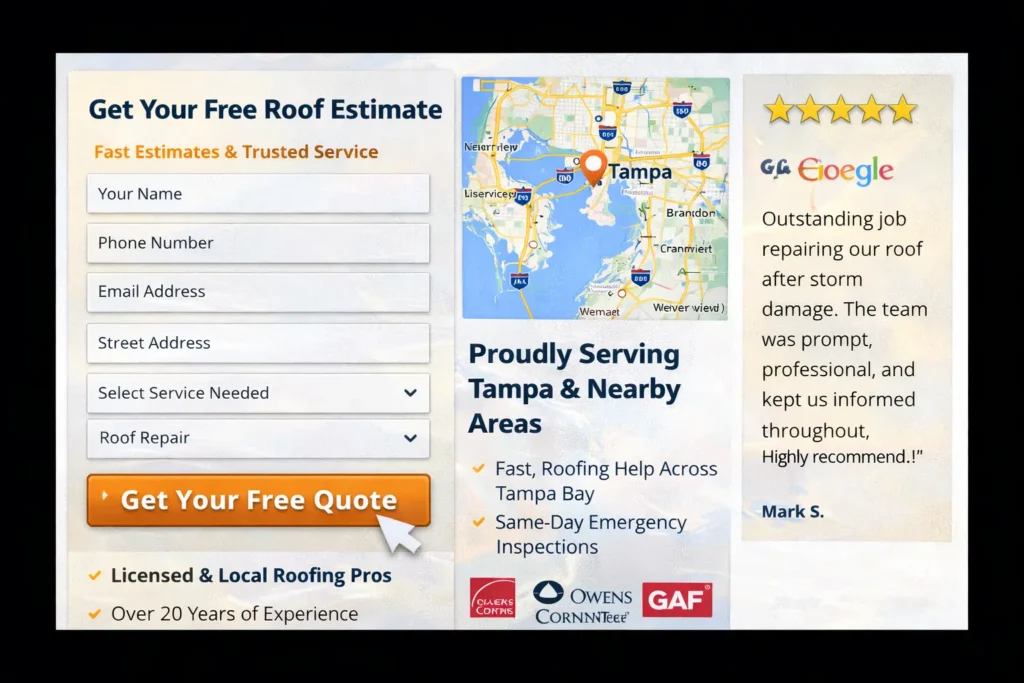
This is also where internal linking helps the article feel more useful instead of salesy. For example, the same conversion principles that improve a contractor site also show up in a gym website that gets leads and a gym membership website. Different industries, same core rule: the visitor needs a clear next step backed by visible trust.
A practical content move is to include short homeowner education throughout the page. Explain how long an inspection takes, what signs point to repair versus replacement, whether financing is available, and what happens after a form is submitted. These details reduce anxiety and make the site more useful before anyone ever calls.
A Better Roofing Company Website Starts With Clarity
The best contractor sites do not win because they say more. They win because they remove doubt faster. When the offer is clear, the proof is believable, the pages match real search intent, and the action step feels easy, more visitors turn into real conversations.
If the goal is stronger rankings and better leads, the site should work like a sales tool, not just an online brochure. That means local relevance, service-specific pages, mobile-friendly contact paths, and trust elements placed exactly where homeowners need them. Build that well, and the site becomes easier to rank, easier to trust, and easier to convert.
Frequently Asked Questions
1. Why does a roofing company need a professional website?
A professional roofing website helps build trust, generate leads, and turn visitors into booked jobs. When homeowners search for a roofer, your website is often the first impression they get of your business. A clean design, clear service pages, strong calls to action, and a mobile-friendly layout can make your company look more credible and make it easier for customers to contact you.
2. What pages should a roofing company website have?
A roofing company website should include the core pages customers expect before they request a quote. At minimum, that usually means a Home page, About page, Services page, Service Area page, Gallery or Past Projects page, Reviews page, and Contact page. Many roofing businesses also benefit from FAQ pages, blog content, and separate pages for services like roof repair, roof replacement, and storm damage roofing.
3. How can a roofing website get more leads?
A roofing website gets more leads when it is built for both SEO and conversions. That means using clear headlines, fast-loading pages, click-to-call buttons, quote forms, trust signals, customer reviews, and location-based content. A website should not just look good. It should guide visitors toward taking action, whether that means calling, filling out a form, or requesting an inspection.
4. What makes a good roofing company website design?
A good roofing website design is clear, fast, mobile-friendly, and focused on customer trust. Homeowners want to quickly see what services you offer, where you work, and why they should choose your company. Strong roofing websites use simple navigation, real project photos, visible contact details, and persuasive calls to action. The best design also supports search engine visibility so more local customers can find your business online.