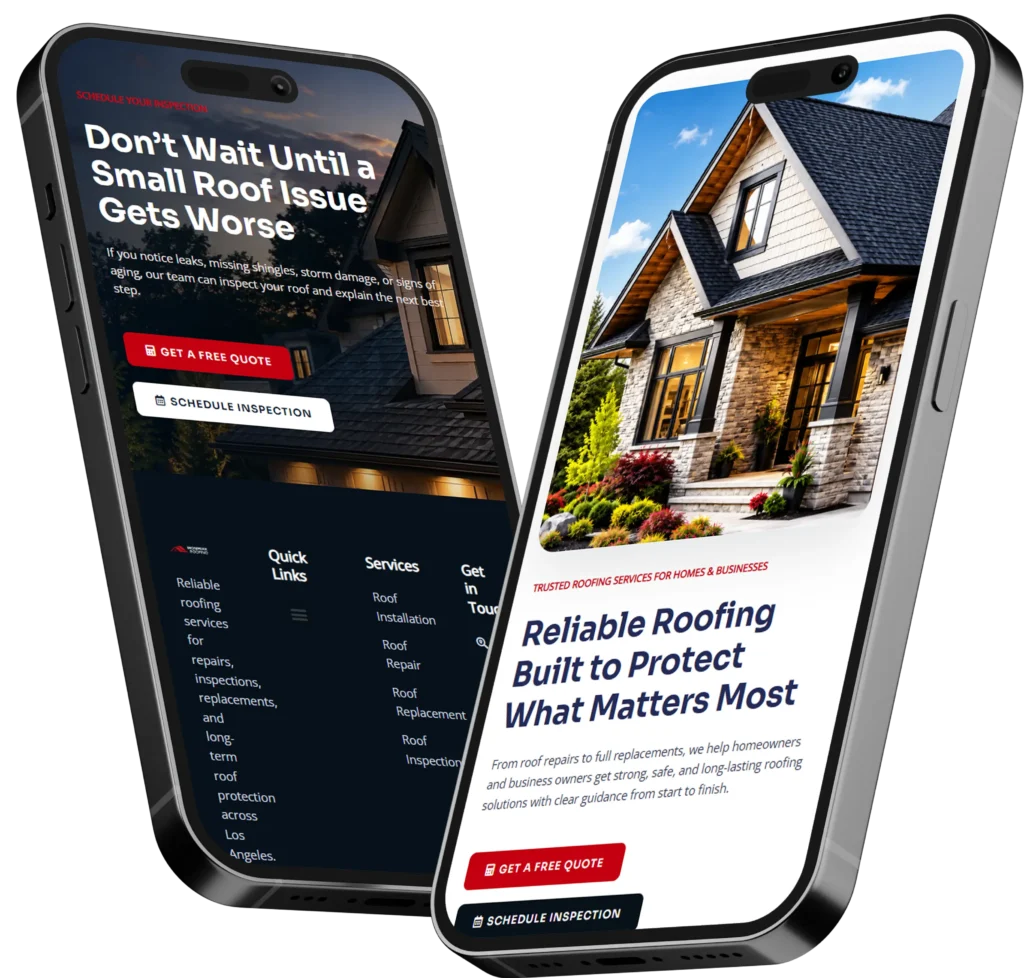
Website design packages help small business owners compare what they get, what it costs, and which level of design support matches their goals. The best option is usually the plan that combines clear messaging, fast pages, SEO basics, trust-building content, and a conversion path for calls, bookings, or quote requests.
A good website should do more than look nice. It should explain what you offer, help visitors trust you quickly, and guide them toward the next step.
In this guide, we’ll break down what is usually included, why package levels matter, how to compare options, and which choice makes the most sense for service businesses, local brands, and growing companies.
What Is Usually Included in a Website Design Plan
A website design plan is a structured service that helps you build, improve, or relaunch your website. Instead of paying for random design tasks one by one, you get a clear scope of work.
Most plans include page design, mobile responsiveness, basic SEO setup, contact forms, calls-to-action, image placement, and launch support. Higher-level plans may include copywriting, landing pages, booking setup, speed improvements, redesign strategy, or ongoing maintenance.
If your site feels outdated, slow, or unclear, it may be worth reviewing website redesign that converts before choosing the lowest-cost option.
Why Small Businesses Need a Clear Website Plan
Small business owners often lose leads because their website does not answer basic questions fast enough. A visitor wants to know what you do, where you serve, how much trust they can place in you, and how to contact you.
When the website structure is unclear, people leave. When the layout is slow, hard to read, or missing strong calls-to-action, fewer visitors become leads.
A clear plan helps prevent this by organizing the project before design begins. It keeps the web designer focused on business goals, not just colors and layouts.
For example, a local contractor may need service pages, a quote form, project photos, and trust signals. A consultant may need a professional homepage, booking link, case studies, and a simple lead magnet. A restaurant may need menu pages, map visibility, and online booking.
The right choice depends on what your website needs to do.
Common Types of Website Design Plans
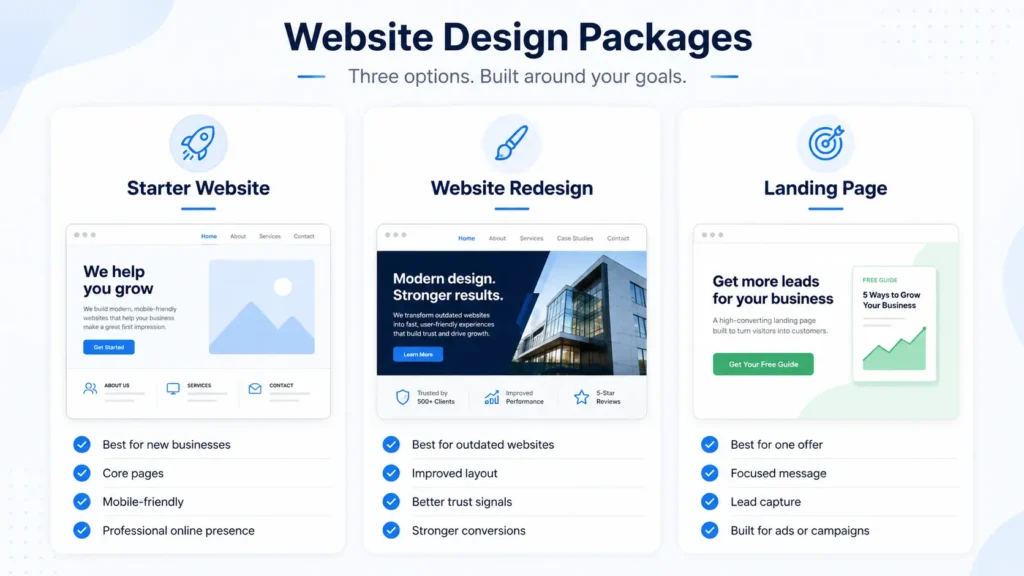
Not every business needs the same level of website support. Some only need a simple starter website, while others need a full redesign with better SEO, landing pages, and conversion planning.
| Plan Type | Best For | What It Usually Includes |
|---|---|---|
| Starter Website | New small businesses | Home, about, contact, basic service page, mobile-friendly layout |
| Business Website | Growing local businesses | Multiple service pages, stronger homepage, lead forms, SEO basics |
| Redesign Plan | Existing sites that look outdated | New layout, better messaging, improved speed, updated trust sections |
| Landing Page Plan | Ads, promotions, or campaigns | One focused page built for calls, bookings, or form submissions |
| Growth Plan | Businesses ready to scale | Website strategy, conversion sections, SEO structure, ongoing improvements |
A starter plan is useful if you need a professional online presence quickly. A business plan is better if you depend on leads from Google, referrals, or local searches. A redesign plan makes sense if your current site is live but not converting well.
Need inspiration before choosing a direction? Review portfolio highlights to see how real design choices can change the way a business is presented online.
How to Choose the Right Option
The best choice is not always the cheapest one. It is the one that matches your business stage, your goals, and your current website problems.
Start by asking what your website must accomplish. Do you need more calls? More bookings? More quote requests? More trust from visitors who are comparing you with competitors?
✅ Choose a starter plan if you are new and only need a clean foundation.
✅ Choose a business plan if you need multiple service pages and stronger lead generation.
✅ Choose a redesign plan if your current website looks unprofessional, loads slowly, or does not match your brand anymore.
✅ Choose a landing page if you are running paid ads or promoting one specific offer.
✅ Choose a growth-focused plan if SEO, conversions, and long-term improvements matter.
A professional designer should explain why each option fits or does not fit your business. That guidance matters because a website is not just a visual project. It is a sales and trust tool.
For more details on what affects project cost, read this small business website design pricing guide.
What Makes a Web Design Plan Worth the Investment
A strong website plan should help your business look credible and make it easy for visitors to take action. That means the design needs to support both trust and conversion.
Here are the most important areas to review before hiring a designer:
| Feature | Why It Matters | What to Look For |
|---|---|---|
| Mobile Design | Most visitors check websites from phones | Easy reading, simple buttons, fast loading |
| Clear Messaging | People decide quickly if you can help | Strong headline, simple service explanation |
| SEO Basics | Helps Google understand the website | Clean headings, page titles, meta descriptions |
| Trust Elements | Builds confidence before contact | Reviews, work samples, guarantees, photos |
| Lead Path | Turns visitors into inquiries | Contact form, booking button, phone number |
| Speed & Usability | Reduces frustration and bounce | Lightweight design, optimized images |
Google’s SEO Starter Guide explains that SEO is about improving a site’s presence in Search through helpful, accessible improvements, not shortcuts.
Why Website Redesign Can Be the Better Choice
Sometimes a new plan is not about building from scratch. It is about fixing what is already holding the business back.
A redesign may be the best choice when your website has outdated visuals, confusing navigation, weak content, slow loading, poor mobile layout, or missing calls-to-action. These problems can make a real business look less trustworthy than it is.
A redesign should not only make the site look fresh. It should improve the visitor journey. This means updating the homepage, improving service pages, adding better proof, cleaning up old sections, and making the next step easier.
For example, a med spa may need clearer treatment pages and booking buttons. A law firm may need stronger trust signals and location-based pages. A home service company may need before-and-after photos, review sections, and emergency contact options.
A helpful redesign starts with strategy. That is why reading professional website redesign tips can help you understand what should change before you invest.
How Landing Pages Fit Into a Website Plan
Landing pages are best when you want visitors to take one specific action. They are often used for paid ads, local promotions, email campaigns, seasonal offers, or service-specific campaigns.
Unlike a full website, a landing page removes distractions. It focuses on one offer, one audience, and one conversion goal.
For example:
✅ A roofing company can use a storm damage inspection page.
✅ A dentist can use a teeth whitening promotion page.
✅ A consultant can use a booking page for discovery calls.
✅ A local gym can use a trial membership page.
The main benefit is focus. A visitor does not need to search through the whole website. The page answers the key question, builds trust, and points them to the action.
If your business runs ads but sends people to a generic homepage, you may be losing leads. A focused landing page can make the offer easier to understand and the next step easier to complete.
SEO Features to Ask For
A beautiful website can still struggle if it is not built with SEO basics. Search engines need clear structure, helpful content, page titles, headings, internal links, image optimization, and fast loading pages.
You do not need every advanced SEO service on day one, but your website should have a strong foundation.
Ask your designer if the project includes optimized page titles, meta descriptions, clean URL structure, heading hierarchy, alt text for images, fast mobile pages, and Google-friendly navigation.
Accessibility is also part of a better user experience. The W3C explains that WCAG guidelines are organized around making web content perceivable, operable, understandable, and robust, which helps more users access and navigate a site.
A website that is easier to use is often easier to trust. It also gives visitors fewer reasons to leave before contacting you.
For businesses that want strategy and build support in one place, website design & development services can help connect design, usability, and conversion goals.
Trust Signals That Should Be Included
Trust is one of the biggest reasons people contact a business online. Visitors may not know you yet, so your website needs to prove that you are real, capable, and reliable.
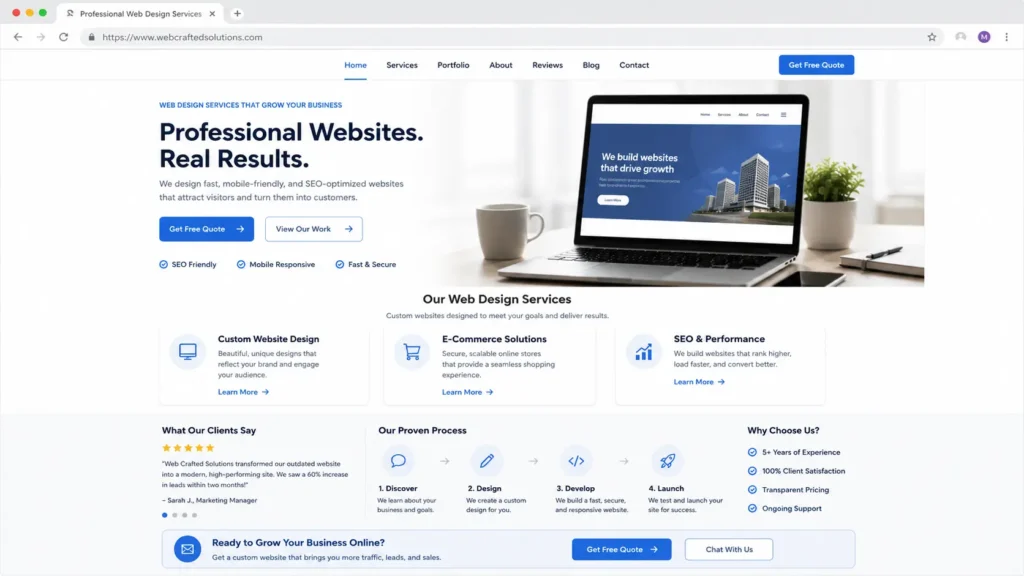
Good trust signals include customer reviews, project photos, certifications, guarantees, team photos, service area details, before-and-after examples, and clear contact information.
Your website should answer silent objections before the visitor asks them. Are you experienced? Do you serve my area? Can I see your work? Is it easy to contact you? Do other people trust you?
This is where many low-cost websites fall short. They may look clean, but they do not include enough proof. A stronger design plan should include space for reviews, project examples, and clear reasons to choose your business.
You can also explore conversion-focused web design if your main goal is to turn more visitors into leads.
What to Prepare Before Hiring a Web Designer
Before starting a project, gather the details that will help your designer build faster and better.
You should prepare your main services, service areas, brand colors, logo files, photos, testimonials, competitor examples, preferred websites, and your main goal for the site.
Also write down what is not working with your current website. Maybe people do not call. Maybe the site does not explain your services. Maybe it looks old compared with competitors. Maybe your pages are too slow.
A good designer can help organize everything, but your input makes the final website more accurate.
Here is a practical tip: list your top three customer questions. Then make sure the website answers those questions near the top of important pages. This helps both visitors and search engines understand your offer faster.
Pricing Factors That Affect the Final Quote
Website pricing can vary because not every project requires the same work. A five-page brochure website is different from a full redesign with copywriting, SEO setup, booking tools, landing pages, and ongoing care.
Common pricing factors include number of pages, custom design level, copywriting needs, integrations, booking systems, ecommerce features, SEO depth, image sourcing, speed optimization, and maintenance.
A lower price may work for a simple project, but it may not include strategy, content help, or conversion planning. A higher price may be worth it if your website directly supports leads and revenue.
The key is to compare deliverables, not just the number on the proposal.
Ask these questions before you decide:
✅ What pages are included?
✅ Is mobile design included?
✅ Is copywriting included or separate?
✅ Are SEO basics included?
✅ Will you help with launch?
✅ Is there post-launch support?
✅ How will the website help generate leads?
A professional answer should feel clear, not vague.
Red Flags When Comparing Web Designers
Be careful with offers that sound too cheap, too fast, or too unclear. A website can look finished but still miss important business details.
Watch for vague scopes, no mobile examples, no mention of SEO basics, no revision process, no launch support, no clear timeline, and no explanation of how the design will help conversions.
Another red flag is a designer who focuses only on appearance. Design matters, but small businesses also need structure, content, trust, and calls-to-action.
You should also avoid plans that do not explain ownership. Make sure you know who owns the website, domain, content, and design files after launch.
Working with small business web design experts can help you avoid these issues because the conversation should focus on business outcomes, not just style.
Final Takeaway: Choosing Website Design Packages That Bring Better Leads
Choosing a website plan is about finding the right match between your budget, your business goals, and the actions you want visitors to take. A simple site may be enough for a new business, but a growing company may need a stronger structure with service pages, SEO basics, trust sections, and conversion-focused design.
The best option is the one that helps your audience understand you quickly, trust you faster, and contact you with less friction.
If your current site does not support calls, bookings, or quote requests, it may be time to work with a professional. Learn more about hiring a professional web designer for business before choosing your next step.
Frequently Asked Questions
1. How much should a small business pay for web design?
A small business should pay based on the website’s role in generating leads, not only on the number of pages. A simple starter site usually costs less because it has fewer pages and fewer custom features. A redesign, SEO-ready service site, or booking-focused website usually costs more because it requires strategy, content structure, mobile design, trust sections, and conversion planning. The best choice is the plan that supports your business goals and gives visitors a clear path to call, book, or request a quote.
2. What should be included in a professional web design plan?
A professional web design plan should include strategy, mobile-friendly design, clear page structure, SEO basics, and lead-focused calls-to-action. For small businesses, this often means a homepage, service pages, about page, contact page, trust sections, review placement, optimized images, and simple navigation. It should also include launch support so the site goes live correctly. If your business relies on calls or bookings, ask whether forms, booking buttons, phone links, and conversion sections are part of the scope.
3. Is a website redesign better than building a new site?
A website redesign is usually better when you already have a site, but it looks outdated or does not convert visitors. Redesigning allows you to keep what works while improving layout, speed, content, trust signals, and calls-to-action. A brand-new build may be better if the old site has poor structure, broken pages, or no useful content. The right choice depends on whether your current website can be improved or needs a complete rebuild to support leads, trust, and SEO.
4. How do I know if I need to hire a professional web designer?
You should hire a professional web designer if your website affects how people judge, contact, or book your business. Signs you need help include low inquiries, outdated design, confusing service pages, weak mobile experience, slow loading, poor search visibility, or a lack of trust-building content. A professional can help turn your website into a clearer sales tool by improving design, messaging, navigation, and conversion paths so visitors know what to do next.