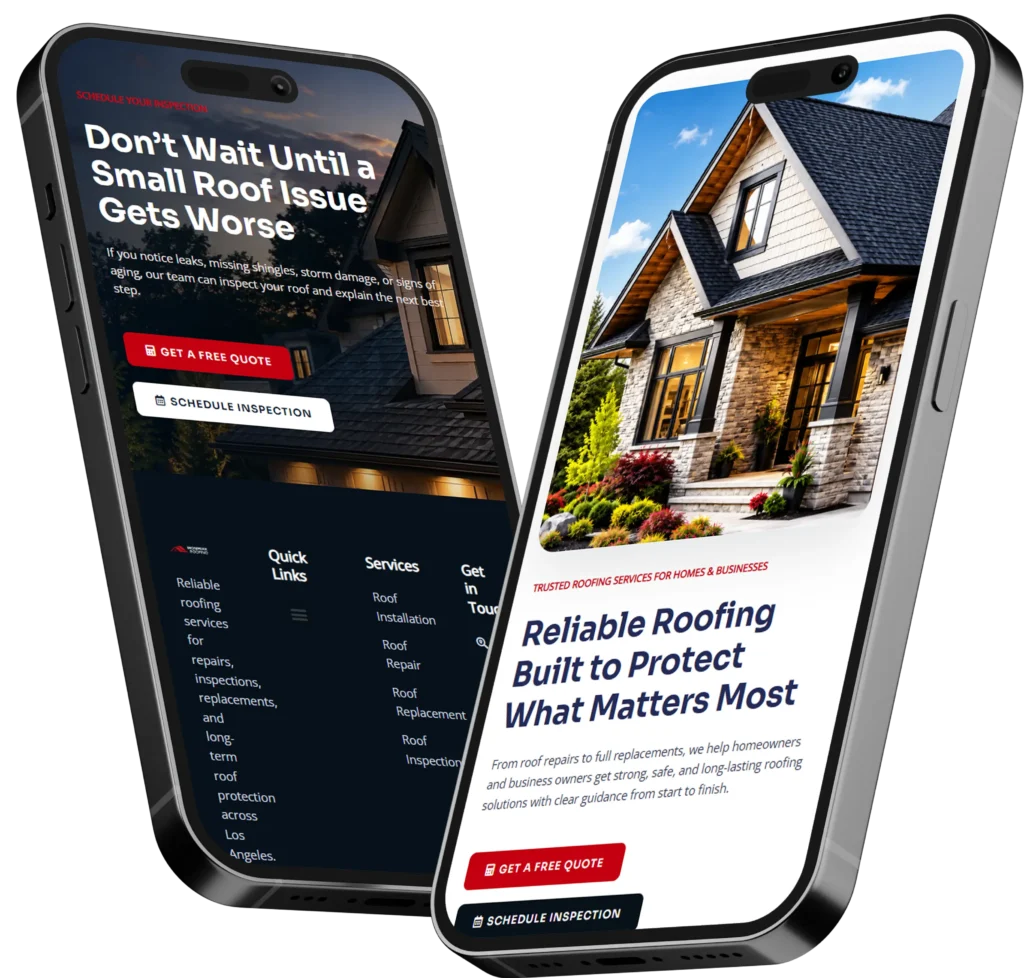
Looking for website design services near me means you want a nearby expert who can plan, design, and build a website that brings in leads. The best option for most small businesses is a local designer or boutique studio that offers strategy, mobile design, SEO basics, speed work, and clear pricing in one package.
A good website should not only look modern. It should answer customer questions, load quickly, guide visitors to contact you, and make your business feel trustworthy within seconds.
If you want help from a local team, start with growth-driven web design and compare your goals before choosing a package.
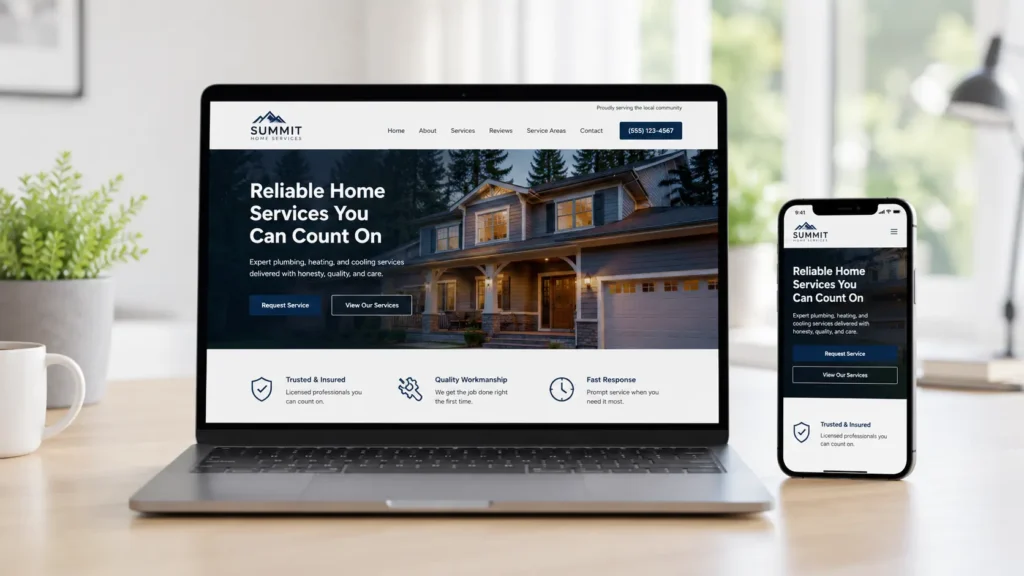
What Local Website Design Services Usually Include
Local website design is more than choosing colors and fonts. A strong designer studies your business, your audience, your competitors, and the action you want visitors to take.
For example, a plumber may need emergency call buttons, service-area pages, and trust badges. A salon may need online booking, gallery photos, and reviews. A consultant may need service pages, case studies, and a clear contact form.
Basic Definition and Purpose
A website design service helps you plan the structure, layout, content flow, visuals, and user experience of your site. Some designers only create the look, while others also handle development, SEO setup, speed improvements, copy guidance, and maintenance.
The purpose is simple: make your website easier to use and more likely to turn visitors into calls, bookings, quote requests, or purchases.
What Should Be Included
| Service Area | Why It Matters | What to Ask Before Hiring |
|---|---|---|
| ✅ Website strategy | Helps every page support a business goal | “Will you plan the site structure before designing?” |
| ✅ Mobile responsive design | Most visitors check businesses on phones first | “Will every page be tested on mobile?” |
| ✅ SEO basics | Helps search engines understand your pages | “Do you optimize titles, headings, and URLs?” |
| ✅ Speed optimization | Slow websites lose visitors fast | “Will you compress images and improve load time?” |
| ✅ Conversion layout | Guides users toward calls or forms | “Where will calls to action appear?” |
| ✅ Launch support | Prevents broken pages after publishing | “Do you test forms, links, and tracking?” |
For a clear starting point, review website design & development services before deciding what level of help you need.
How Much Does Website Design Cost
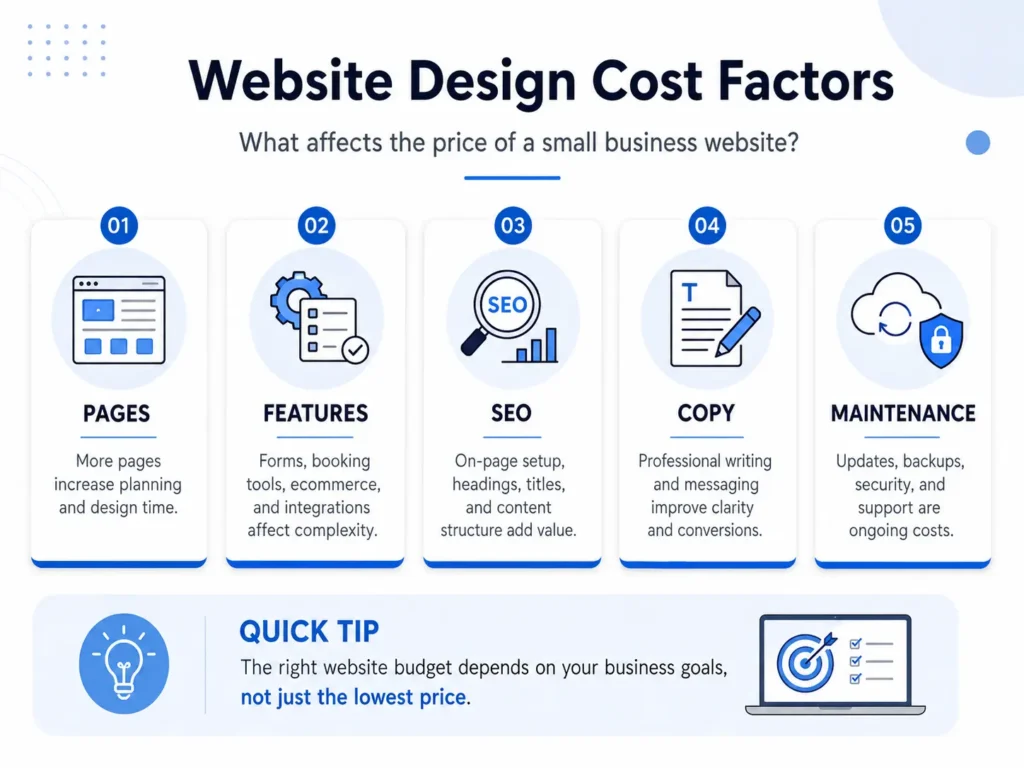
Website design pricing depends on page count, features, content, branding, custom design, SEO work, and whether you hire a freelancer, agency, or local studio.
Clutch’s 2026 pricing guide reports that web design agencies often charge $2,000 to $100,000 depending on project size, complexity, and features. It also notes that many web design companies charge around $100 to $149 per hour. You can compare broader market pricing through this web design pricing benchmark.
For most small businesses, the practical range is usually lower than enterprise pricing. A simple brochure site may cost less than a custom lead-generation website with SEO, copywriting, booking tools, and integrations.
| Website Type | Typical Best Fit | Common Cost Range |
|---|---|---|
| Starter website | New business, simple online presence | $1,000 to $3,500 |
| Small business website | Service business that needs leads | $3,500 to $8,000 |
| Custom conversion website | Established business with stronger goals | $8,000 to $20,000+ |
| Ecommerce website | Product catalog, checkout, payments | $5,000 to $30,000+ |
| Ongoing care plan | Updates, security, speed, support | $100 to $500+ per month |
The best choice is not always the cheapest one. A low-cost website can become expensive if it has weak structure, slow pages, poor mobile design, or confusing calls to action.
For a deeper cost breakdown, read small business website design pricing.
Which Website Design Option Is Best
There are three common options: DIY builder, freelancer, or local website design studio. Each can work, but the best choice depends on your goal.
A DIY website is fine if you are just testing an idea, have a small budget, and do not need much customization. The downside is that you must handle layout, copy, SEO, image sizing, mobile checks, and troubleshooting yourself.
A freelancer can be a good fit when you need a smaller website and have a clear brief. This works best if the freelancer has both design and development skills, or if you already have content and brand direction.
A local studio is usually the best option for service businesses that need strategy, SEO structure, conversion design, launch support, and long-term help. You get a more complete process and fewer gaps between design, content, performance, and maintenance.
If your website is old but still has useful content, a redesign may be smarter than starting over. Check this professional website redesign guide if your current site looks outdated or does not convert well.
How to Choose a Local Web Designer
Start by looking at actual work, not promises. A designer’s portfolio should show clean layouts, mobile-friendly pages, clear calls to action, and websites that match different industries.
You can review portfolio highlights to see whether the design style fits your business.
Next, ask how the designer handles planning. A good website project should begin with questions like:
✅ Who is the main customer?
✅ What action should visitors take?
✅ Which services make the most profit?
✅ What pages are needed for SEO and trust?
✅ What makes your business different from competitors?
Do not choose based on visuals alone. A beautiful website that hides your phone number, loads slowly, or makes services hard to understand will not help much.
A strong local designer should explain why each page exists, how users will move through the site, and which design option supports your business goal. For example, a local contractor may need a homepage, service pages, project gallery, reviews, and quote form. A restaurant may need menu access, location details, photos, reservations, and mobile tap-to-call buttons.
Why Website Design Affects SEO and Leads
Website design affects how users and search engines understand your business. Google explains that SEO helps search engines understand your content and helps users decide whether to visit your site through search results. You can review the official Google SEO Starter Guide for more context.
That means your website should be built with clear page titles, helpful headings, descriptive content, clean URLs, internal links, and fast performance.
Good design also builds trust. Visitors often judge your business before reading every word. If the layout feels outdated, crowded, or hard to use, they may leave and choose a competitor.
The best website design connects three things:
Your business offer, what your customer needs, and the next step they should take.
That is why service pages matter. Your homepage introduces the business, but your service pages answer specific buying questions. If someone needs a remodeler, dentist, landscaper, or consultant, they want to know what you do, where you work, what it costs, and how to get started.
For package comparison, visit website design package options.
What a Good Website Design Package Should Have
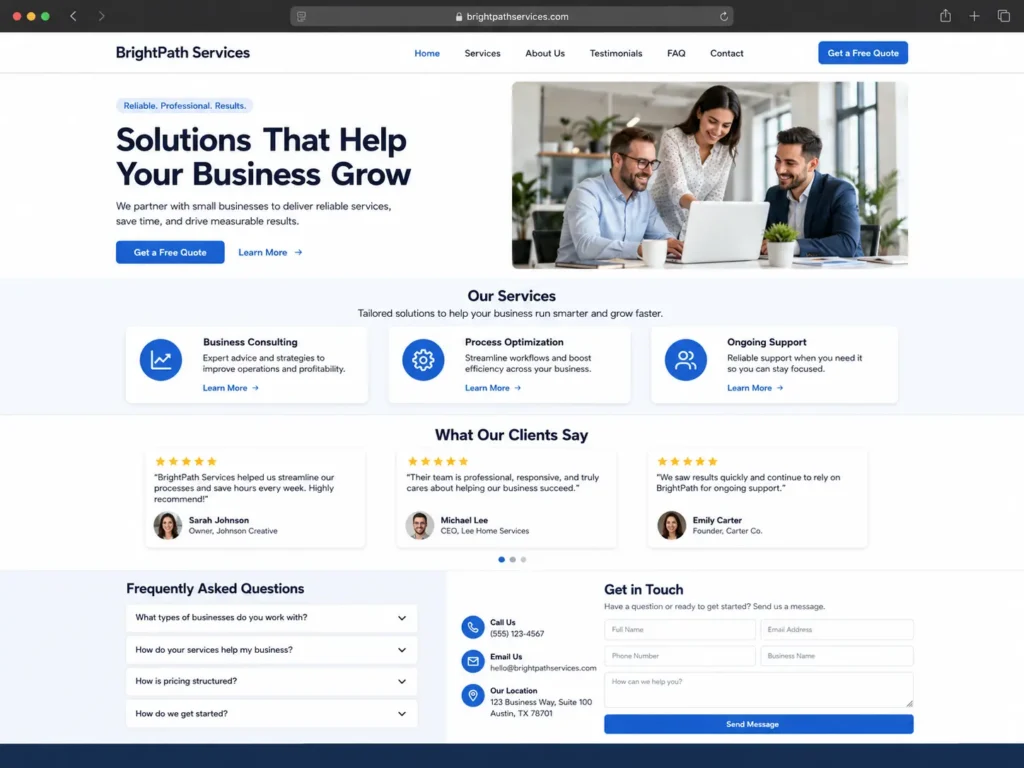
A good package should include planning, design, build, testing, and post-launch support. If a designer skips planning, your website may look nice but fail to answer the right questions.
At minimum, your package should include a homepage, core service pages, contact page, mobile responsive design, basic on-page SEO, form testing, image optimization, and launch support.
For businesses that depend on search traffic, ask about location pages, blog structure, schema markup, internal linking, and content updates. These details help your website become more useful over time.
Also ask who writes the copy. Some designers expect you to provide all text. Others help organize or write conversion-focused content. This matters because weak copy can make even a great design underperform.
A practical tip: before hiring, write down your top three services, your top three customer questions, and your top three trust builders. These might include reviews, years in business, certifications, guarantees, or project photos. Give that list to your designer before the first layout is created.
What Is the 3 Second Rule in Website Design
The 3 second rule means visitors should understand who you are, what you offer, and what to do next almost immediately. It is not a strict law, but it is a useful design test.
When someone lands on your homepage, they should not have to guess. Your first screen should clearly show your business type, location or service area, main benefit, and call to action.
For example, “Custom websites for local service businesses” is clearer than “We build digital experiences.” A button that says “Request a Free Website Audit” is clearer than “Learn More” if your goal is lead generation.
Here is a simple test. Open your homepage on a phone, cover the lower part of the screen, and look only at the first visible section. Can a new visitor understand your offer without scrolling? If not, your hero section needs work.
Good 3 second design usually includes:
✅ A clear headline
✅ A short supporting sentence
✅ One main button
✅ A trust signal
✅ Fast loading visuals
✅ Simple navigation
This is also where get a free website audit can help, especially if your current site gets traffic but few leads.
Common Mistakes to Avoid
One common mistake is building around what the business owner likes instead of what the customer needs. Your favorite color or layout may not be the best choice if it makes the website harder to read or use.
Another mistake is treating the homepage as the whole website. A strong site needs supporting pages that answer service-specific questions. This helps users and search engines understand your expertise.
Avoid using too many animations, oversized images, vague headlines, hidden contact information, and long forms. Every design choice should make the visitor’s decision easier.
Also, do not ignore maintenance. Websites need updates, backups, security checks, speed reviews, and content refreshes. A neglected website can become slow, outdated, or vulnerable over time.
Final Takeaway: Choosing a Local Website Designer
Choosing the right local web designer comes down to fit, process, and results. Look for someone who can explain the why behind the design, how the site will support your goals, and which option makes sense for your budget.
If you are a small business that needs more calls, bookings, or quote requests, choose a team that understands strategy, SEO, mobile usability, and conversion-focused layouts.
A website is not just a digital brochure. It is often the first sales conversation your customer has with your business. Make sure it is clear, fast, trustworthy, and built to guide people toward action.
Frequently Asked Questions
1. How much does it cost to have your website designed?
The cost to have your website designed usually depends on the size, features, and level of customization needed. A simple small business website may cost a few thousand dollars, while a custom website with SEO, copywriting, booking tools, ecommerce, or advanced integrations can cost much more. The best way to budget is to list the pages you need, the features you want, and whether you also need content, branding, or ongoing support.
2. How much do website designers usually charge?
Website designers usually charge by the hour, by the page, or by the full project. Freelancers may charge lower rates, while agencies and local studios often charge more because they include strategy, design, development, testing, and support. Hourly rates can vary widely depending on experience and location. For most small businesses, a fixed project price is easier to manage because you know the scope, timeline, and deliverables before work begins.
3. How much does it cost to get someone to build me a website?
The cost to get someone to build your website depends on whether you need a basic site, a lead-generation site, or a full custom build. A basic site may be enough for a new business that only needs a simple online presence. A growing business usually needs stronger service pages, SEO setup, faster performance, forms, analytics, and conversion-focused design. Paying more can make sense when the website is expected to bring regular leads.
4. What is the 3 second rule in website design?
The 3 second rule in website design means visitors should quickly understand your offer, trust your business, and know what to do next. In the first few seconds, your headline, layout, images, navigation, and call to action need to work together. If users feel confused, they may leave before reading your services. A strong homepage makes the message obvious right away and gives visitors a simple next step, such as calling, booking, or requesting a quote.