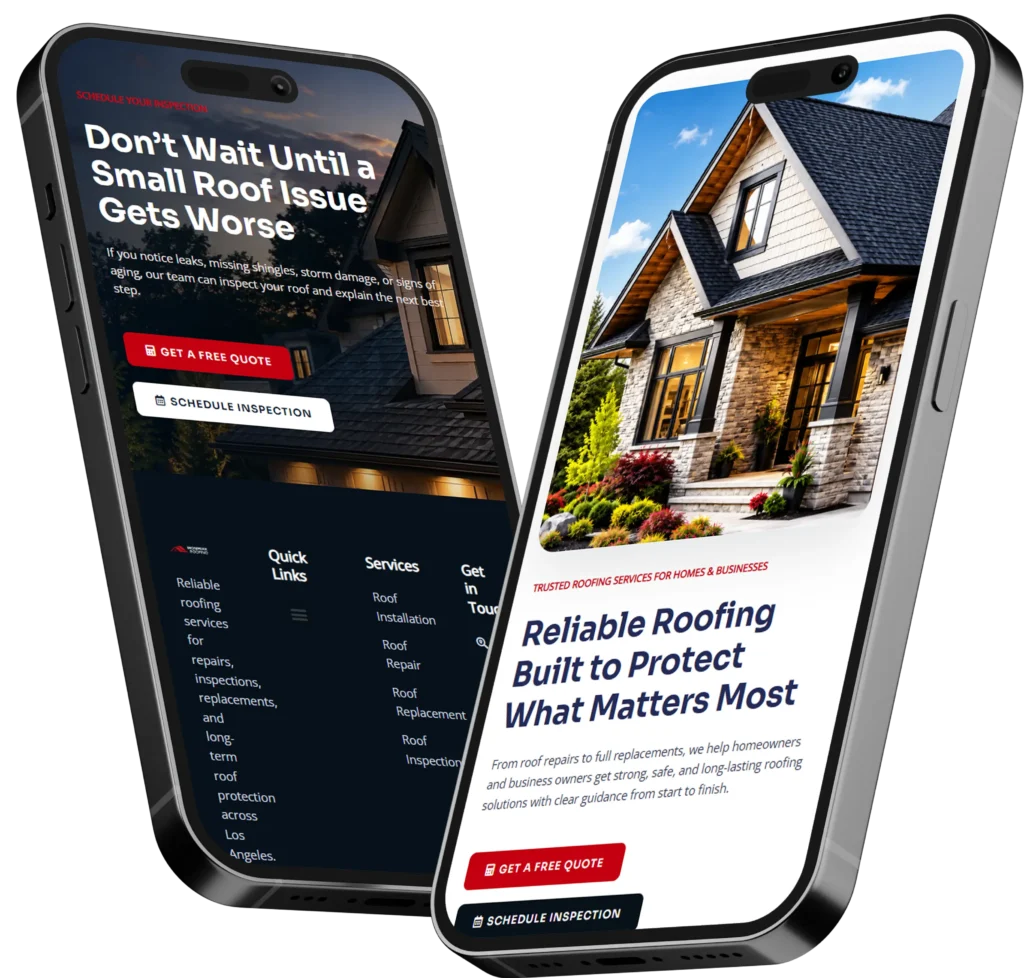
The best small business website content ideas are pages and sections that answer customer questions, prove trust, and make it easy to call, book, or request a quote. A strong small business website should explain what you do, who you help, why people should trust you, and what step they should take next.
For most small business owners, the problem is not always the design. It is the missing message. A site can look clean but still fail if visitors cannot quickly understand your services, prices, process, reviews, location, or next step.
In this guide, you’ll learn which content ideas matter most, why they help with SEO and conversions, and how to use them on your homepage, service pages, landing pages, and blog.
Need help turning your content into a site that actually brings leads? Work with small business web design experts who understand strategy, structure, and conversion.
Why Website Content Matters for Small Businesses
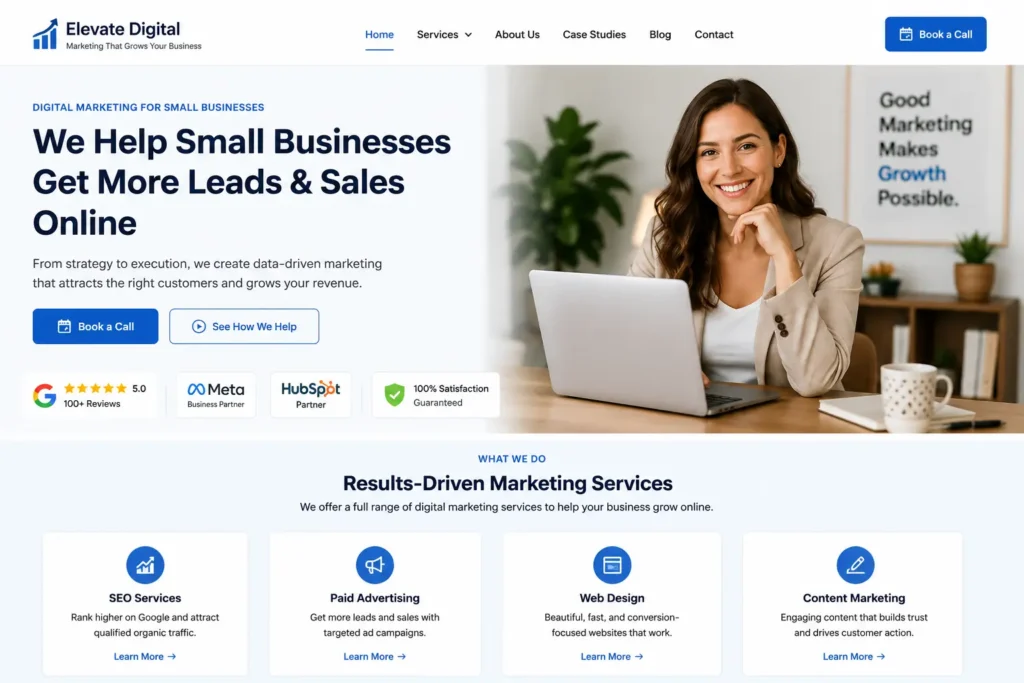
Your website content does three important jobs at once. It helps Google understand your business, helps visitors trust you, and helps potential customers decide whether to contact you.
A small business website is often the first serious impression someone gets before they call, book, or buy. If your site only says “welcome” and lists a few services, visitors may leave because they still have unanswered questions.
Good website content answers things like:
✅ What do you offer?
✅ Who is it for?
✅ What problem do you solve?
✅ Why should someone choose you?
✅ What happens after they contact you?
Google’s own SEO guidance explains that search-friendly content helps search engines understand your pages and helps users decide whether to visit your site. You can read more in the Google SEO Starter Guide.
That is why content should not be treated as filler. It is part of your sales process.
What Content Should a Small Business Website Have?
A small business website should have content that guides a visitor from curiosity to confidence. The most useful pages are usually the homepage, service pages, about page, portfolio or proof page, contact page, and helpful blog content.
The best option depends on your goal. If you need more calls, your content should focus on trust, location, services, and contact buttons. If you need more booked consultations, your content should explain your process and show proof. If you need more SEO traffic, your content should answer specific questions customers search before they hire.
| Website Content Idea | Why It Works | Best Placement |
|---|---|---|
| Clear homepage headline | Tells visitors what you do in seconds | Top of homepage |
| Service overview | Helps users choose the right offer | Homepage and services page |
| Detailed service pages | Improves SEO and explains value | Individual service pages |
| Portfolio or sample work | Builds visual trust | Portfolio page |
| Testimonials | Reduces doubt | Homepage, service pages, landing pages |
| FAQ section | Answers objections before contact | Service pages and landing pages |
| Process section | Shows what happens after inquiry | Homepage and service pages |
| Strong call to action | Turns interest into action | Throughout the site |
A strong site does not need hundreds of pages. It needs the right pages with useful, clear, and conversion-focused content.
If your current site looks outdated or does not explain your services clearly, review these website design & development services to see how strategy and design can work together.
Homepage Content Ideas That Make Visitors Stay
Your homepage should not try to say everything. It should quickly tell visitors they are in the right place and guide them to the next page or action.
Start with a direct headline. Instead of “Welcome to Our Website,” use a headline that explains the result you provide. For example, a local cleaning company could say, “Reliable House Cleaning for Busy Families in Austin.” A photographer could say, “Brand Photography That Helps Small Businesses Look Professional Online.”
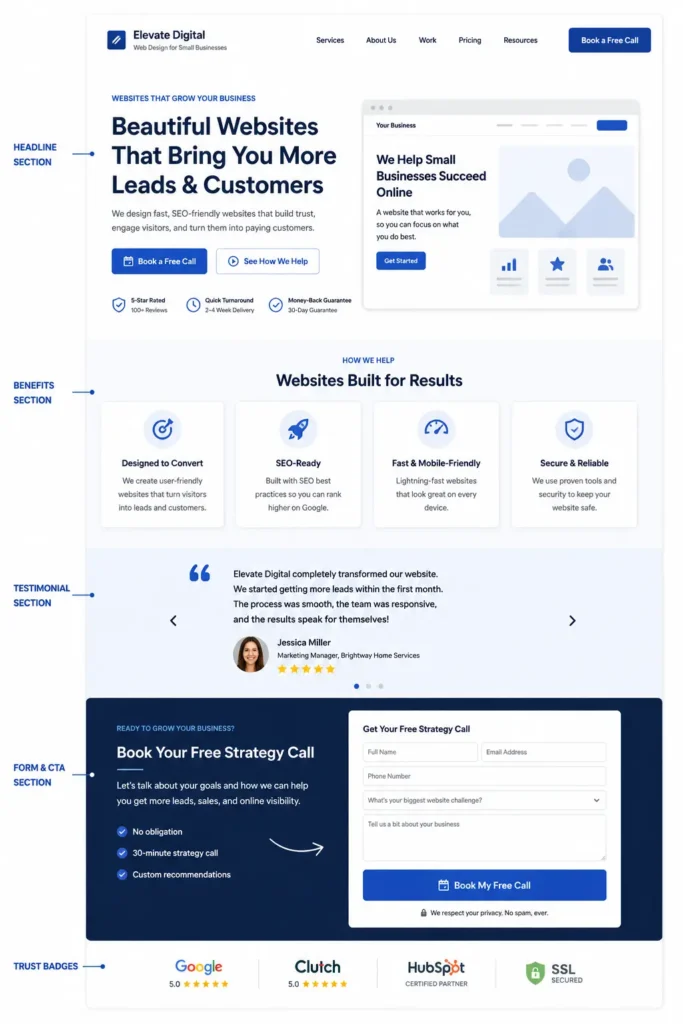
Your homepage should include:
✅ A clear headline
✅ A short paragraph explaining your value
✅ Main services
✅ Reviews or trust signals
✅ A simple process
✅ A call button or booking button
✅ Links to service pages
This is where many small businesses lose leads. They talk too much about themselves before explaining what the customer gets. A better homepage leads with the customer’s problem and shows how your service solves it.
For example, a web designer homepage might say:
“We design websites for service-based businesses that need more calls, bookings, and trust online.”
That sentence is clear because it says who it helps, what it provides, and what result matters.
Need examples for stronger first-screen messaging? Read this guide on website headline examples for small business.
Service Page Content Ideas That Turn Visitors Into Leads
Your service pages are often more important than your homepage. When someone searches for a specific service, they want details before they contact you.
A good service page should explain what the service includes, who it is for, why it matters, and what action the visitor should take. If you only list the service name and a short sentence, you are not giving people enough reason to choose you.
A strong service page can include:
✅ Service description
✅ Problems the service solves
✅ What is included
✅ Who the service is best for
✅ Before and after examples
✅ Pricing guidance or starting price
✅ FAQs
✅ Testimonials
✅ Contact or booking section
The best option for most small businesses is to create one strong page for each main service. This helps search engines understand your offer and helps customers find the exact thing they need.
For example, instead of one page that lists “web design, SEO, branding, landing pages,” create separate pages for website design, website redesign, landing page design, and SEO support. Each page can answer a different search intent.
If you need help writing pages that explain your offers clearly, this guide on service page copy for small business is a good next read.
Landing Page Content Ideas for Calls, Bookings, and Quotes
A landing page is different from a regular website page. It is built around one goal. That goal might be booking a consultation, requesting a quote, downloading a guide, or calling your business.
Landing pages work best when they remove distractions and focus on one action.
For a small business landing page, include:
✅ A benefit-driven headline
✅ One clear offer
✅ A short explanation of who it is for
✅ Proof, such as reviews or results
✅ A simple form
✅ A strong call to action
✅ A short FAQ section
The U.S. Small Business Administration explains that a call to action encourages a visitor to take a specific step, such as calling, subscribing, or learning more. That makes CTAs important for any small business website that needs leads. Read the SBA guide on calls to action.
A strong landing page does not need to be long. It needs to be focused. If the page is for a website redesign consultation, every section should support that action. Do not send people to five different places. Guide them to one decision.
Want to see how layout and proof can support conversion? Browse the project gallery.
Trust-Building Content Ideas for Small Business Websites
Trust is one of the biggest reasons visitors choose one small business over another. People want proof before they spend money, share their contact details, or book a call.
Trust-building content can be simple, but it must feel real.
Add content such as customer reviews, before and after examples, certifications, team photos, business location, guarantees, case studies, and clear contact details. Even small details can make your business feel more legitimate.
For example, a contractor can show completed projects by city. A salon can show real client photos. A consultant can show client outcomes. A web designer can show screenshots of finished websites, explain the client problem, and describe what improved after the redesign.
| Trust Content | Best For | Practical Tip |
|---|---|---|
| Testimonials | Service businesses | Add the customer’s first name, location, or business type when allowed |
| Portfolio | Designers, builders, creatives | Show the problem, solution, and final result |
| Team photo | Local service providers | Use real photos instead of stock images |
| Process section | Higher-ticket services | Explain what happens after someone inquires |
| Guarantees | Repair, maintenance, service work | Keep claims realistic and specific |
| FAQ answers | Businesses with common objections | Answer pricing, timeline, and trust questions clearly |
The best trust content is specific. “Great service” is helpful, but “They redesigned our website and made it easier for customers to book consultations” is stronger because it explains the result.
Blog Content Ideas That Support SEO
Blogs can help small businesses rank for questions customers ask before they are ready to buy. This is useful because not every visitor searches “hire a web designer near me” right away. Some search questions first.
For example, a business owner may search:
✅ “Why is my website not getting leads?”
✅ “How often should I redesign my website?”
✅ “What should I put on my homepage?”
✅ “Do I need a landing page for ads?”
✅ “How much content should a service page have?”
Each question can become a helpful blog post. The goal is not to write random articles. The goal is to answer questions that connect naturally to your services.
A web designer could write blogs about homepage copy, service page structure, local SEO basics, website redesign signs, landing page mistakes, and trust-building website sections. These topics attract business owners who may later need professional help.
The best blog content should include examples, practical steps, and internal links to relevant services. For example, a blog about redesign mistakes can link to a website redesign service. A blog about unclear messaging can link to website messaging for small business.
Local SEO Content Ideas for Small Businesses
Local businesses need content that connects their services to the areas they serve. This does not mean stuffing city names everywhere. It means creating useful location-aware content.
A local service business can mention service areas, nearby neighborhoods, local project examples, and common problems in the area. A plumber might discuss older homes in a certain city. A wedding photographer might discuss popular venues. A web designer might mention helping local businesses compete with larger brands online.
Good local SEO content can include:
✅ Service area page
✅ City-specific service examples
✅ Local testimonials
✅ Google Business Profile link
✅ Directions or parking details
✅ Local project photos
✅ Nearby service coverage
The best option is to add local relevance naturally to important pages. Do not create thin city pages that say almost the same thing. Each location page should have unique details, examples, and helpful information.
Website Redesign Content Ideas
If your website already exists but is not bringing leads, the issue may be outdated content, unclear messaging, weak calls to action, slow loading, or poor mobile layout.
A website redesign is a good time to improve both design and content. Do not only change colors and fonts. Rewrite the pages so they better explain your offer and guide people toward action.
Useful redesign content includes:
✅ A stronger homepage headline
✅ Updated service descriptions
✅ New testimonials
✅ Better project examples
✅ Clearer contact sections
✅ More helpful FAQs
✅ Stronger calls to action
✅ Fresh photos or brand visuals
Which option is best? If your site gets traffic but few inquiries, start with messaging and conversion sections. If your site gets almost no traffic, improve SEO structure and service pages. If your site looks untrustworthy, update visuals, proof, and layout.
A good redesign should make the website easier to understand, easier to trust, and easier to use.
Practical Tips for Writing Better Website Content
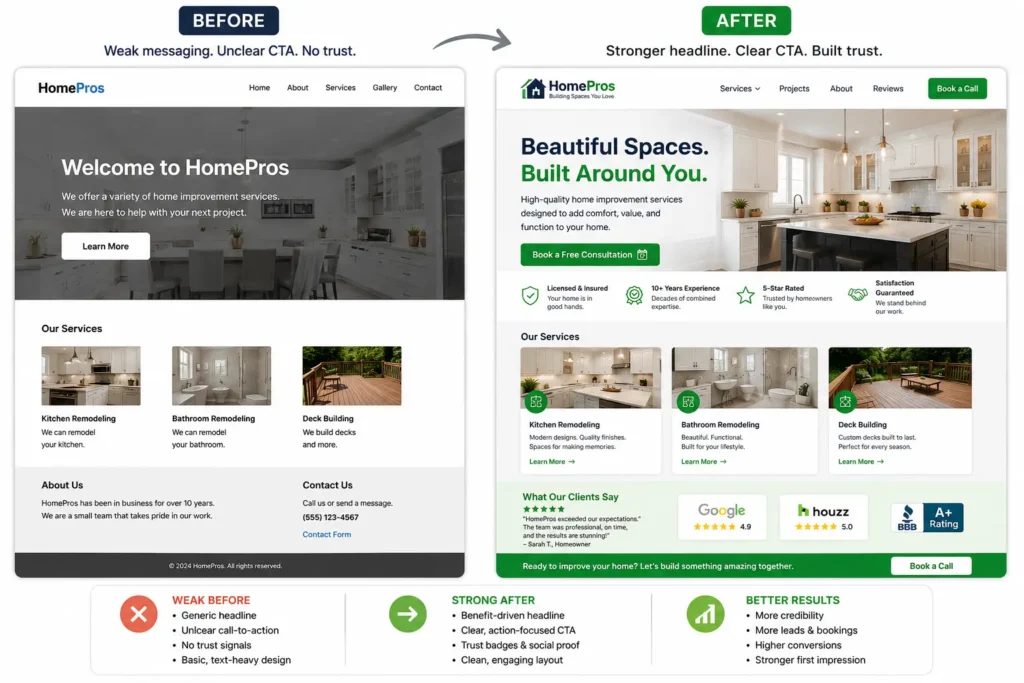
Small business website content should sound clear, helpful, and human. Avoid vague phrases like “we provide quality solutions” or “we are passionate about excellence.” Those lines do not tell visitors what they actually get.
Write like you are answering a customer who is about to call.
Instead of:
“We offer professional solutions for businesses of all sizes.”
Try:
“We build clean, mobile-friendly websites for small businesses that need more calls, quote requests, and booked appointments.”
That version is better because it is specific. It explains the service, audience, and outcome.
Here are simple ways to improve your content:
✅ Use short paragraphs
✅ Put the main benefit near the top
✅ Add real examples
✅ Explain your process
✅ Answer common objections
✅ Use buttons with clear actions
✅ Link to related pages naturally
The best website content does not try to sound fancy. It tries to be useful.
Which Website Content Should You Create First?
The best place to start depends on what your business needs right now.
If you need more trust, start with testimonials, portfolio examples, team photos, and FAQs. If you need more search traffic, start with service pages and helpful blogs. If you need more paid ad results, start with landing pages. If you need better conversions, improve your homepage headline, calls to action, and contact sections.
For most small businesses, the best order is:
- Homepage
- Main service pages
- Contact page
- Portfolio or proof page
- FAQs
- Blog content
- Landing pages
This order works because your core pages should be strong before you add more content. Sending visitors to a weak website from blogs, ads, or social media usually wastes traffic.
Common Website Content Mistakes to Avoid
Many small business websites fail because they make the visitor work too hard. The content may be too vague, too short, too focused on the business owner, or missing a clear next step.
Avoid these common mistakes:
✅ Using unclear headlines
✅ Hiding contact details
✅ Listing services without explaining them
✅ Forgetting reviews or proof
✅ Using stock photos only
✅ Writing for Google but not people
✅ Having too many buttons with different actions
✅ Not explaining pricing, timeline, or process
One of the biggest mistakes is assuming visitors already understand your value. They do not. Your website needs to explain why your service is worth choosing.
A clear website makes people feel confident. A confusing website makes them compare you with someone else.
Final Thoughts on Small Business Website Content Ideas
The strongest Small Business Website Content Ideas are the ones that help visitors understand, trust, and contact your business faster. Your website should not only look good. It should answer real questions, show proof, explain your services, and guide people toward calls, bookings, or quote requests.
Start with your homepage and service pages first. Then add trust sections, FAQs, landing pages, and blog content that supports your SEO. When each page has a clear purpose, your website becomes more than an online brochure. It becomes a lead-building tool for your business.

Frequently Asked Questions
1. What content should a small business website include?
A small business website should include clear service information, a strong homepage headline, detailed service pages, trust signals, testimonials, contact details, FAQs, and a clear call to action. The goal is to help visitors understand what you offer and why they should choose you. For service businesses, it is also smart to include a process section, sample work, service areas, and helpful blog posts that answer buyer questions.
2. How can website content help a small business get more leads?
Website content helps generate leads by giving visitors the confidence to take action. When your pages explain your services, answer objections, show reviews, and make the next step easy, visitors are more likely to call, book, or request a quote. Good content also supports SEO, which can bring more qualified people to your site. The best content connects customer problems to your solution in a clear and practical way.
3. When should a small business redesign its website content?
A small business should redesign its website content when visitors are not converting, services have changed, the site feels outdated, or the message no longer matches the business. If people visit your site but do not call, book, or fill out forms, your content may be unclear. A redesign is also helpful when your pages are too thin, missing FAQs, lacking proof, or not built around your current goals.
4. Is it better to hire a web designer or write website content myself?
It depends on your time, skill, and business goals. Writing it yourself can work if you understand your customers, services, and sales message clearly. Hiring a professional web designer is often better when you need strategy, layout, SEO structure, and conversion-focused sections. A designer can help turn your ideas into pages that look trustworthy, read clearly, and guide visitors toward calls, bookings, or inquiries.