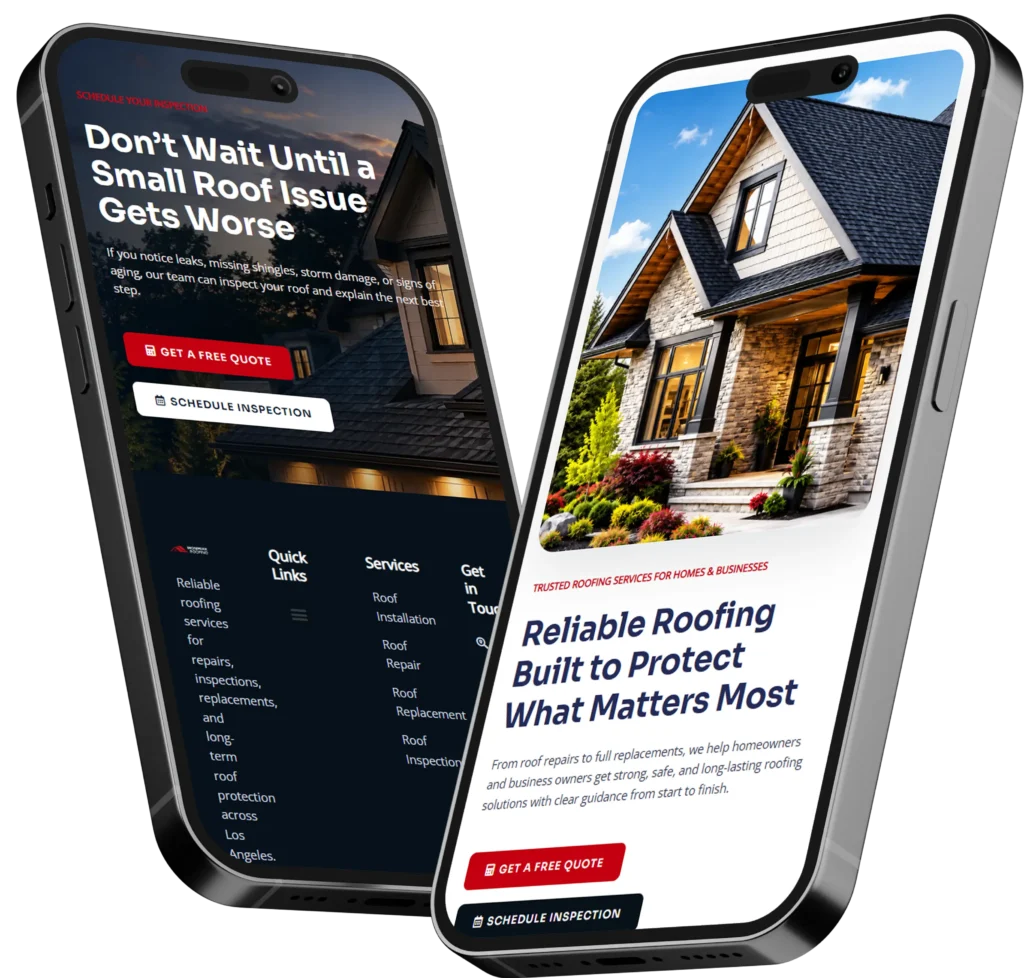
Service page copy for small business should clearly explain what you offer, who it helps, why you are trusted, and what the visitor should do next. The best service page answers buyer questions fast, builds confidence, and guides people toward a call, booking, quote, or consultation.
A good service page is not just a block of words about your business. It works like a quiet salesperson on your website. It explains the problem, shows your process, removes doubt, and makes the next step feel easy.
If your current website gets visits but not enough calls or inquiries, your service pages may need stronger copy, better structure, and clearer calls to action. For help with layout, messaging, and conversion strategy, visit small business web design experts.

What Is a Service Page?
A service page is a website page that explains one specific service your business offers. It helps potential customers understand what the service includes, who it is for, how it works, and why they should choose you instead of another provider.
For example, a web designer might have separate pages for website design, website redesign, landing pages, SEO support, and maintenance. A local contractor might have separate pages for kitchen remodeling, bathroom remodeling, roofing, and repairs.
Each page should focus on one clear intent. That makes it easier for visitors to know they are in the right place. It also helps search engines understand what the page is about. Google’s SEO Starter Guide explains that SEO helps search engines understand your content while also helping users find your site and decide whether to visit it.
Why Service Page Copy Matters for Small Businesses
Small business owners often rely on trust. People do not just compare prices. They compare confidence, clarity, speed, experience, and proof.
Your service page copy matters because it answers the questions people are already asking in their mind:
Can this business help me?
Do they understand my problem?
Have they done this before?
What happens after I contact them?
How much effort will this take from me?
When your page does not answer these questions, visitors leave and keep searching. When your page answers them clearly, visitors are more likely to take action.
Google’s helpful content guidance says its ranking systems are designed to prioritize helpful, reliable information created to benefit people. That is why service page copy should not be written only for keywords. It should be written to help real customers make a confident decision.
What Makes a Good Service Page Work?
A good service page works because it connects the service to the customer’s real goal. People are not only buying a website, landing page, redesign, or SEO service. They want more trust, more leads, more bookings, more calls, and fewer missed opportunities.
Clear Positioning
Your page should quickly explain what you do and who you help. A vague headline like “Professional Solutions for Your Business” does not say enough. A clearer version would be “Website Redesign for Local Service Businesses That Need More Calls.”
That type of headline tells the visitor what the service is, who it is for, and the outcome they can expect.
Simple Service Explanation
Many small businesses make the mistake of talking too much about features. Features matter, but customers first need to understand the result.
Instead of only saying “custom WordPress website,” explain what that means for the customer. You might say, “You get a fast, mobile-friendly website built around your services, trust signals, and lead forms.”
Trust Signals
Trust signals help visitors feel safe. These can include testimonials, portfolio examples, before and after screenshots, years of experience, process steps, guarantees, certifications, or recognizable client types.
Want to see how this looks in real projects? Browse the portfolio highlights to understand how design, copy, and structure work together.
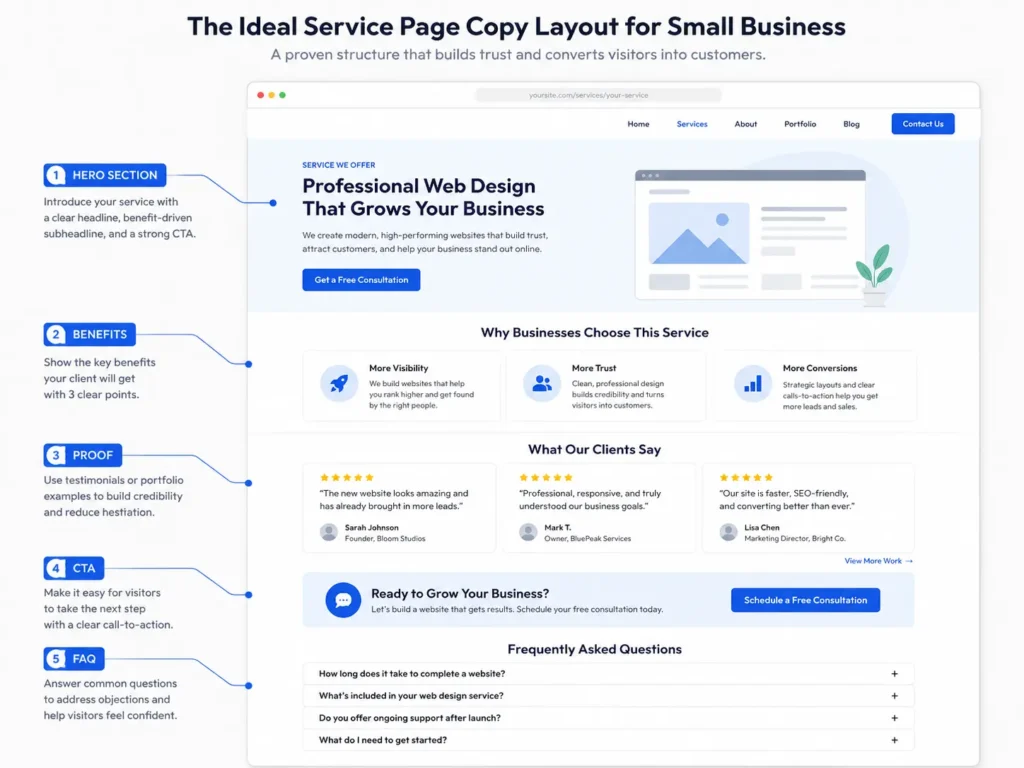
Basic Structure of a High-Converting Service Page
A strong service page should feel easy to scan. Most visitors will not read every word first. They look for signs that the page matches their problem.
Here is a simple structure that works well for small business websites:
| Page Section | Purpose | What to Include |
|---|---|---|
| Hero section | Confirm the service fast | Clear headline, short benefit, CTA button |
| Problem section | Show you understand the visitor | Pain points, missed leads, poor trust, outdated design |
| Service explanation | Explain what you provide | Scope, deliverables, process, examples |
| Benefits section | Show why it matters | More calls, stronger trust, better SEO, better conversions |
| Proof section | Build confidence | Testimonials, work samples, results, screenshots |
| CTA section | Move visitors forward | Book a call, request quote, get audit, view services |
| FAQ section | Remove final doubts | Pricing, timeline, redesign, SEO, hiring questions |
This structure keeps your page useful for both humans and search engines. It also makes the page easier to improve later because each section has a clear job.
How to Write the First Section
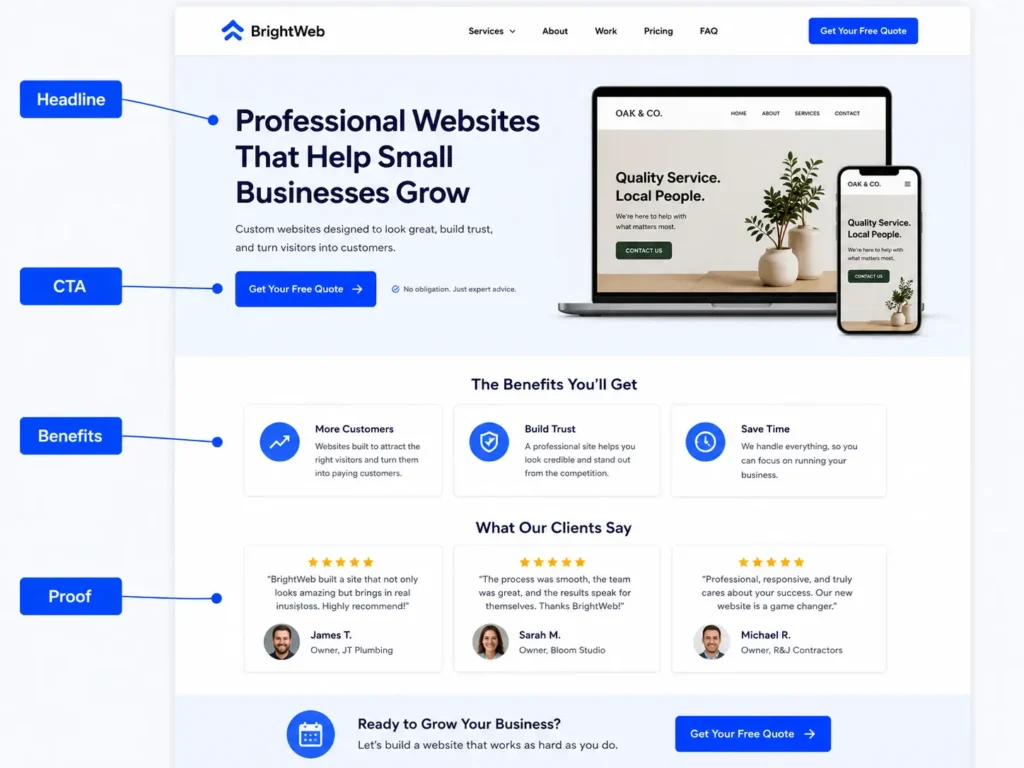
The first section should answer the visitor’s main question right away. Do not start with a long company history. Start with the result.
A strong first section includes three parts:
✅ What you do
✅ Who it helps
✅ What action the visitor should take next
For example:
“We design conversion-focused websites for small businesses that need more leads, calls, and bookings. Get a clean, mobile-friendly website that explains your services clearly and helps visitors take action.”
This works because it is specific. It tells the reader what the service is and why it matters.
If you need a complete page strategy, design support, or redesign help, review the website design & development services.
Common Problems Your Copy Should Solve
Small business websites often struggle because the service pages are too general. They explain what the company does, but not why the visitor should care.
Visitors Do Not Understand the Offer
If your page has too much jargon, visitors may not know what they are getting. Use plain language. Say “booking form” instead of “conversion pathway.” Say “faster loading pages” instead of “performance architecture.”
Visitors Do Not Trust the Business Yet
Trust is built through proof. Add testimonials, project examples, local experience, team photos, and clear process details. A visitor should not have to guess if you are legitimate.
Visitors Do Not Know What to Do Next
Every service page needs a clear call to action. It can be “Book a free consultation,” “Request a quote,” “Get a website audit,” or “View our work.” Do not make the visitor hunt for the next step.
For related planning, read the website content checklist for small business before updating your pages.
Which Service Page Copy Style Is Best?
The best copy style depends on your service, price point, and customer intent. A small business selling a simple service may need a short, direct page. A higher-value service, such as a website redesign or SEO project, usually needs more explanation and proof.
| Business Goal | Best Copy Style | Why It Works |
|---|---|---|
| Get more phone calls | Direct and local-focused | Visitors need fast answers and an easy call button |
| Sell a high-ticket service | Detailed and proof-driven | Buyers need trust, process, examples, and reassurance |
| Promote landing pages | Benefit-focused and action-oriented | The page should explain one offer and push one CTA |
| Improve SEO visibility | Search-intent focused | Copy should answer questions people search before hiring |
| Build trust for redesigns | Problem and solution style | Visitors need to see what is broken and how you fix it |
For most small business owners, the best option is a balanced service page. It should be clear enough for fast readers, detailed enough for cautious buyers, and structured enough for SEO.
How to Explain Your Service Clearly
Clear service copy follows a simple flow. Start with the customer’s problem, explain the service, then show the result.
For example, instead of saying:
“We provide professional landing page development.”
Say:
“Your landing page should help visitors understand one offer and take one clear action. We create landing pages that support ads, promotions, booking campaigns, and local service offers.”
The second version explains what the service does in real life. It gives the visitor a reason to care.
When writing your own page, answer these questions:
✅ What problem does this service solve?
✅ Who is this service best for?
✅ What is included?
✅ What result should the customer expect?
✅ What should they do next?
This simple approach keeps the copy focused and avoids filler.
How to Add SEO Without Making the Page Awkward
SEO should support the reader, not interrupt them. The keyword should appear naturally in important places, but the page should still sound human.
Use the main topic in the title, introduction, one heading, and a few related phrases. Add helpful subtopics like pricing, timeline, process, redesign, SEO, calls, bookings, trust, and leads. These related terms help the page match more search intent.
Good SEO copy also uses internal links. For example, if someone is learning about service pages, they may also need help with website copy for small business or homepage copy for small business.
Internal links help readers move to the next useful page. They also help search engines understand the relationship between your content.
Practical Tips for Better Service Page Copy
Small changes can make your page more convincing. Start by reading the page out loud. If a sentence sounds too formal, rewrite it the way you would explain it to a customer.
Use customer language. If your clients say “I need more calls,” do not only say “lead generation improvement.” If they say “my website looks outdated,” use that phrase in your problem section.
Add specific examples. A page for website redesign can mention slow load times, confusing navigation, weak mobile layout, missing trust badges, poor contact forms, and unclear service descriptions.
Place your CTA after major sections. Do not wait until the bottom. Some visitors are ready early, while others need more details.
Keep paragraphs short. Many small business customers read on mobile, so long blocks of text can feel heavy.
What to Avoid on a Service Page
Avoid copy that sounds too broad. Words like “best,” “quality,” “professional,” and “reliable” are fine, but they need proof behind them.
Avoid talking only about your business. Your page should focus on the customer’s problem and the result they want.
Avoid hiding important details. If visitors need to know your process, timeline, service area, or booking steps, explain them clearly.
Avoid weak CTA buttons like “Submit.” Use action-based wording such as “Get a Free Website Audit,” “Book a Consultation,” or “Start Your Website Redesign.”
If your page has traffic but low conversions, it may be time to review the copy, layout, forms, calls to action, and trust signals together.
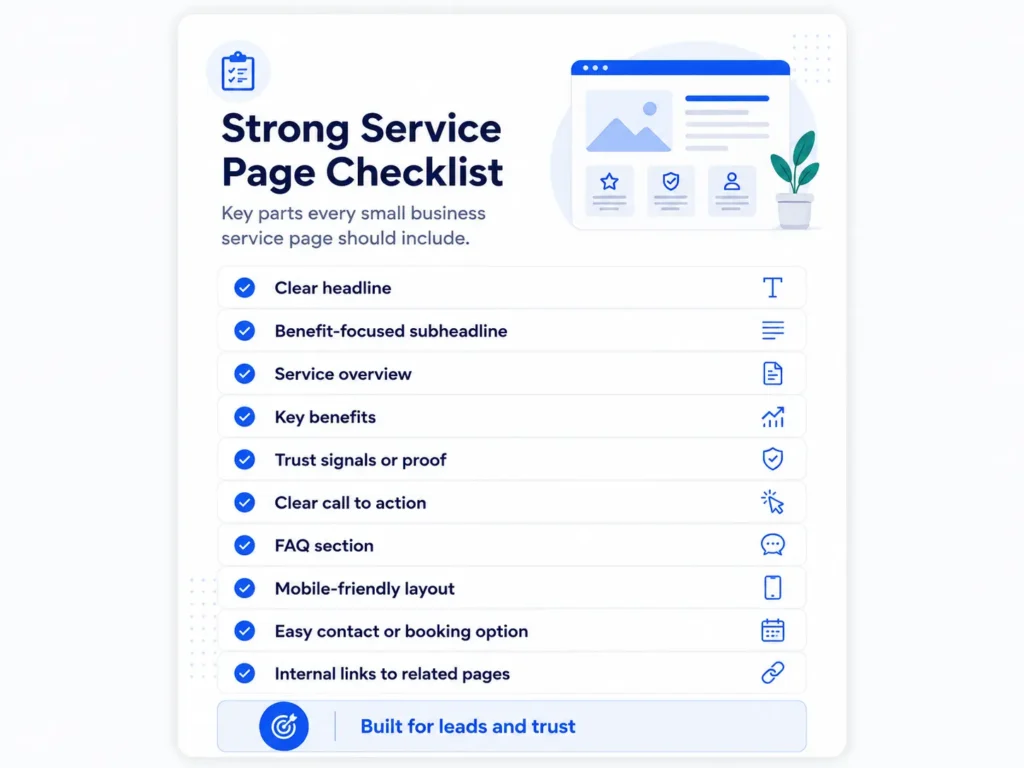
Small Business Service Page Copy Checklist
Use this quick checklist before publishing or redesigning your page.
✅ The headline says what the service is
✅ The first paragraph explains the main benefit
✅ The page speaks to one clear customer type
✅ The service is explained in plain language
✅ Benefits are connected to leads, calls, bookings, or trust
✅ Proof appears before the final CTA
✅ Internal links point to helpful related pages
✅ The page includes FAQs
✅ The CTA is visible more than once
✅ The page is easy to read on mobile
This checklist is especially useful when updating older service pages. You do not always need a full rewrite. Sometimes you need clearer sections, stronger proof, and better CTA placement.
When Should You Hire a Website Designer?
You should consider hiring a website designer when your service page needs more than simple text edits. If your layout is confusing, your page loads slowly, your contact form is hard to find, or your design does not look trustworthy, copy alone may not fix the problem.
A professional website designer can help connect the copy, layout, visuals, SEO structure, and lead flow. That matters because visitors judge the whole page, not just the words.
Hiring help is also smart when your business depends on online leads. A better service page can support calls, quote requests, booking forms, paid ads, local SEO, and referrals. If your website is part of your sales process, it should be built to guide people toward action.
For redesigns, audits, speed improvements, and conversion updates, explore website redesign that converts.
Final Takeaway: Service Page Copy for Small Business
Strong service pages are built around clarity, trust, and action. They explain the service in simple terms, show why it matters, and make the next step easy for the visitor.
The best page is not the longest one. It is the one that answers real questions, proves your value, and helps potential customers feel ready to call, book, or request a quote.
If your page feels vague, outdated, or too hard to scan, start with the basics. Clarify your headline, improve your first paragraph, add proof, place better CTAs, and link to helpful supporting pages. These changes can make your website feel more useful to visitors and more aligned with what search engines want to understand.
Frequently Asked Questions
1. What should a small business service page include?
A small business service page should include a clear headline, service explanation, benefits, proof, CTA, and FAQs. The page should quickly tell visitors what you offer, who it helps, and why they should trust you. It should also explain the process, show examples or testimonials, and guide visitors toward a call, booking, quote request, or consultation.
2. How can website copy help a small business get more leads?
Website copy can help a small business get more leads by turning visitor interest into clear action. Good copy explains the problem, presents the service as the solution, and removes doubts before the visitor leaves. It also makes calls to action easier to follow. When your copy is specific, trust-building, and easy to scan, more visitors are likely to contact you.
3. Is it worth redesigning a service page for SEO and conversions?
Yes, redesigning a service page is worth it when the current page gets traffic but does not generate enough calls, leads, or bookings. A redesign can improve layout, mobile readability, page speed, trust signals, internal linking, and CTA placement. SEO brings visitors to the page, but conversion-focused design and copy help those visitors take the next step.
4. Should I hire a web designer or write my own service page?
You can write your own service page if you understand your customers, offer, and website goals clearly. However, hiring a web designer is often better when you need stronger layout, SEO structure, landing page strategy, trust-building sections, or conversion improvements. A professional can help make sure your message, design, and call-to-action flow work together.