Website copy for small business should clearly explain what you do, who you help, and why a visitor should contact you. The best copy makes your offer easy to understand, builds trust quickly, and guides people toward calls, bookings, quote requests, or form submissions.
If your site looks nice but visitors do not take action, the problem may not be the design alone. It may be the words, page flow, service clarity, or trust signals that are missing from each section.
In this guide, you’ll learn what makes strong copy work, why it matters for small businesses, how to write each page, and which option is best if you want more leads from your website.
For a stronger online presence, explore growth-driven web design that focuses on clarity, trust, and conversions.
Why Website Copy Matters for Small Businesses
Your website is often the first place people judge your business. Before they call, book, or request a quote, they want to know if you are professional, trustworthy, and right for their problem.
Good website copy answers those questions before doubt takes over. It explains your service in plain language, removes confusion, and tells visitors what to do next.
A small business website should not sound like a brochure. It should work like a helpful salesperson that is available every day. It should guide people from “I’m interested” to “I’m ready to contact you.”
Weak copy usually creates these problems:
✅ Visitors leave because they do not understand your offer
✅ Service pages sound too general
✅ Calls to action are hard to find
✅ The homepage talks too much about the business and not enough about the customer
✅ Trust elements are missing or buried
Strong copy fixes this by giving visitors the right message in the right order. It shows what you do, why it matters, how your process works, and why you are a safe choice.
Google also recommends creating content for users first and making it easier for search engines to understand your pages through clear, helpful content. You can review Google Search Central’s SEO Starter Guide for more SEO basics.
What Makes Small Business Website Copy Effective
Effective copy is simple, specific, and action-focused. It does not try to impress people with clever lines. It helps them make a decision.
For example, instead of saying:
“We provide innovative digital solutions for growing brands.”
Say:
“We design fast, professional websites for small businesses that want more calls, bookings, and quote requests.”
The second version is better because it tells visitors who the service is for, what the service does, and what result they can expect.
Here is the basic formula:
| Website Copy Element | Why It Matters | Practical Example |
|---|---|---|
| Clear headline | Tells visitors they are in the right place | “Professional Websites for Local Service Businesses” |
| Problem statement | Shows you understand their need | “Your site should not make people guess what you do.” |
| Service clarity | Explains the offer quickly | “Website design, redesign, landing pages, and SEO-ready pages.” |
| Trust proof | Reduces hesitation | Reviews, portfolio, certifications, before and after examples |
| Call to action | Tells people what to do next | “Book a free website audit” or “Request a quote” |
The goal is not to write more. The goal is to say the right thing clearly.
If your current pages feel unclear, a website design & development services review can help identify where your copy, layout, and call-to-action flow need improvement.
How to Write Homepage Copy That Converts
Your homepage should answer the biggest questions fast. Visitors should know what you do within a few seconds.
A strong homepage usually includes:
✅ A direct headline
✅ A short supporting sentence
✅ A clear button
✅ A section for services
✅ A section for proof
✅ A short process
✅ A final call to action
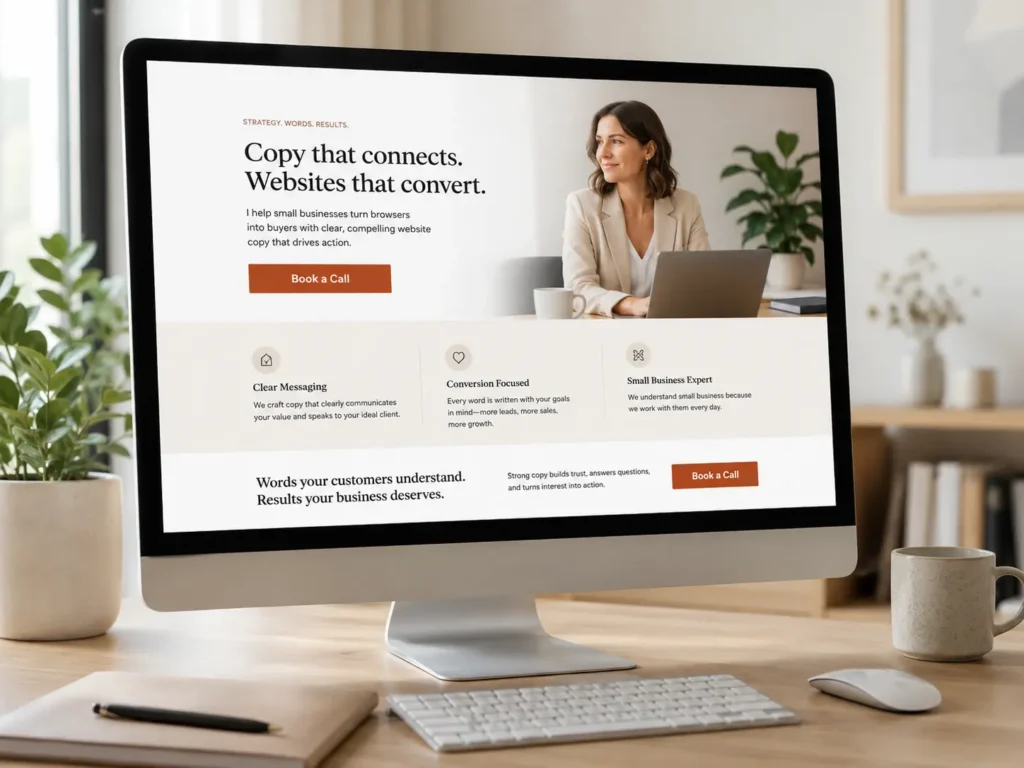
The first screen matters most. This is where many small business websites lose people. The headline should not be vague. It should say what you offer and who you help.
Example homepage hero:
“Custom Websites for Small Businesses That Need More Leads”
Supporting sentence:
“We design clean, fast, and SEO-ready websites that help service-based businesses get more calls, quote requests, and bookings.”
Button:
“Get a Free Website Audit”
This works because it connects the service to a business outcome. A visitor does not only want a website. They want a website that helps them look credible and bring in customers.
Keep homepage sections short. Do not explain everything there. Use the homepage to guide visitors to service pages, portfolio pages, and contact options.
You can also add proof early. A simple line like “Trusted by local service businesses, consultants, and growing brands” can make the page feel safer.
For visual proof, link visitors to your portfolio highlights so they can see real project examples before contacting you.
How to Write Service Page Copy
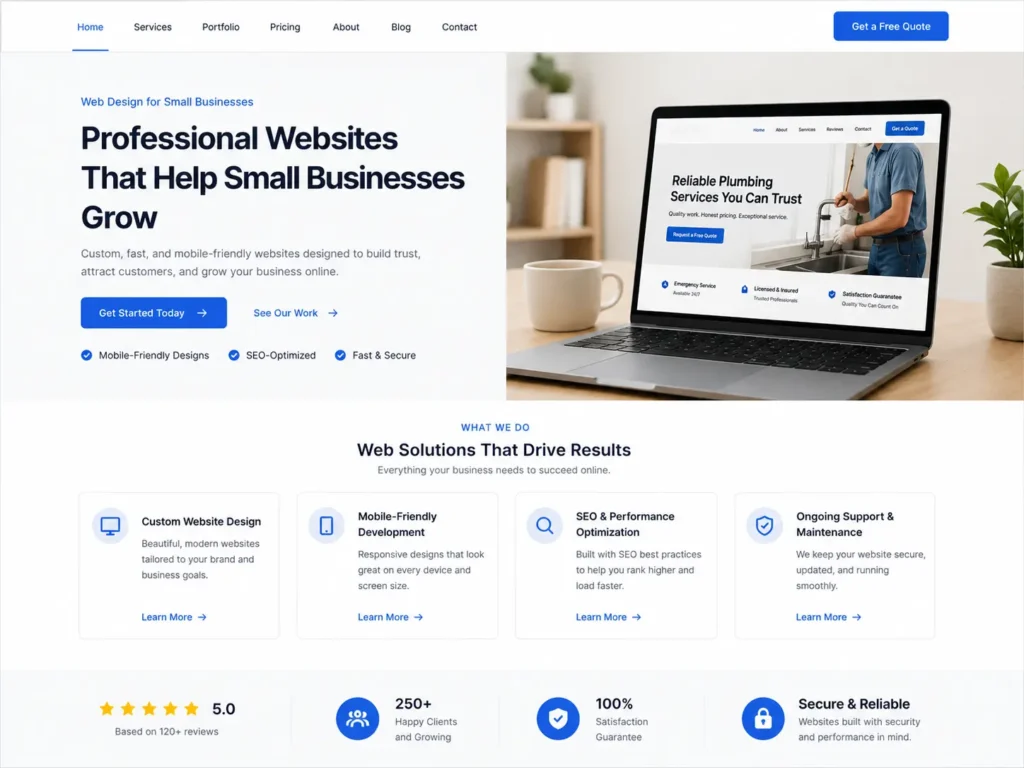
Your service page should explain one main offer in detail. This is where visitors decide if they want to hire you.
A good service page starts with the result, not the technical work. For example, a website redesign page should not begin with “We update layouts and improve code.” It should begin with the business problem:
“Your website should help visitors trust you, understand your services, and contact you without confusion.”
Then explain how the service solves that problem.
For small business websites, each service page should include:
✅ Who the service is for
✅ What problem it solves
✅ What is included
✅ Your process
✅ Why your approach is different
✅ Proof or examples
✅ A strong call to action
This is also where you can add SEO naturally. Use phrases related to your service, such as website redesign, landing page design, small business web design, SEO website copy, service page copy, and conversion-focused design.
Avoid stuffing keywords. Google and real users both prefer helpful, natural content.
A simple service page structure looks like this:
| Page Section | What to Write | Best Use |
|---|---|---|
| Hero section | Main service and outcome | Best for quick clarity |
| Problem section | What the visitor is struggling with | Best for emotional connection |
| Solution section | How your service helps | Best for building interest |
| Process section | Steps from start to launch | Best for reducing uncertainty |
| Proof section | Results, samples, testimonials | Best for trust |
| CTA section | Invite action | Best for leads |
If the offer is complex, add a short “What’s Included” section. This helps visitors compare your service against other options.
Writing Landing Page Copy for Leads
A landing page has one job. It should push one offer, one audience, and one action.
This makes landing pages different from homepages. A homepage gives visitors several paths. A landing page removes distractions and focuses on one conversion.
Landing pages are useful for:
✅ Google Ads campaigns
✅ Local service promotions
✅ Free audits or consultations
✅ Seasonal offers
✅ Booking pages
✅ New service launches
The best landing page copy starts with the visitor’s goal. If someone searches for a website redesign, they are probably thinking, “My current website looks outdated” or “I’m not getting enough leads.”
Your copy should meet that concern directly.
Example landing page headline:
“Redesign Your Website So More Visitors Call, Book, or Request a Quote”
Then support it with clear benefits:
“Get a cleaner layout, stronger messaging, faster pages, and a call-to-action flow built for small business leads.”
Your landing page should also reduce risk. Add testimonials, examples, service details, process steps, and a simple form. Do not ask for too much information at first. Name, email, website URL, and project goal may be enough.
For more help comparing options, read this guide on how to hire remote web designer.
Which Website Copy Option Is Best
The best option depends on your time, budget, and growth goals.
If you are just starting and need a simple online presence, writing your own first draft can work. You know your customers, your services, and your common questions. That knowledge is valuable.
However, if your website needs to bring in leads, rank better, or support paid traffic, professional help is usually better. A web designer who understands copy, SEO, layout, and conversions can build the page around the user journey.
Choose DIY copy if:
✅ You have a small budget
✅ You need a simple starter site
✅ You know your audience very well
✅ You are willing to revise later
Choose professional copy and design if:
✅ Your current site is not generating leads
✅ You are investing in SEO or ads
✅ Your services need better positioning
✅ You want stronger trust and conversion flow
✅ You do not have time to write and structure every page
The best setup is often a mix. The business owner provides raw information, customer pain points, service details, and examples. The web designer turns that into clear copy and a better website structure.
The U.S. Small Business Administration explains that market research helps business owners understand customers, demand, competition, and pricing. That same thinking applies to website copy because your message should match what your buyers actually care about. You can review the SBA market research and competitive analysis guide for more business planning insight.
Copywriting Tips for Trust and SEO
Trust is one of the biggest reasons people contact one business instead of another. A small business website should make visitors feel that they are dealing with a real, reliable company.
Use trust-building copy throughout the site, not only on the About page.
Good trust signals include:
✅ Real project images
✅ Testimonials
✅ Service area details
✅ Clear pricing guidance or packages
✅ Years of experience
✅ Process explanations
✅ FAQs
✅ Before and after examples
✅ Contact details that are easy to find
For SEO, each page should have one clear topic. A page about website redesign should not also try to rank for logo design, hosting, SEO, and branding all at once. Keep the focus tight.
Use headings that match real customer questions. For example:
“What Is Included in a Website Redesign?”
“How Long Does a Small Business Website Take?”
“Do I Need SEO Copy Before Launch?”
These headings help both people and search engines understand the page.
Also, avoid generic claims like “best service” unless you explain why. Instead, say what makes your process useful:
“We plan each page around your customer’s next step, so visitors know whether to call, book, or request a quote.”
That is more believable and more helpful.
For related planning, review this website content checklist for small business.
Practical Website Copy Examples
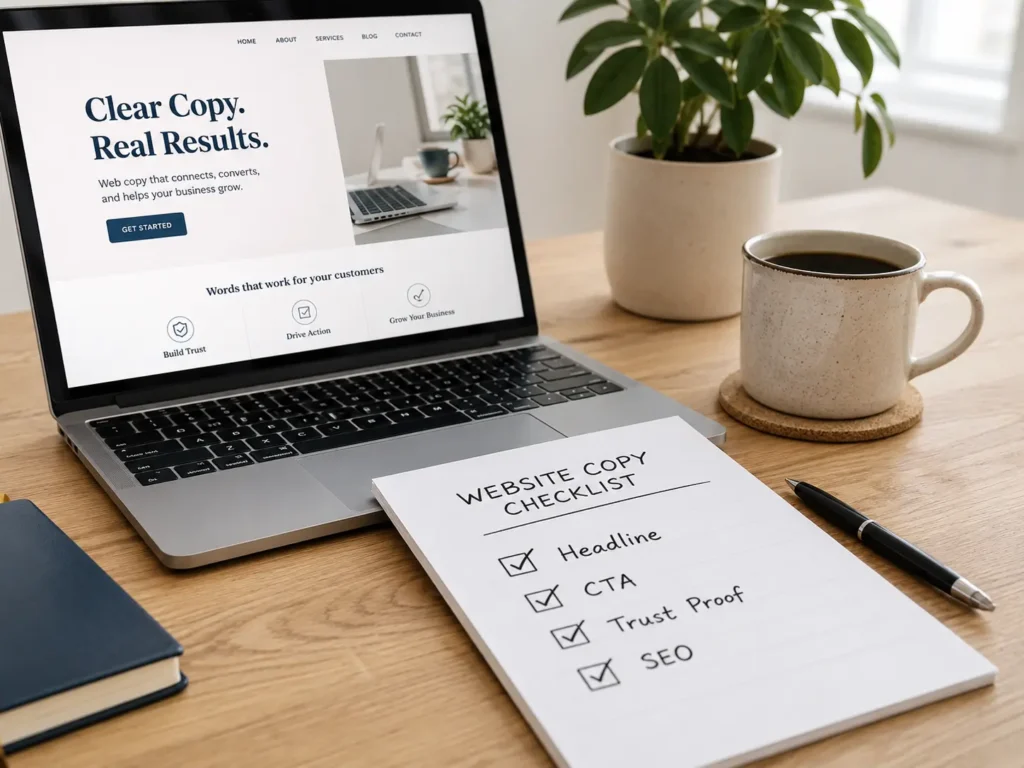
Here are a few simple before and after examples that can help you improve your own pages.
Weak headline:
“Welcome to Our Website”
Better headline:
“Reliable Home Cleaning Services for Busy Families in Austin”
Why it works: It names the service, audience, and location.
Weak CTA:
“Submit”
Better CTA:
“Request a Free Cleaning Quote”
Why it works: It tells people exactly what happens after they click.
Weak service description:
“We offer quality solutions for your needs.”
Better service description:
“We build clean, mobile-friendly websites for small businesses that need better trust, clearer services, and more quote requests.”
Why it works: It explains the service and the outcome.
Good copy should feel useful. Visitors should not have to decode what you mean. Every section should move them closer to action.
Common Mistakes to Avoid
Many small business websites fail because the copy focuses on the owner instead of the customer. Your story matters, but the visitor first wants to know if you can solve their problem.
Avoid opening with long company history. Start with the customer’s need, then explain why your business is qualified to help.
Another mistake is hiding the call to action. If someone is ready to call, book, or request a quote, do not make them search for the next step. Add buttons throughout the page, especially after service explanations and trust sections.
Also avoid using the same copy on every service page. Each service should have its own angle. A landing page for website redesign should speak to outdated design, lost trust, poor mobile experience, and weak conversion flow. A landing page for SEO should speak to search visibility, content structure, and traffic quality.
If you serve U.S. customers, this guide on choosing a website designer for US small business may help you decide what support fits your goals.
Final Thoughts on Website Copy for Small Business
Website copy for small business should make your offer clear, build trust, and help visitors take action without confusion. When your pages explain the right message in the right order, your website becomes more than an online brochure.
It becomes a lead-generation tool.
Start with your homepage, then improve your main service pages, landing pages, and FAQs. Keep the writing simple, useful, and focused on what your customers need to know before they contact you.
If your current site looks outdated, feels unclear, or does not bring in enough leads, it may be time for a better message and a better page structure. Strong copy, clean design, and clear calls to action can make your business easier to trust and easier to hire.
Frequently Asked Questions
1. What should be included in small business website copy?
The most important parts are a clear headline, service explanation, trust proof, and call to action. Your copy should quickly explain what you do, who you help, what problem you solve, and what visitors should do next. A strong website also includes testimonials, service details, FAQs, location or service area information, and simple contact options. These elements help visitors feel confident before they call, book, or request a quote.
2. How does better website copy help a small business get more leads?
Better copy helps visitors understand your value faster and take action with less hesitation. Many small business websites lose leads because the message is vague, the services are unclear, or the buttons are weak. When your copy explains the problem, shows the solution, adds proof, and gives a clear next step, visitors are more likely to trust your business and contact you.
3. Should I redesign my website or just rewrite the copy?
Rewrite the copy if the design still looks professional, but redesign the site if the layout hurts trust or conversions. Copy can improve clarity, SEO, and calls to action, but it cannot fully fix a slow, outdated, or confusing website. If your pages look old, load slowly, or feel hard to use on mobile, a redesign with stronger messaging is usually the better option.
4. Is it better to write my own website copy or hire a web designer?
Writing your own copy can work for a simple starter site, but hiring a professional is better when leads matter. A business owner knows the service well, but a web designer can organize the message, layout, SEO structure, and conversion path more effectively. If your website needs to support bookings, calls, quote requests, or paid ads, professional guidance usually creates a stronger result.