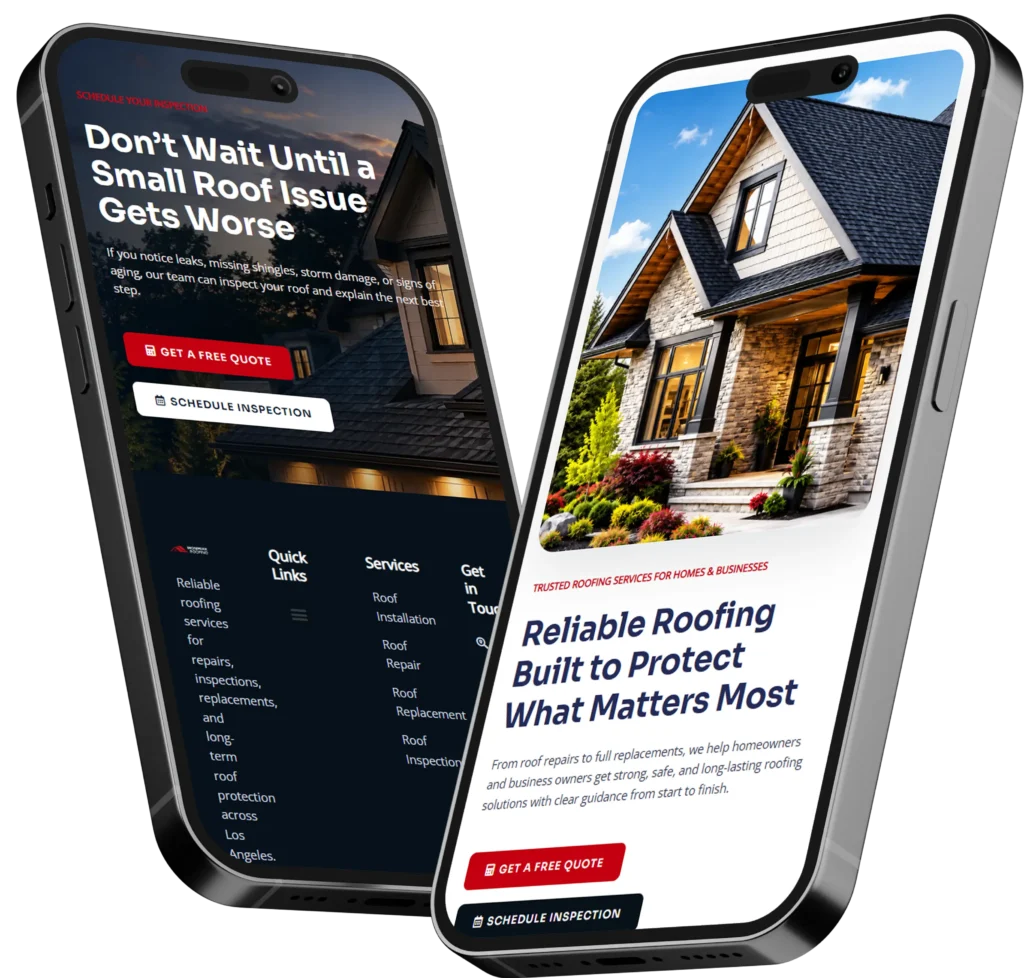
Home service website design helps local contractors get more calls by making trust, services, and contact options obvious. The best service websites load fast, rank locally, and turn homeowners into qualified leads.
The best websites for plumbers, HVAC teams, electricians, roofers, cleaners, and other local contractors do three things fast: build trust, show the right service, and make it easy to call or book. If a visitor has to guess what you do, where you work, or how to reach you, the site is already losing leads.
A strong service business website is not just about looking modern. It needs clear messaging, a mobile-first layout, fast-loading pages, proof that you are legitimate, and calls to action placed exactly where a homeowner is ready to act.
That matters even more in local markets where people compare multiple businesses in a short window. They may land on your homepage, a service page, or a location page first. Every one of those entry points should tell them what problem you solve, who you serve, and what the next step is.
If your current site feels slow, generic, or hard to navigate, that usually shows up in lower trust, fewer inquiries, and weaker lead quality. The upside is that the right structure can fix all three.

Why Good Design Matters for Local Service Businesses
Homeowners do not browse service websites the same way they browse fashion stores or software tools. They are usually trying to solve a practical problem. Their AC stopped working, the roof is leaking, the water heater failed, or they finally want to schedule a long-delayed upgrade.
That means your site has to reduce friction immediately.
A clean layout helps, but conversion comes from clarity. Visitors want to know:
✅ what you do
✅ whether you serve their area
✅ whether people trust you
✅ how fast they can reach you
✅ what happens after they contact you
When those answers are visible within seconds, your website starts acting like a sales tool instead of an online brochure.
This is also why generic templates often underperform for service companies. They may look polished, but they usually hide important local trust signals. Things like service areas, emergency availability, financing, review proof, project photos, licensing, and strong contact options need to be visible without digging.
If you want a site that is planned around lead flow instead of guesswork, take a look at our growth-driven web design.
What a High-Converting Service Website Needs
A local contractor website should feel simple to the visitor, but it should be doing a lot of work under the surface. Good structure guides people from interest to action without overwhelming them.
Here is what that looks like in practice:
| Website Element | Why It Matters | What Good Looks Like |
|---|---|---|
| Clear headline | Helps visitors know they are in the right place | States service, audience, and location focus in one quick line |
| Primary call to action | Moves people toward a quote or call | Sticky phone button, short form, and repeated CTA blocks |
| Service pages | Matches search intent and improves clarity | One page per core service with FAQs, proof, and local relevance |
| Reviews and trust proof | Reduces hesitation | Real testimonials, ratings, badges, warranties, and certifications |
| Mobile-first layout | Most local traffic is mobile | Fast load, tap-friendly buttons, and short readable sections |
| Project photos | Shows real-world proof | Before and after images, job types, and captions tied to services |
| Service area signals | Confirms relevance | Cities served, map section, and location-based copy |
| Fast performance | Prevents drop-off | Compressed images, clean code, and lightweight page structure |
The strongest sites do not stop at having these elements. They place them in the right order. A visitor should see a clear offer first, trust signals second, proof third, and conversion options throughout the page.
That structure is especially important for high-intent searches. Someone looking for “roof repair near me” or “emergency plumber in [city]” is often ready to contact a company right away. If the page opens with a vague hero image and a paragraph about your values, you waste the moment.
Want to see how those pieces come together visually? Browse our portfolio highlights for examples of strong layout, hierarchy, and service business positioning.
The Pages That Usually Drive the Most Leads
Not every page on a service website has the same job. Some pages build trust, some support rankings, and some are there to convert visitors who already know what they need.
The pages below usually matter most.
Homepage
Your homepage should summarize the business fast. It is not the place for vague branding. It should introduce your main services, the types of homes or customers you help, your main service area, and the clearest action someone can take today.
A strong homepage also routes visitors to deeper pages. That means clear service cards, visible city mentions, review proof, and a short but direct message about why customers choose you.
Individual Service Pages
These are some of the most important pages for both SEO and conversions. Each major offer deserves its own page. For example, HVAC repair, AC installation, drain cleaning, panel upgrades, roof replacement, or pressure washing should not be buried on one general services page.
Each page should explain the problem, the process, the benefits, and why your team is the right fit. It should also include proof, FAQs, and at least one direct CTA above the fold.
Location or Service Area Pages
If you serve multiple cities or neighborhoods, location pages can become a major growth channel when done well. The mistake is making them thin and repetitive. Good location pages should show real service relevance, common local needs, nearby proof, and a tailored CTA.
For a deeper look at structure and local targeting, read our local service website guide.
About Page
Homeowners often check the about page before they trust a company enough to call. This page should not just tell your origin story. It should answer why your team is credible, what kind of work you focus on, and what customers can expect.
Photos of the team, years in business, certifications, and a simple process overview help this page do its job.
Contact Page
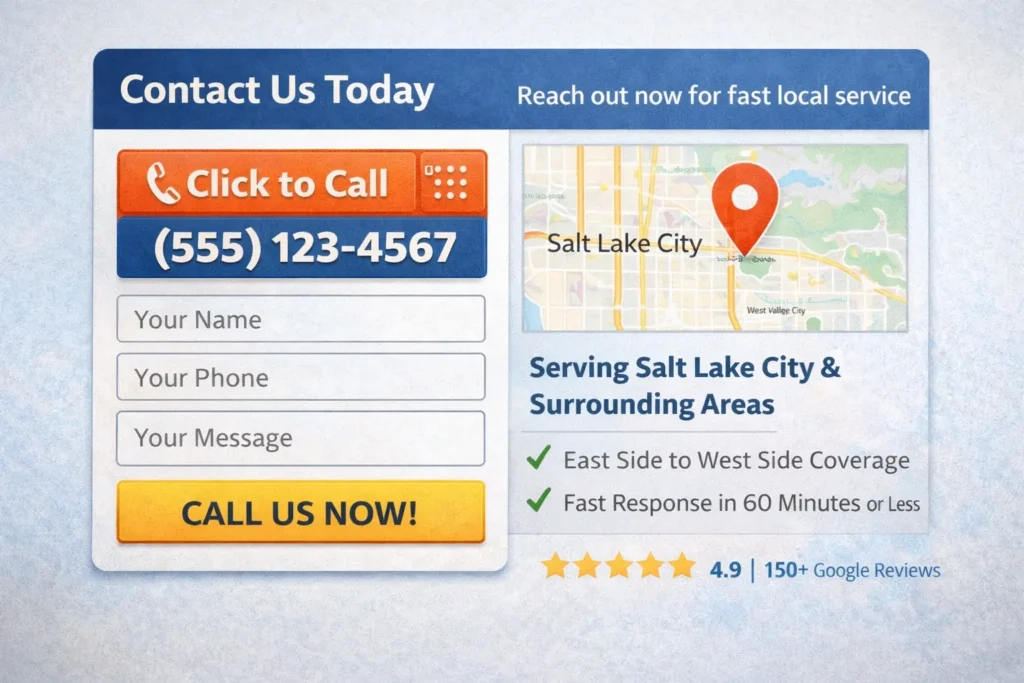
A contact page should be frictionless. Keep the form short. Show the phone number clearly. Add business hours, service areas, and expected response times. If you offer emergency support, financing, or same-day visits, make that easy to find.
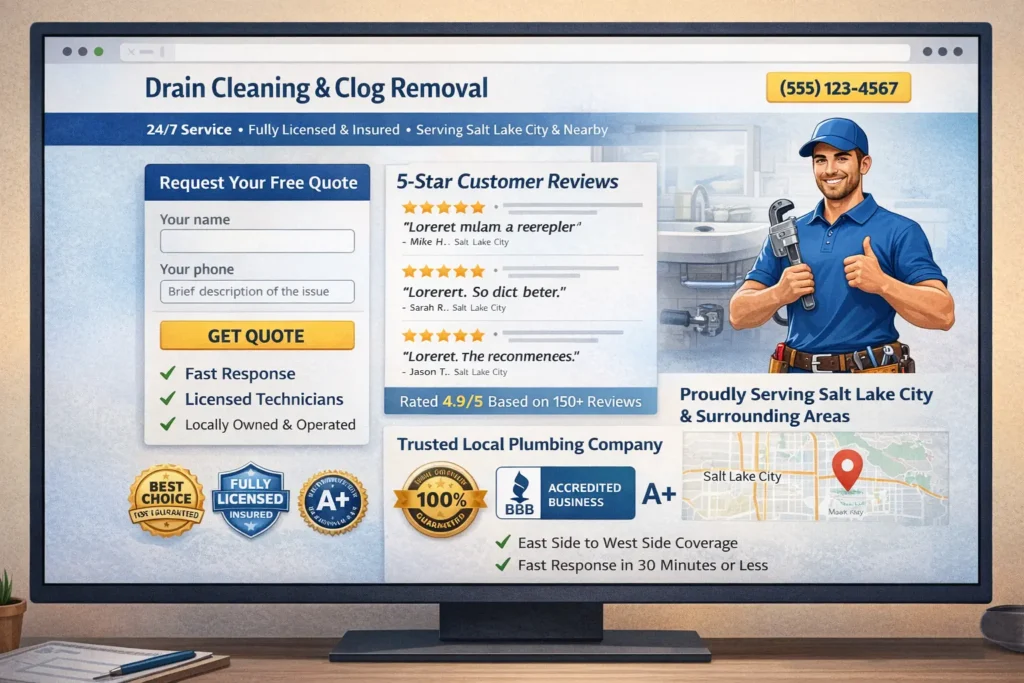
How Great Design Improves Ranking and Conversion at the Same Time
A lot of business owners separate SEO from design, but on service websites, they are closely connected. Search visibility brings traffic. Design quality decides what happens next.
For example, a service page may rank for a strong local keyword, but if it loads slowly, hides the phone number, or looks outdated, the traffic will not turn into jobs. The opposite also happens. A beautiful site may look premium, but if the page structure is weak and the service content is too thin, it struggles to rank.
The best-performing sites usually get both right.
They organize services in a way that search engines can understand. They use headings that match intent. They include real local signals. They build pages that are useful enough to support rankings and clear enough to support action.
This is where performance matters too. Before launch or redesign, it is smart to review your pages with PageSpeed Insights and compare your business profile details with Google’s local ranking tips. Those two checks help you spot issues with speed, usability, and local visibility before they start costing leads.
If you handle urgent services, page structure matters even more. Messaging, CTA placement, and response cues need to work under pressure. That is why this emergency plumbing website design example is useful. It shows how urgency changes the way a page should be framed.
Which Website Design Option Makes the Most Sense
Not every business needs the same build path. The best option depends on your market, growth goals, and how much you need the site to do.
| Option | Best For | What to Watch Out For | Best Fit |
|---|---|---|---|
| DIY builder | Very new businesses with a tight budget | Often limited in SEO structure, flexibility, and trust positioning | Temporary starter site |
| Generic freelancer template | Businesses that need something fast | Can look polished but may miss strategy, local SEO, and conversion flow | Short-term refresh |
| Specialized web designer for service businesses | Companies that want more leads, stronger positioning, and easier growth | Higher upfront investment, but better long-term performance | Best overall choice for serious local growth |
For most established contractors, the third option is usually the strongest. A specialist understands service pages, local search behavior, quote-driven layouts, and the difference between traffic and real lead flow.
That does not mean the site needs to be huge. It means the pages need to be intentional. A lean website with the right structure usually performs better than a bloated site with too many pages and weak messaging.
If you are comparing build options now, our website design & development services page gives you a clearer look at scope, direction, and what a strategic redesign should include.
Common Design Mistakes That Quietly Kill Leads
Most underperforming sites do not fail because of one huge problem. They fail because of multiple small issues stacked together.
One of the most common is weak messaging. If your homepage says “quality service you can trust” but never clearly states the service, area, and value, visitors still have questions.
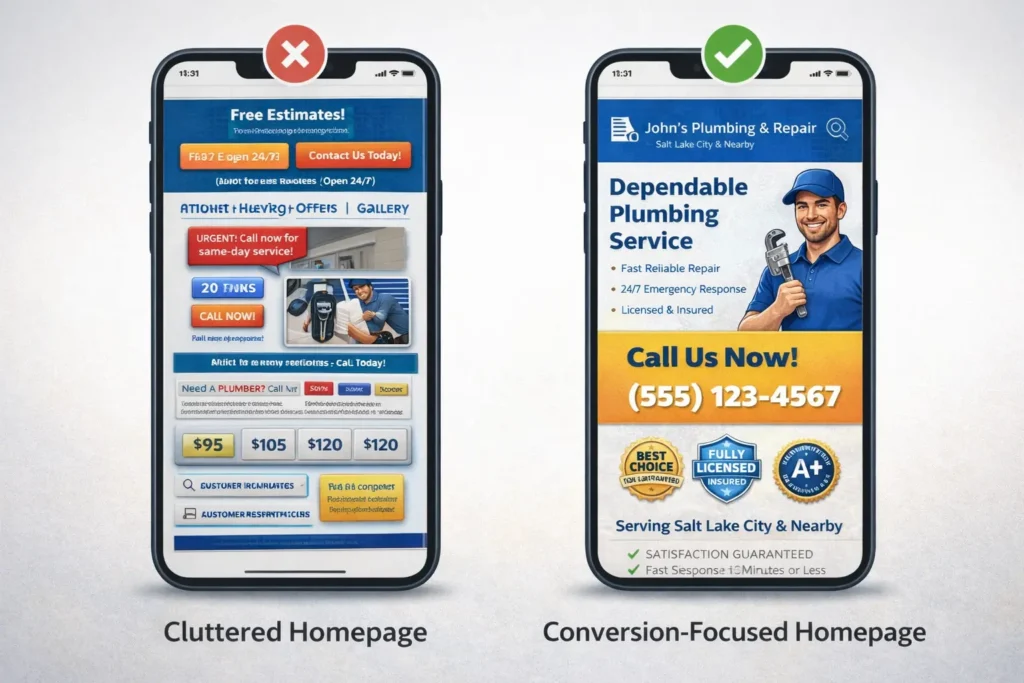
Another issue is clutter. Too many popups, too much text above the fold, and too many competing buttons make the site feel harder than it should. People looking for help at home want fast answers, not a puzzle.
A third mistake is using the same page style for every service. Roof replacement, AC repair, electrical panel upgrades, and house cleaning do not all carry the same buying urgency. The layout, proof, and CTA language should reflect the job type.
Many businesses also forget to show proof in the places people actually look. Reviews should not live only on a hidden testimonials page. They should appear near service descriptions, quote forms, and CTAs where hesitation naturally happens.
And then there is mobile. A site can look fine on desktop and still lose leads on phones because buttons are too small, forms are too long, and important details are buried. Since so much local traffic comes from mobile, this is one of the first places to tighten up.
For another useful example of a trust-heavy service page setup, check out this roof repair website guide.
How to Know Your Current Website Needs a Redesign
Sometimes the signs are obvious. Sometimes they are quieter.
If your site feels old, gets little engagement, or does not reflect the quality of your work, it may already be costing you jobs. The same is true if you are relying mostly on referrals because the website does not consistently convert search traffic.
A redesign is usually worth considering when:
✅ your site is slow or awkward on mobile
✅ your services are buried or poorly organized
✅ your forms are long, and your phone CTA is hard to find
✅ your location coverage is unclear
✅ your design no longer matches your market position
✅ your competitors look more trustworthy at first glance
You should also think about redesigning if the site is hard to update internally. When it takes too much effort to add a city page, publish photos, update offers, or refresh service copy, marketing slows down. That becomes a growth problem, not just a design problem.
What a Better Site Should Feel Like to the Customer
A homeowner should land on your website and feel oriented right away. They should know the company is real, the service is relevant, the next step is simple, and the risk feels lower.
That feeling comes from a mix of smart design choices:
a clear headline, real project visuals, proof near the CTA, short sections, location relevance, and a contact path that does not ask for too much too soon.
Good websites do not try to impress people with complexity. They make decisions easier. They help people move from “maybe” to “I’ll call this company” with less doubt.
What to Do Next
The goal of home service website design is not just to make a business look professional. It is to help the right local customer trust you fast, understand your offer, and take action without friction.
If your current site looks decent but does not produce consistent calls or quote requests, the issue is usually not one button or one headline. It is the full structure. When the pages, proof, messaging, local intent, and mobile experience all work together, the website becomes a real lead asset instead of a placeholder.
Frequently Asked Questions
1. How much should a website cost for a home service business?
A good service business website should be priced around strategy, not just design. In the U.S., pricing can vary a lot depending on page count, copywriting, SEO setup, custom design, and integrations like forms, booking tools, or CRM connections. A very cheap build may get you online, but it often misses the structure needed for rankings and conversions. For most serious contractors, it is better to invest in a site that supports lead generation, not just appearance.
2. What pages should a contractor or local service company website have?
The most important pages are the homepage, core service pages, location pages, about page, and contact page. Those pages cover the essentials a homeowner wants to see before reaching out. Depending on the business, you may also need financing pages, maintenance plan pages, gallery pages, and dedicated emergency service pages. The best page set is the one that matches how customers search and how your sales process actually works.
3. How long does it take to design and launch a service business website?
Most quality website projects take several weeks because the best results come from planning, not rushing. Timeline depends on how many pages are needed, whether content has to be written from scratch, and how quickly feedback is provided. A simple site can move faster, but a strategic build with SEO structure, custom layout, service page planning, and proper revisions usually takes longer. That extra time often produces a much stronger launch.
4. Can a better website really help a local service business get more calls?
Yes, a better website can absolutely increase qualified leads when the structure supports real buying behavior. More calls usually come from clearer messaging, stronger trust proof, better mobile usability, and easier contact flow. Rankings matter, but conversion matters just as much. If people land on the page and instantly understand the service, area, credibility, and next step, you will usually see better lead quality along with better volume.