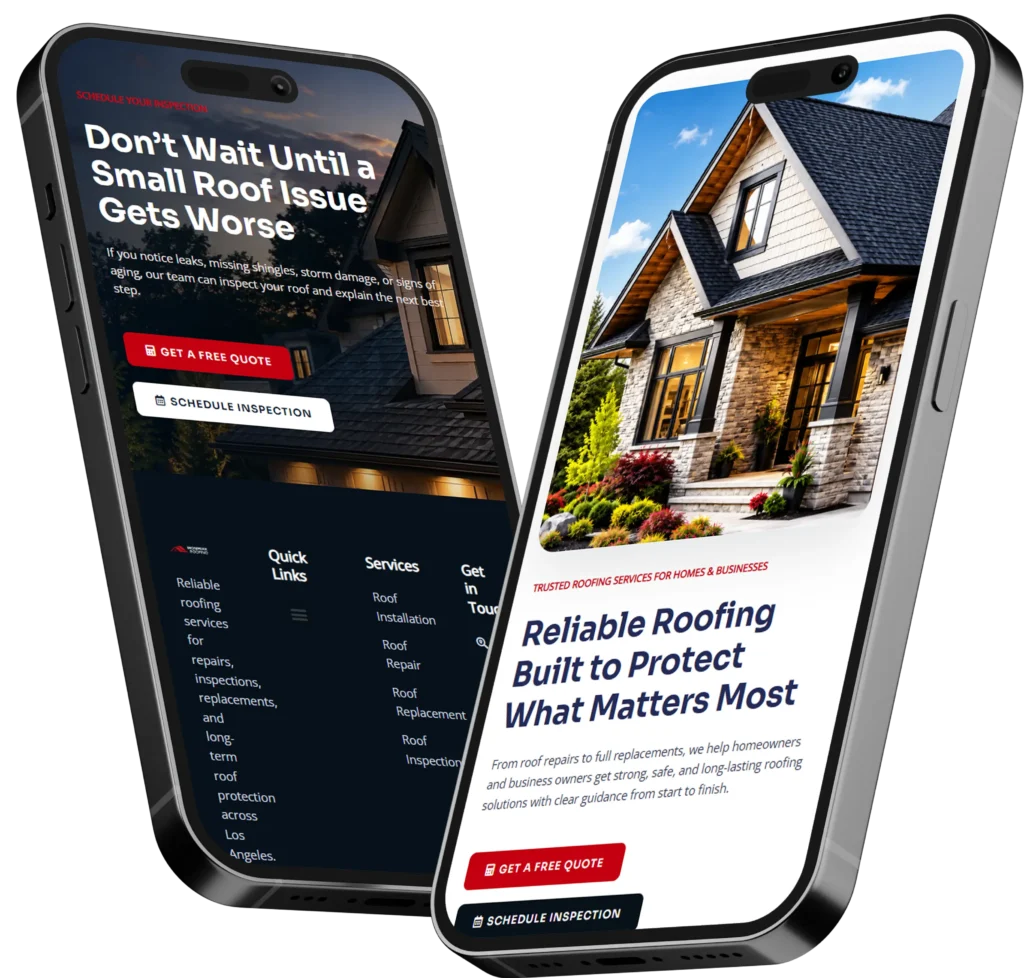
A maid service website should make trust, services, and quote requests obvious within seconds. The best-performing version is usually fast, local, clear, and built to turn visitors into real inquiries instead of passive traffic.
Most maid companies do not lose leads because the service is weak. They lose leads because the website feels generic, slow, unclear, or hard to trust on mobile. A visitor lands on the page, cannot confirm what is offered, does not see proof, and leaves before filling out the form.
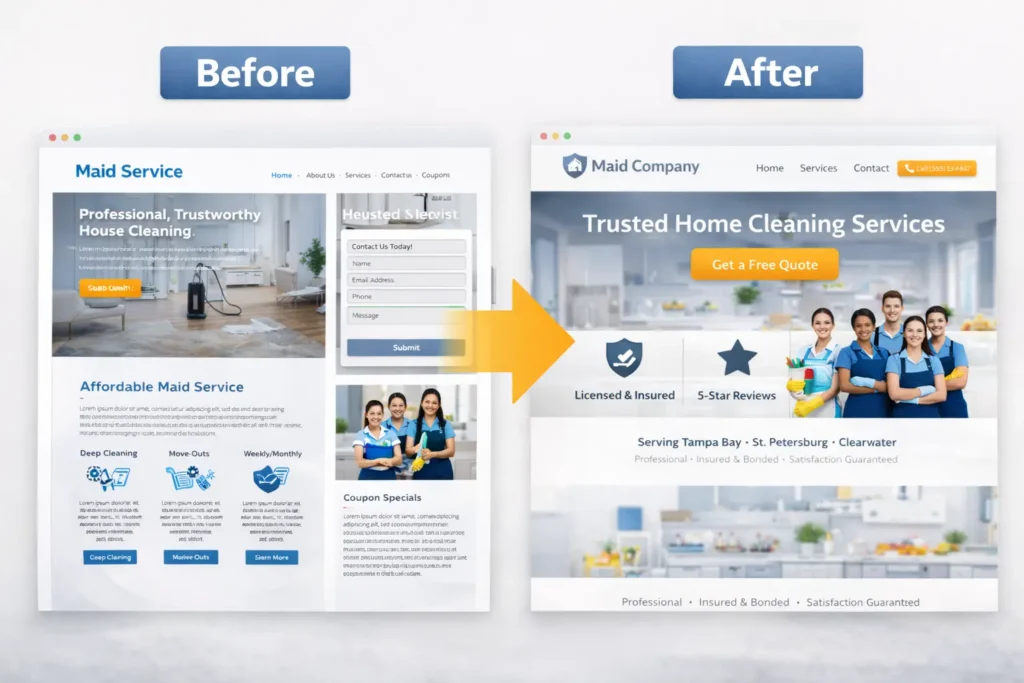
That is why the right website design is not just about looking polished. It is about removing hesitation. For a local maid company, that usually means making the service area clear, explaining the offer in plain language, showing real proof, and guiding the visitor toward one easy next step.
If you are comparing providers, working with small business web design experts who understand local service funnels will usually save you time and expensive revisions later.
Why do maid company websites lose leads faster than they think
Cleaning is a high-trust service. A homeowner is not choosing a logo or a color palette. They are deciding who gets access to their home, whether the company feels dependable, and whether booking will be simple. That means the website has to reduce uncertainty almost immediately.
A weak site usually fails in small but costly ways. The headline is vague. The quote button is buried. The service pages are too broad. The photos feel like stock images from a template. The business serves multiple cities, but the site barely mentions them. Each one may seem minor on its own, but together they lower trust fast.
This is also why a pretty homepage alone is not enough. The stronger result usually comes from a site structure that matches how real buyers think. People want to know what you do, where you work, what kind of jobs you handle, what proof you can show, and how to request a quote without friction.
If you want a close topical companion to this article, your cleaning service website guide is a strong related piece to reference internally because the conversion logic is similar.
What a high-converting maid company site should include
A strong service-business site does not need dozens of pages to work well. It needs the right pages, the right order, and the right message on each one.
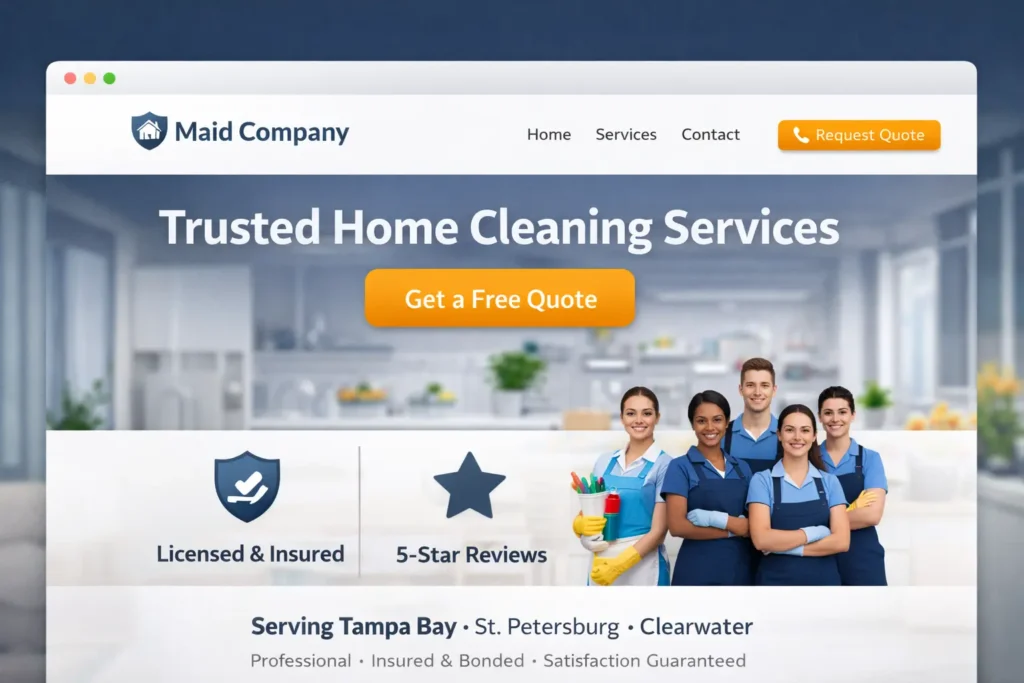
The homepage should clarify the offer right away. It should say what the company does, who it serves, and where it works. A line like “Professional maid services for busy families in Tampa Bay” is far more useful than a generic headline about sparkling homes.
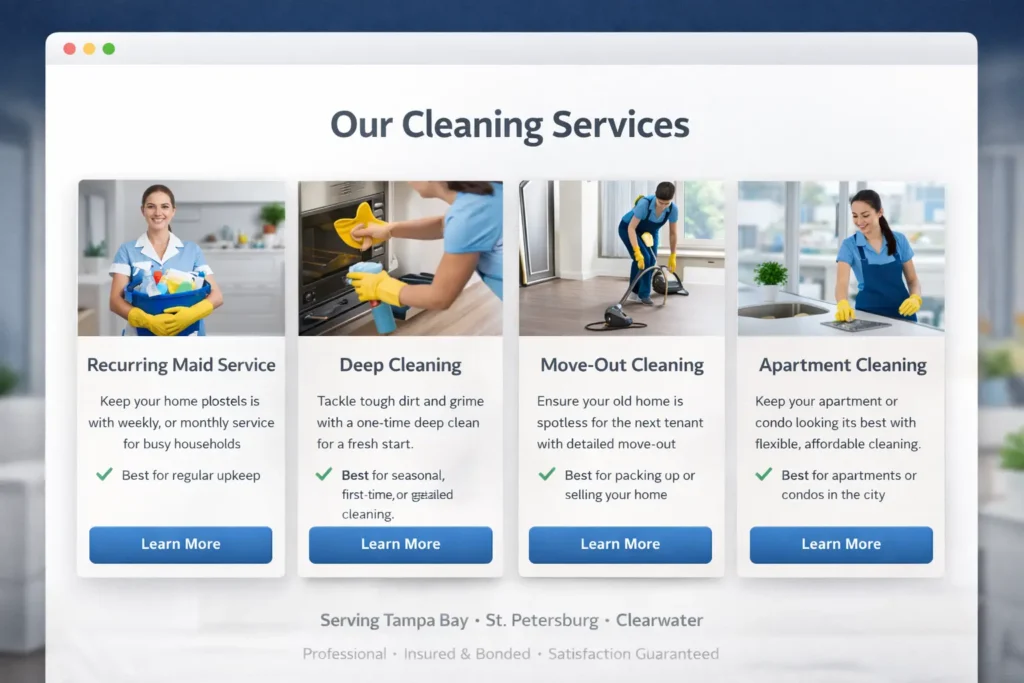
The services page should separate the actual buying categories. If you offer recurring maid service, deep cleaning, move-in or move-out cleaning, apartment cleaning, or vacation rental turnovers, each service should be easy to understand. This helps both rankings and conversion quality because visitors can self-select faster.
Trust should be designed into the page, not pushed to the footer. Review snippets, satisfaction guarantees, insured or bonded details when accurate, team photos, process sections, and clear response expectations all help reduce hesitation. This is also where website design & development services become more valuable than a purely visual redesign, because the page structure has to support both SEO and conversion.
Here is a simple benchmark table you can use when reviewing a draft:
| Website Section | Why It Matters | What It Should Show |
|---|---|---|
| Hero section | Creates the first impression in seconds | Service type, city or service area, one main CTA |
| Services section | Helps visitors find the right offer | Separate categories with short, specific descriptions |
| Trust section | Reduces fear and hesitation | Reviews, guarantees, credentials, and real photos |
| Service area section | Confirms local relevance | Cities, neighborhoods, ZIP codes, nearby references |
| Quote section | Converts interest into action | Short form, click-to-call, response-time expectation |
One practical detail that improves lead quality is adding a short “best for” line under each service. For example, recurring maid service can say it is best for busy households that want weekly or biweekly upkeep. Deep cleaning can be said to be best for first-time clients, seasonal resets, or pre-event preparation. That small layer of guidance helps people choose faster.
If you want to show visual proof instead of just describing it, a project gallery can help visitors compare layouts, hierarchy, and trust placement more clearly.
How the right structure improves trust, local SEO, and AEO
A lot of business owners think ranking higher is mostly about adding more words. In reality, structure does much of the heavy lifting.
Your homepage should target the main brand and market. Service pages should go deeper into each offer. Location pages should explain where you work without repeating the same paragraph with a swapped city name. Blog posts should support the service pages instead of competing with them.
That is where a web designer who understands local search becomes useful. They do not just choose fonts and spacing. They map the page hierarchy, improve internal links, reduce click friction, and make the site easier for both search engines and answer engines to understand.
For maid companies, local consistency matters more than many owners realize. Google explains that local results are influenced by relevance, distance, and prominence, so your site should clearly support the places you serve and the services you provide through Google’s local ranking tips. On the performance side, PageSpeed Insights is one of the easiest ways to test how your pages behave before and after a redesign.
AEO matters here, too. Answer engines and AI summaries usually prefer pages that answer the main question quickly, use descriptive subheadings, and include FAQs that sound direct instead of bloated. That is one reason the first two sentences of a page matter so much. A short answer-first opening often makes the page easier to extract, quote, and summarize.
This is also where your related content can work harder. A reader comparing niches may naturally move into house cleaning website tips or a more B2B-focused commercial cleaning website design guide. That type of internal path strengthens topical relevance while keeping readers on the site longer.
Which website option is best for your business
Not every maid company needs the same type of website. The right choice depends on your stage, budget, competition, and growth goals.
A DIY site can be enough if the business is brand new and only needs a temporary online presence. A template-based redesign can work when the brand needs something cleaner without starting from zero. But for most local service businesses that want better rankings and stronger conversion flow, a custom strategy-led build is the better long-term move.
| Option | Best For | Main Strength | Main Limitation |
|---|---|---|---|
| DIY builder | Very early-stage solo businesses | Lowest upfront cost | Usually weak on conversion structure and local SEO |
| Premium template | Small teams needing a faster relaunch | Better visual baseline than DIY | Often still generic and harder to localize well |
| Semi-custom build | Growing local businesses | Better messaging and cleaner page structure | Needs a clearer strategy to perform well |
| Custom lead-focused website | Established businesses that want stronger local growth | Strongest fit for SEO, trust, and booking flow | Higher initial investment |
For most maid companies, the best option is a semi-custom or custom service website built around local intent. Why? Because this niche depends heavily on trust, specificity, and ease. A generic layout can look acceptable, but it often lacks stronger service pages, better city targeting, and a smoother lead path.
The better question is not “Which option is cheapest?” It is “Which option gives me the clearest message, the easiest booking path, and the best chance to turn traffic into inquiries?” In most cases, that answer points toward a build with stronger planning behind it.
Design details that quietly improve bookings
Some of the most important improvements are not dramatic. They are quiet design choices that make the site feel easier to trust.
Your CTA should stay obvious throughout the page. One button in the hero is not enough. Add the main action again after services, after trust proof, and near the FAQ. Not aggressively, just naturally. Repetition works when it follows the visitor’s decision-making path.
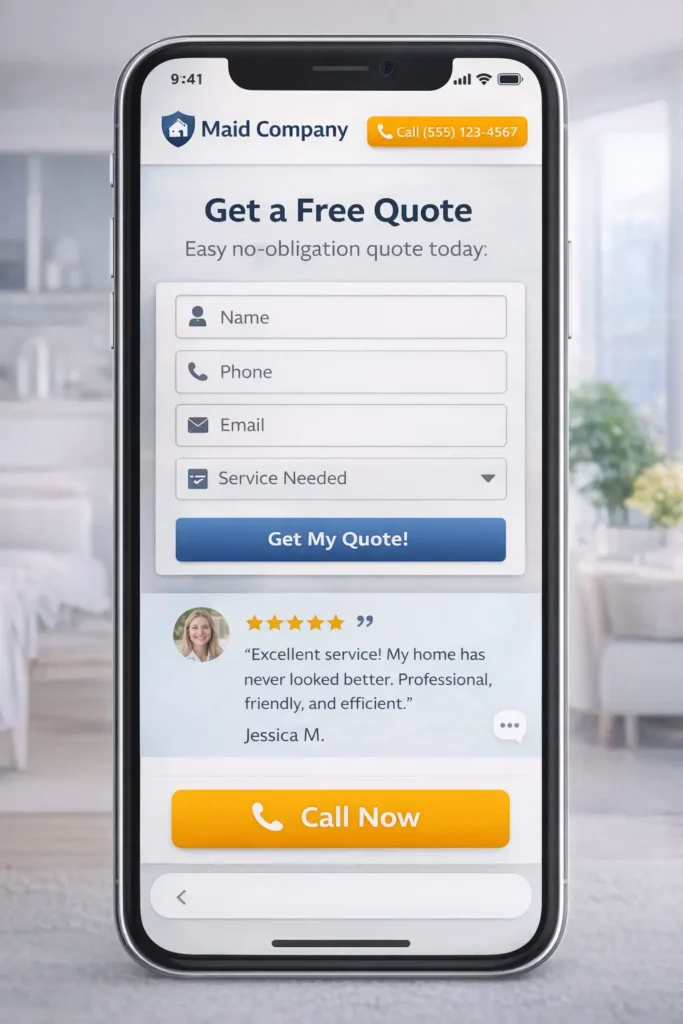
The mobile experience also matters more than owners expect. Most local service traffic arrives on phones. If the form is too long, the buttons are too small, or the page jumps while loading, visitors leave. A shorter form usually performs better than a detailed intake form at the first step.
A strong maid website usually gets these basics right:
✅ clear headline tied to the service and location
✅ short quote form with only essential fields
✅ real testimonials with useful language, not just star icons
✅ visible proof of service area and offer
✅ fast, stable mobile pages that feel easy to use
Copy also deserves more attention. Many service websites sound interchangeable because they use the same broad claims. Cleaner copy is usually more persuasive. Instead of saying you deliver excellence and unmatched quality, explain what the customer can expect. Do you offer weekly and biweekly visits? Do you bring supplies? Do you follow a checklist? Do you send reminders? Do you handle pet-friendly households? Those details help buyers trust the page faster.
Common mistakes that hold maid company websites back
One common mistake is hiding the service area. Even a well-designed site can underperform if a visitor cannot quickly tell whether you serve their neighborhood or city. Local clarity is part of conversion, not just SEO.
Another mistake is relying too heavily on stock photos. A few stock images are fine, but the foundation should feel real. Team photos, branded vehicles, supplies, uniforms, and actual client-safe visuals usually feel more believable.
The third mistake is making the homepage do too much. A homepage should guide, not explain every possible service in full detail. When everything is treated like a headline, nothing feels important.
The fourth mistake is using vague calls to action. “Learn more” is weaker than “Request a quote,” “Check availability,” or “See pricing options.” The next step should feel obvious.
The fifth mistake is publishing blog content with no internal purpose. Posts should connect naturally to service pages, not sit alone as isolated traffic pieces. That is one reason internal linking matters so much in topical clusters like cleaning, maid services, and commercial janitorial design.
The sixth mistake is treating the site like a finished brochure instead of a growth asset. Better websites evolve. They add FAQs, strengthen city pages, improve testimonial placement, tighten forms, and expand proof as the business matures.
Final Take
The best maid service website is not the one with the fanciest effects. It is the one that answers customer questions quickly, feels trustworthy on mobile, proves local relevance, and guides visitors toward a quote without confusion.
For most business owners, hiring a web designer, the smartest choice is a structure-first approach. Start with page purpose, trust signals, local clarity, and conversion flow. When those pieces work together, the site becomes more than an online placeholder. It becomes a lead-generation asset that supports SEO, AEO, and real business growth.
Frequently Asked Questions
1. What should a maid company website include to get better leads?
Clear service structure matters most here. A maid company website should include a direct headline, clear service categories, visible service areas, real testimonials, a short quote form, and proof that the business is trustworthy. It should also explain who the service is for and what happens after someone fills out the form. Better leads usually come from people who already understand your offer before they contact you, so clarity should come before extra design effects.
2. Is a custom website better than a template for a maid business?
A custom or semi-custom build is usually better when you care about lead quality and long-term visibility. Templates can work for a newer business with a very tight budget, but they often look similar to competitors and leave little room for stronger service pages, city pages, and better conversion flow. A more tailored build gives your web designer better control over messaging, calls to action, layout hierarchy, and internal linking, which usually leads to better performance over time.
3. How many pages does a maid service company website really need?
Fewer pages, better purpose is the right mindset. Most maid companies do not need a huge website to compete. A homepage, services page, contact or quote page, about page, and a few focused city or service-area pages are often enough to start strong. From there, blog posts and FAQs can support rankings and answer buyer questions. The goal is not page count for its own sake. The goal is to build a structure where every page has a clear job.
4. How do I choose the right web designer for a maid company?
Choose strategy before style. The right web designer should understand local service businesses, not just visual design. Look for someone who can explain page hierarchy, service page planning, internal linking, mobile conversion, and trust-building elements like reviews, FAQs, and proof sections. Ask how they think about local SEO and quote flow, and review real examples before hiring. A good designer should be able to show how the site will help you get more qualified inquiries, not just look nicer.