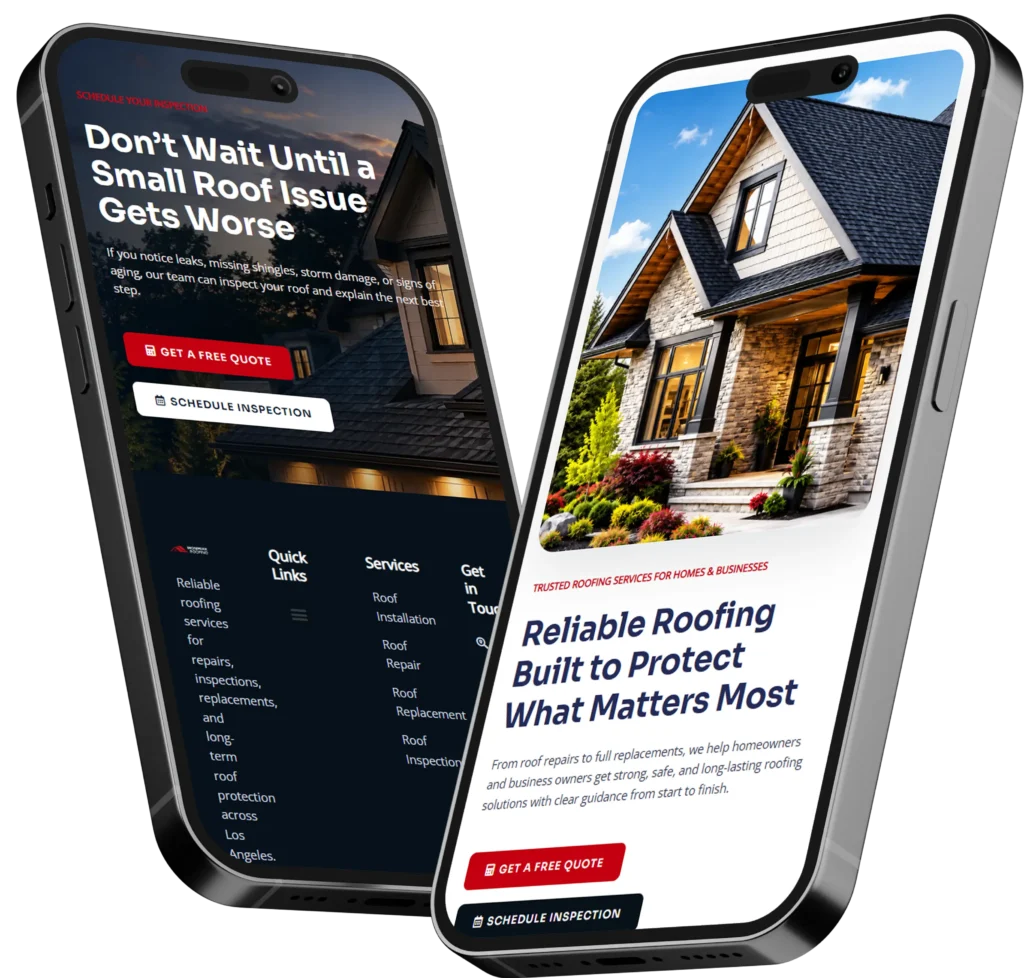
A web designer for local business helps turn nearby searches into calls, bookings, and visits by building a fast, clear, mobile-friendly website. The best choice is a designer who understands local SEO, service pages, conversion flow, and trust signals like reviews, maps, and real project examples.
For most small businesses, a good website is not just an online brochure. It should answer customer questions quickly, show why your business is trustworthy, and guide people toward one simple action like calling, booking, requesting a quote, or visiting your location.
If you want a website that looks professional and works harder for your business, start with growth-driven web design built around local leads, not just visuals.
Why Local Businesses Need the Right Website Designer
Local customers usually search with intent. They are not only browsing. They may need a plumber today, a dentist this week, a contractor for an estimate, or a restaurant nearby. If your website is slow, confusing, outdated, or missing key details, that visitor may choose a competitor within seconds.
That is why design matters. A strong local business website makes your offer obvious, shows your location and service area, displays proof, and makes contacting you simple. It should load quickly, look clean on mobile, and help search engines understand what services you offer.
A regular designer may focus mostly on colors, layout, and branding. Those things matter, but a local business needs more than a nice homepage. You need pages that match how people search, content that answers buyer questions, and calls to action that feel natural.
Google also recommends good user experience signals like loading performance, interactivity, and visual stability through Core Web Vitals, which is why speed and usability should be part of the design process, not an afterthought. You can learn more from Google’s Core Web Vitals guide.
What a Good Local Business Website Should Include
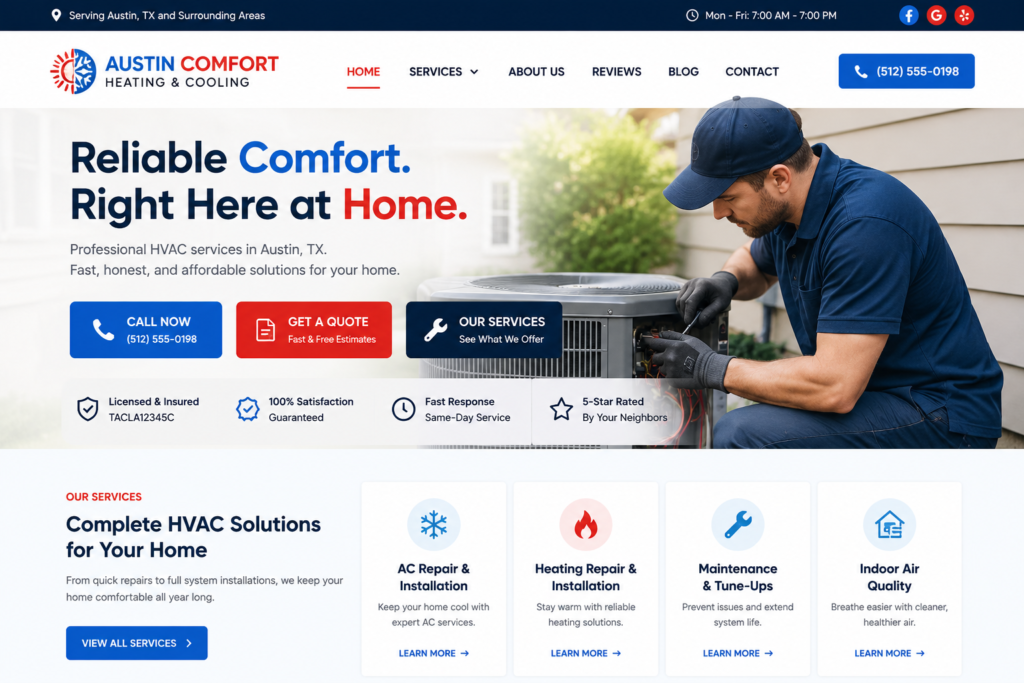
A local website should be simple enough for visitors to understand in seconds, but complete enough to build trust. The homepage should explain what you do, who you help, where you work, and why someone should choose you. Your service pages should go deeper into each offer so customers and search engines can clearly understand your business.
The best websites also include trust markers. These can be reviews, before-and-after photos, certifications, awards, years in business, guarantees, or examples of completed work. A visitor who has never heard of you needs proof before they reach out.
Your contact options should also be easy to find. Place your phone number, quote form, booking button, or contact link near the top of the page and throughout the content. Do not make people hunt for the next step.
| Website Element | Why It Matters | Best Way to Use It |
|---|---|---|
| Clear headline | Tells visitors they are in the right place | Mention your service and location clearly |
| Fast mobile layout | Most local searches happen on phones | Keep buttons large and pages easy to scan |
| Service pages | Helps rank for specific offers | Create one strong page per main service |
| Reviews and proof | Builds trust before the first call | Add testimonials, ratings, or project samples |
| Strong call to action | Turns visitors into leads | Use “Request a Quote,” “Book a Call,” or “Get Started” |
If you already have a site but it does not bring steady leads, a website redesign that converts may be better than starting from scratch.
How to Choose Which Website Option Fits Your Business
There are several ways to get a website built. The right option depends on your budget, timeline, goals, and how important local lead generation is to your business.
A DIY website builder can work for a very new business that only needs a simple online presence. It is usually cheaper, but it takes time and may lack strategy. You might get a basic site live, but you may struggle with search visibility, conversion layout, speed, and future changes.
A freelancer can be a good fit if you need a smaller website and already know exactly what you want. The challenge is that freelancers vary widely. Some are strong designers, some are developers, and some understand SEO, but not all can combine strategy, design, speed, and lead generation.
A local web design team is often the better choice when your website needs to support real business growth. This is especially true if you serve a specific city, region, or service area. You get a clearer strategy, stronger structure, and better long-term support.
| Option | Best For | Watch Out For |
|---|---|---|
| DIY builder | New businesses with very small budgets | Limited SEO, generic design, time-consuming setup |
| Freelancer | Simple sites with clear requirements | Skill gaps in SEO, copy, speed, or support |
| Template website | Quick launch and basic presence | Can look similar to competitors |
| Local design team | Businesses that want leads and growth | Higher investment, but usually better strategy |
Which option is best? For a business that depends on calls, bookings, form submissions, and local visibility, a strategy-led local website team is usually the strongest choice. It gives you design, technical setup, content structure, and conversion planning in one place.
How Much Should You Budget for a Small Business Website?
Website cost depends on the size of the site, level of custom design, number of service pages, copywriting needs, SEO setup, booking features, forms, galleries, and maintenance. A basic website usually costs less, while a conversion-focused website with service pages and local SEO planning costs more.
The better question is not only “How much is the website?” It is “What should this website help my business earn?” A cheap website that does not bring leads can become expensive over time. A stronger website that brings regular inquiries can pay for itself faster.
For example, a local service business that earns $500 to $2,000 from one new customer may only need a few extra leads per month to justify a better website. That is why your website should be judged by clarity, trust, speed, and conversion value, not just the design fee.
If you are comparing quotes, check what is included. Does the price include mobile design, SEO basics, page speed work, contact forms, copy guidance, launch support, and training? You can also compare common pricing factors in this guide to website design pricing for small business.
Local SEO Features Your Website Should Have
A local website should help search engines connect your business with the right location and services. This starts with clear page titles, service-based headings, local terms, internal links, image alt text, schema where needed, and consistent business information.
Your name, address, phone number, service areas, and business hours should match what appears on your Google Business Profile and other listings. Google Business Profile lets businesses show up on Search and Maps with photos, offers, posts, reviews, and key business details, which makes it an important part of local visibility. You can review Google’s official Business Profile resource.
Your website and Google profile should work together. The website gives visitors full details, service explanations, proof, and conversion paths. The profile helps people discover you in local search and maps. When both are aligned, customers get a more consistent experience.
A good designer should also understand internal linking. For example, a homepage can link to service pages, service pages can link to quote forms, and related blog posts can support important topics. This helps users move naturally through the site and helps search engines understand page relationships.
For businesses that want a clearer package, reviewing website design packages can help you see what level of support fits your goals.
Practical Tips Before Hiring a Website Designer
Before hiring anyone, prepare a short list of your goals. Do you want more phone calls, more quote requests, more bookings, better local rankings, or a more professional brand image? The clearer your goal, the easier it is to choose the right design approach.
Next, gather your most important business details. This includes your services, service areas, customer types, best photos, reviews, frequently asked questions, and examples of past work. These details help the designer create a website that feels specific to your business instead of generic.
Ask to see examples of completed projects. A designer’s portfolio shows more than style. It shows whether they can organize information, create clear calls to action, and design pages that feel trustworthy. You can view portfolio highlights to get ideas for layout, structure, and visual direction.
Also ask how the site will be built for updates. Small businesses often need to change hours, add services, update photos, post blogs, or adjust offers. A website should not feel impossible to manage after launch.
Signs You Need a Website Redesign
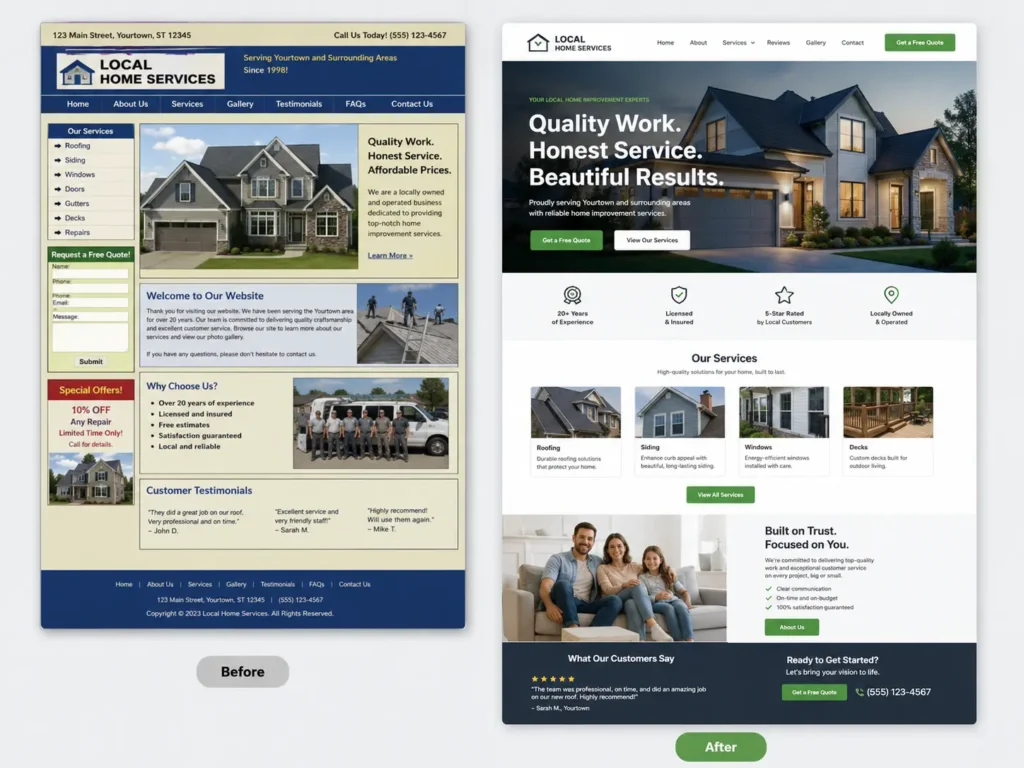
You may not need a brand-new website, but you may need a redesign if your current site no longer supports your business. Common signs include slow loading pages, outdated visuals, poor mobile layout, low traffic, weak calls to action, confusing navigation, or no clear service pages.
Another warning sign is when customers keep asking basic questions your website should already answer. If people cannot quickly find your pricing range, location, services, process, or contact details, your site may be creating friction.
A redesign can also help when your business has changed. Maybe you added new services, moved locations, expanded your team, changed your pricing, or started targeting a different type of customer. Your website should match where your business is now, not where it was years ago.
For location-based searches, you may also want to review website design services near me to understand how local intent affects website structure.
What the Website Process Usually Looks Like
A strong website process starts with discovery. This is where the designer learns about your business, customers, services, competitors, and goals. Skipping this step often leads to a website that looks fine but does not speak clearly to your audience.
After discovery, the next step is structure. This includes deciding which pages you need, how the navigation should work, and what each page should accomplish. For a local business, this often includes a homepage, about page, service pages, contact page, gallery or portfolio, and helpful blog content.
Then comes copy, design, development, testing, and launch. Testing is important because small problems can hurt conversions. Buttons should work, forms should send properly, images should load fast, and the mobile version should feel smooth.
After launch, the site should be monitored and improved. A website is not a one-time business card. It can keep getting better as you learn what visitors click, which pages bring leads, and which services need more visibility.
Final Take: web designer for local business
Choosing the right web designer for local business is about more than getting a good-looking website. It is about building a site that explains your value, supports local SEO, earns trust, and turns visitors into real leads.
The best option is usually the one that combines design, strategy, speed, mobile usability, local content, and clear calls to action. A small business website should make it easy for customers to understand what you do, why you are credible, and how to contact you.
If your current site is outdated or not bringing results, it may be time to work with website design & development services that focus on growth, not just appearance.

Frequently Asked Questions
1. How much does a website designer cost for a small business?
A small business website designer can cost anywhere from a basic starter rate to several thousand dollars, depending on the size, features, content, and strategy included. A simple brochure-style site usually costs less, while a custom website with service pages, SEO setup, booking tools, copywriting, and conversion planning costs more. The best way to compare pricing is to look at what is included, not just the final number.
2. How much should a web designer cost?
A web designer should cost enough to cover proper planning, design, mobile setup, testing, and launch support. Very low pricing may seem attractive, but it can leave out important parts like SEO structure, speed optimization, conversion layout, and future support. For a local business, the better investment is a website that helps generate leads. Always ask what pages, revisions, technical work, and post-launch support are included before choosing.
3. What is the 3 second rule in website design?
The 3 second rule means visitors should understand your website’s main message almost immediately. In the first few seconds, your page should show what you offer, who you help, where you serve, and what action visitors should take next. This matters because local customers often compare options quickly. A clear headline, visible call button, fast loading speed, and simple layout can help keep people from leaving.
4. How to create a website for local business?
To create a local business website, start with your goal, services, location, and ideal customer. Build a clear homepage, dedicated service pages, an about page, a contact page, and trust sections like reviews or project examples. Make sure the site is mobile-friendly, fast, and connected to your Google Business Profile. Add local keywords naturally, use clear calls to action, and keep your business details consistent everywhere online.