
A yoga studio website should clearly explain your classes, build trust fast, and make it simple for new students to book. The best-performing sites combine strong local SEO, calm design, mobile-first pages, and a friction-free booking flow.
Most studio owners do not lose leads because they lack traffic. They lose leads because the website does not answer key questions quickly enough. When someone lands on your homepage, they want to know what you offer, where you are, how to book, what makes your studio different, and whether the space feels right for them. If those answers are buried, vague, or difficult to find on mobile, many visitors leave before taking the next step.
That is why a good studio site has to do more than look peaceful. It needs to work hard behind the scenes. It should support search visibility, guide users toward action, and remove the friction that keeps a first-time visitor from becoming a paying student.
Why a Yoga Studio Needs a High-Converting Website
A yoga studio competes on more than price. People choose classes based on trust, atmosphere, convenience, teacher credibility, and how easy the next step feels. Your site becomes the first-class experience before someone ever walks through the door.
When the site is built well, it helps your studio in three important ways. First, it improves discovery. A well-structured site can show up for local searches tied to yoga classes, teacher specialties, beginner sessions, prenatal yoga, or private lessons. Second, it improves trust. Clear photos, class details, and instructor bios help new visitors feel comfortable. Third, it improves conversion. The fewer clicks it takes to go from browsing to booking, the more inquiries and reservations you are likely to get.
This is also where thoughtful design matters. A soft visual style helps, but conversion comes from clarity. Visitors respond when headlines are specific, navigation is simple, and every page points them toward the next action. Studios that want that balance between visual calm and measurable performance often look at website design & development services or review portfolio highlights to see what a strategic studio site can look like in practice.
What Your Website Should Include
A strong studio website should feel effortless to use. That does not mean it has to be large. In fact, many of the best studio sites are compact, but every page has a purpose.
Here is the structure that usually performs best for yoga studios:
| Page or Section | What it should do | Why it matters |
|---|---|---|
| Homepage | Explain your studio, audience, and next step in seconds | Helps new visitors decide whether to stay |
| Class Schedule | Show times, levels, formats, and instructors clearly | Reduces confusion and supports bookings |
| About Page | Tell your story and values without sounding generic | Builds emotional trust |
| Instructor Bios | Show credentials, specialties, and teaching style | Helps visitors choose with confidence |
| Pricing or Memberships | Explain drop-ins, packages, and recurring options | Removes hesitation around cost |
| Contact and Location | Make directions, parking, hours, and map access easy | Supports local SEO and walk-in conversions |
| Reviews or Testimonials | Share real student experiences | Adds social proof |
| Booking CTA | Place clear actions throughout the site | Turns visits into inquiries or reservations |
Each of these sections answers a question a new student already has in mind. The mistake many studios make is assuming visitors will explore until they find what they need. Most people will not. They scan, judge quickly, and move on if the page does not feel easy.
That is why homepage messaging matters so much. Instead of using a vague opening like “Find your balance,” it is better to say exactly what the studio offers and who it serves. For example, a better opening may be: “Beginner-friendly yoga classes in Austin with flexible morning, evening, and weekend sessions.” That sentence gives search engines context and gives users confidence.
Why These Elements Matter for New Student Growth
A visitor who has never heard of your studio needs reassurance. They often ask practical questions first and emotional questions second.
The practical questions are straightforward. Is the studio nearby? Are classes beginner-friendly? Can I book online? What does it cost? Is parking available? Are there restorative, prenatal, or strength-based options?
The emotional questions are quieter, but just as important. Will I fit in? Is this studio too advanced for me? Will the teachers be welcoming? Will the environment feel intimidating?
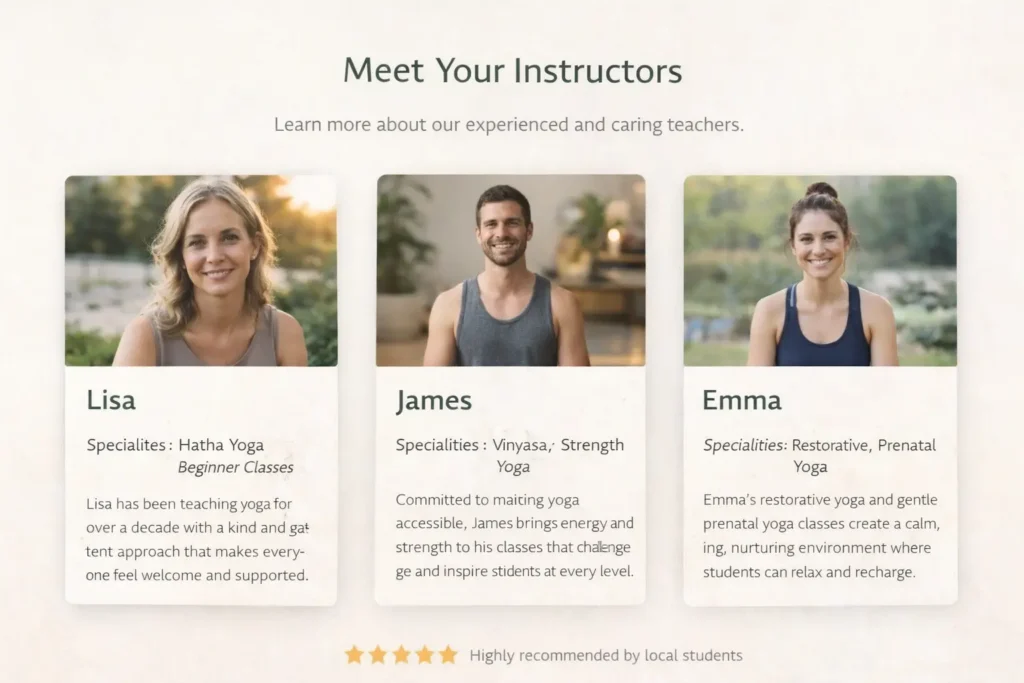
Your website should answer both. This is why instructor pages matter. A short bio with a warm tone, a real photo, and a note about teaching approach can reduce a lot of first-time anxiety. The same is true for FAQs, schedule details, and class descriptions that explain what someone can expect when they arrive.
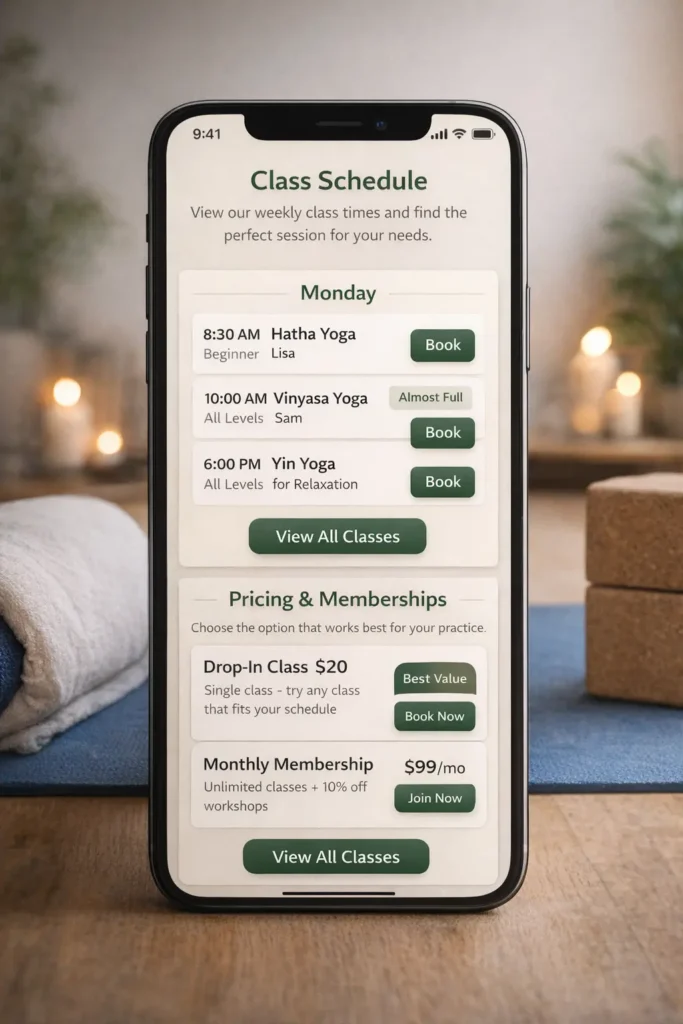
Studios often focus heavily on Instagram, but your site is where serious intent happens. Social media can attract attention. The website closes the loop. A visitor may discover your studio on social, but they usually make the final decision after checking your site.
For a broader context on what Google wants from helpful, accessible content, it is worth reviewing Google Search Essentials and keeping your local business information updated through Google Business Profile Help.
How a Better Website Improves Bookings
Bookings improve when the path from curiosity to action becomes shorter and clearer. That sounds simple, but many studio sites still make people work too hard.
Here is what usually gets in the way:
A homepage that looks nice but says very little.
A menu that hides class information.
A booking link that opens slowly or is hard to use on mobile.
Pricing that is unclear.
No reassurance for beginners.
No trust signals near key calls to action.
A strong booking flow fixes those issues. The homepage introduces the studio and points visitors toward one primary action. The schedule page explains classes in plain language. The pricing page removes ambiguity. Trust signals such as testimonials, reviews, awards, or “new student special” details appear close to the CTA instead of being hidden somewhere else.
It also helps to think in terms of booking friction. Every extra click, every confusing label, and every missing detail creates friction. The studios that book more consistently tend to reduce those decision points.
For example, instead of a generic “Learn More” button, use action-led buttons that match intent, such as “View Class Schedule,” “Book Your First Class,” or “See New Student Offers.” These small shifts make the next step clearer.
If you want inspiration from adjacent fitness niches, these related examples can help: fitness studio website examples and personal trainer website design ideas. They show how service-based businesses can structure pages around trust, clarity, and bookings.
How to Make the Site SEO-Friendly Without Making It Feel Over-Optimized
SEO for a yoga studio should not feel robotic. The best local SEO pages still sound human. They simply organize information in a way that search engines and visitors can understand.
Start with page intent. Each page should target one clear purpose. Your homepage might target your studio brand and main local yoga offering. A class page can target a service such as beginner yoga, hot yoga, prenatal yoga, or private yoga classes. A location page can support neighborhood-based visibility if you serve multiple areas.
Then work on on-page clarity. Use one main topic per page. Keep headings specific. Add local phrases naturally where they help readers understand where you are and who you serve. Write title tags and meta descriptions that describe the real value of the page, not just a list of keywords.
Internal linking also matters. A homepage should point clearly to the schedule, pricing, instructor bios, and contact page. Blog posts should support service pages. If you write an article about preparing for your first yoga class, that post should naturally link back to your beginner class page or your booking page. This helps both users and search engines understand site relationships.
Technical basics matter too. A studio site should load quickly, especially on mobile. Images should be compressed. Buttons should be easy to tap. Booking widgets should not take forever to appear. Navigation should stay simple. These are not just SEO details. They affect real conversion behavior.
| SEO Element | Best Practice for a Yoga Studio | Business Impact |
|---|---|---|
| Title Tags | Use clear service + location phrasing | Improves local relevance |
| Meta Descriptions | Summarize the benefits and the next step | Improves click-through appeal |
| Heading Structure | Keep H1 and H2 topics focused | Improves readability and topical clarity |
| Internal Links | Connect blogs to class and booking pages | Helps users move deeper into the site |
| Mobile Speed | Optimize images and scripts | Reduces drop-off on phones |
| Local Signals | Add address, map, service area, and profile consistency | Supports local discovery |
| Schema and Structured Info | Mark up business details where appropriate | Helps search engines understand the business |
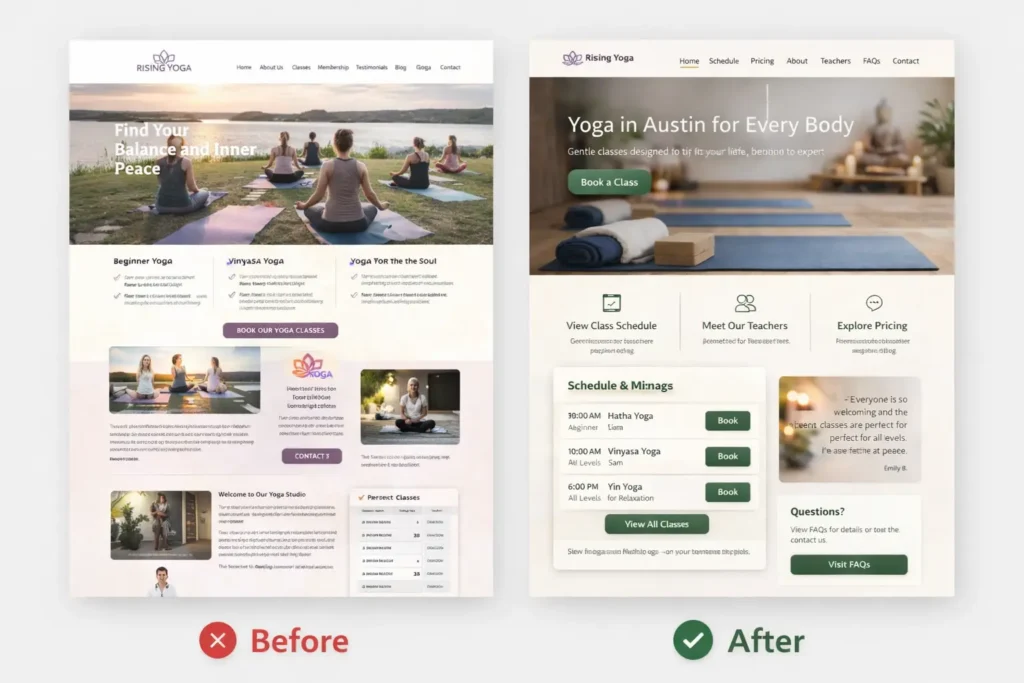
Which Website Option Is Best for a Yoga Studio
The best option depends on your growth stage, budget, and how much flexibility you need.
A DIY site builder can work for a brand-new studio that needs a simple launch. It is usually the fastest and cheapest path. The downside is that many DIY sites end up with weak structure, thin SEO foundations, and templates that look polished but convert poorly.
A premium template is the middle option. It can give you a cleaner design foundation and save time, especially if you already know your brand voice, offer structure, and page priorities. The limitation is that templates still need a strategy. A beautiful template does not automatically produce bookings.
A custom website is usually the strongest option for studios that want long-term growth, stronger local rankings, and a better conversion path. This route works best when the business already knows its audience, has a clear offer mix, and wants the website to act as a real sales asset rather than a digital brochure.
For most yoga studios, the best practical choice is not the cheapest option. It is the option that gives you the clearest messaging, easiest booking flow, fastest mobile performance, and most room to grow. That is where a well-planned custom or semi-custom build often wins.
Common Mistakes That Hold Studio Websites Back
Many studio websites underperform for reasons that are fixable.
One common issue is trying to sound spiritual instead of clear. Brand voice matters, but clarity should come first. Visitors need to know what you do and what to click next.
Another issue is burying the class schedule. This is one of the most visited pages on most studio sites, so it should be easy to access from the main navigation and homepage.
A third issue is weak local trust. If the site does not clearly show the studio location, local relevance, photos of the actual space, and proof from real students, the visitor has to do extra work to trust the business.
Studios also miss opportunities when they publish blog content that never supports the main money pages. Educational articles should connect to class categories, teacher specialties, and booking actions. Content should not live in isolation.
Practical Tips That Improve Results Fast
The fastest gains usually come from improving messaging, not redesigning everything at once.
Clarify the homepage headline so a first-time visitor understands your offer in under five seconds. Move your booking CTA higher on the page. Add a short section for beginners if first-time students are a major growth segment. Make pricing easy to compare. Add reviews near action buttons. Clean up the mobile menu. Improve the instructor bios so they feel personal and reassuring.
You can also add small conversion boosters that make a real difference, such as a “What to Expect for Your First Visit” section, a simple parking note, or a quick explanation of what students should bring. These are minor details, but they remove uncertainty, which is one of the biggest blockers for first-time bookings.
Final Thoughts
A yoga studio website performs best when it combines calm branding with clear structure, local SEO, and an easy booking experience. When every page answers real student questions and points naturally toward action, the site stops being just an online brochure and starts becoming one of your strongest growth tools.
Frequently Asked Questions
1. What should a yoga studio website include?
A strong yoga studio site should include the essentials that help people trust you and book quickly. That means a clear homepage message, an easy-to-read class schedule, pricing or memberships, instructor bios, contact details, and strong calls to action. It should also include testimonials, a mobile-friendly design, and simple navigation. If a first-time visitor cannot understand your offer within a few seconds, the site is likely missing something important that affects both trust and conversions.
2. Why is a yoga studio website important for attracting new students?
A website is important because it acts as your studio’s first impression for people who are actively deciding where to go. Social platforms may create awareness, but your website answers the deeper questions that influence action. New students want to know what classes you offer, whether beginners are welcome, how much it costs, and how the space feels. A strong site builds credibility, supports local search visibility, and helps more visitors become real bookings instead of lost traffic.
3. How can a yoga studio website improve bookings?
A booking-focused website improves results by reducing friction between interest and action. When visitors can quickly find the schedule, understand the class options, compare pricing, and book from their phone without confusion, conversion rates usually improve. Good booking pages also add reassurance through reviews, teacher profiles, and beginner-friendly details. The goal is not only to attract traffic. It is to make the next step feel easy enough that interested visitors actually complete it.
4. How do I make a yoga studio website SEO-friendly?
An SEO-friendly studio website uses clear page structure, local relevance, and helpful content rather than forced keywords. Start with focused pages for your main services, write descriptive headings, add strong internal links, and make sure your address and business information are consistent. Your site should also load fast on mobile and explain your classes in plain language. The best SEO for a yoga business feels natural because it is built around what potential students are already searching for.