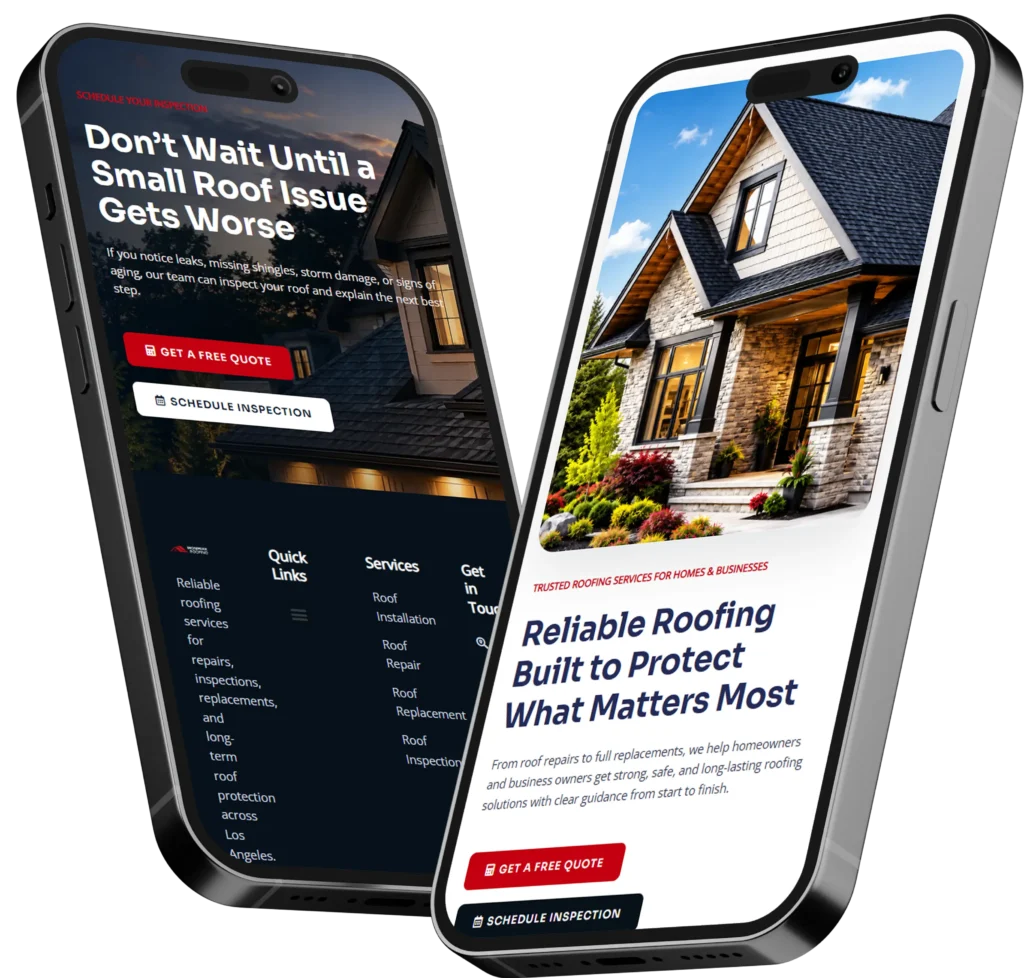
A local service website helps nearby customers understand what you do, trust your business, and contact you fast. When the right pages, proof, and calls to action are in place, the site becomes a lead source instead of just an online brochure.
Most service businesses do not need a flashy site. They need a clear one. That means a strong home page, focused service pages, proof that the company is real, and a booking path that feels easy on mobile and desktop.
If your goal is better rankings, better conversions, and better leads, the answer is not more pages alone. It is a better structure, stronger intent matching, and a simpler path from search to inquiry.
What This Type of Website Should Actually Do
A website for a local service business should do three jobs well.
First, it should explain the offer quickly. A visitor should know within seconds what you do, where you work, and what action to take next. If that message is vague, the visitor has to work too hard. Most will leave before they reach the important part.
Second, it should build trust. Service businesses ask people to invite them into homes, offices, job sites, and private spaces. That means trust matters even more than it does for many e-commerce brands. Reviews, project photos, certifications, guarantees, years in business, and real team information all help reduce hesitation.
Third, it should convert. A beautiful layout is not enough if the phone number is hard to find, the quote form is too long, or the service pages never answer real buyer questions. Great service sites guide people toward one clear next step, such as calling, requesting a quote, or booking a consultation.
This is why many local companies struggle online. Their site talks about the brand in general terms, but it does not make the decision easy. A strong service site makes the offer obvious, the proof visible, and the contact path simple.
Google also recommends creating content that helps search engines understand the page while helping users decide whether they should visit your site. That is one reason clear page structure, readable headings, and useful content matter so much for service businesses.
Why It Matters More for Local Lead Generation
When someone searches for a plumber, electrician, roofer, designer, cleaner, or contractor, they usually do not want to browse for fun. They want a solution. That makes local search traffic high intent, but only if the site matches that intent.
A strong service website can help you win leads in several ways:
✅ It gives each service its own page, which makes the site easier to rank and easier to understand.
✅ It supports local SEO by showing service areas, business details, and trust signals.
✅ It improves conversions because visitors do not have to guess what to do next.
✅ It supports referrals, ads, maps, and social traffic because every channel has a better landing place.
Here is the simplest way to think about it: your site should answer the questions a real buyer has before they call.
| Website Element | What It Should Do | Why It Matters |
|---|---|---|
| Home page | Introduce the offer, service area, and main CTA | Creates clarity in the first few seconds |
| Service pages | Explain each service in detail | Matches search intent and improves conversions |
| About page | Show who is behind the business | Builds trust and legitimacy |
| Reviews and proof | Show results, testimonials, and case studies | Reduces friction and supports decision-making |
| Contact or quote page | Make it easy to reach you | Turns traffic into leads |
| FAQs | Answer buyer concerns before they ask | Helps both SEO and conversions |
If you want to see how high-converting structure looks in real projects, explore the project gallery.
How Google Local Services Fits Into the Bigger Picture
Many business owners mix up Google Local Services, Google Business Profile, and their own website. They work together, but they are not the same thing.
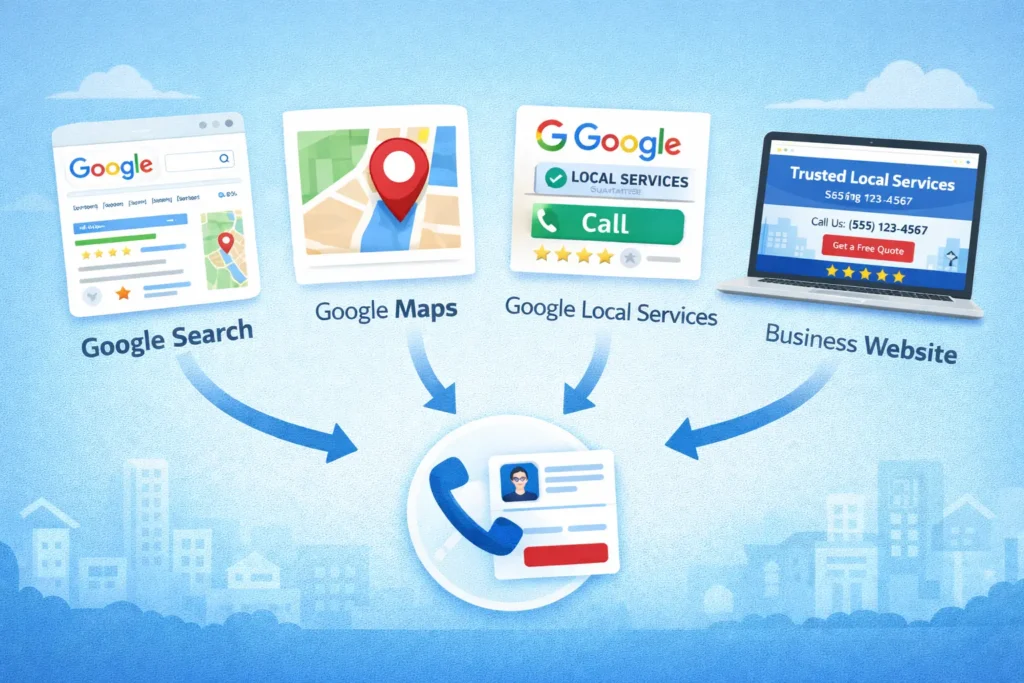
Google says Local Services Ads highlight core details like services offered, service area, hours, and reviews. Google also says a verified Business Profile helps your business appear on Google Search and Maps. That means your visibility can come from more than one place, but your website is still the place where many buyers go to compare, verify, and take action.
A smart setup looks like this:
You keep your Google presence accurate and active, then send people to landing pages that continue the same message. If your Google listing says emergency plumbing, but the page they visit is generic and unfocused, you lose momentum. If the listing and landing page match, trust grows faster.
For the Google side of your strategy, it is worth reviewing Google’s Local Services Ads overview and the Google Business Profile setup guide.
How to Build a Site That Converts More Visitors Into Leads
The fastest way to improve a service site is to stop treating every visitor the same. A person searching for kitchen remodeling has different questions than someone searching for bathroom repairs or monthly maintenance. That is why page depth matters.
Start With a Clear Home Page
Your home page should answer the five things above the fold:
✅ What you do
✅ Who you serve
✅ Where you work
✅ Why people trust you
✅ What action to take next
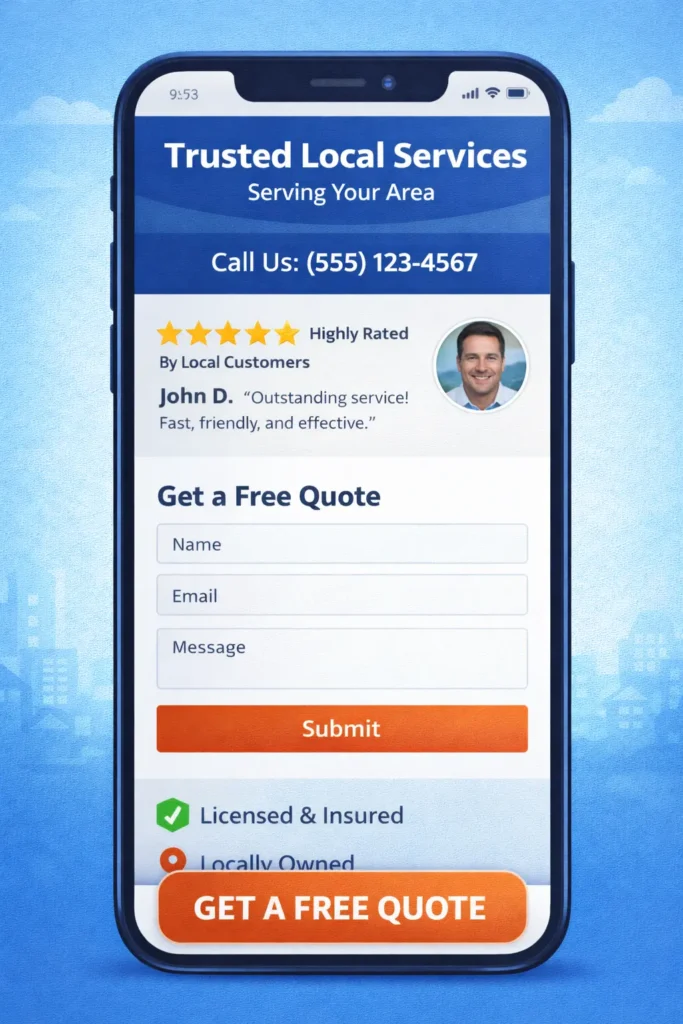
That does not mean cramming everything into the hero section. It means writing a headline that is specific, using a supporting line that explains the value, and placing a visible CTA where people do not have to hunt for it. On mobile, the tap-to-call button should be obvious.
A weak home page says, “Welcome to our company.”
A strong one says, “Kitchen and bath remodeling for homeowners in [service area], with transparent timelines and proven project experience.”
That difference matters because it reduces confusion immediately.
Build Separate Pages for Your Core Services
One of the biggest mistakes service businesses make is listing ten services on one page and calling it done. That is not enough for search visibility or user confidence.
Each important service deserves its own page. Each page should explain:
✅ Who the service is for
✅ What is included
✅ Common problems it solves
✅ What the process looks like
✅ Why your business is a strong choice
✅ What is the next step
This is where service businesses often gain a real SEO advantage. A focused page can rank for specific service intent, but it also converts better because it feels more relevant. A user looking for plumbing repair wants a plumbing repair page, not a general company page with a short paragraph buried halfway down.
If you want professional help building those conversion paths, review the website design & development services.
Add Real Local Relevance Without Keyword Stuffing
Local relevance does not mean repeating the city name twenty times. It means proving that your company truly serves that market.
You can do that by adding service area details, nearby project examples, testimonials from local clients, driving radius information, embedded maps where useful, and copy that reflects the actual way people search in your region. City pages can work very well, but only when they are genuinely useful and not thin duplicates.
Good local relevance feels natural. It helps the visitor say, “Yes, this company actually works where I live.”
Use Trust Blocks in the Places Buyers Need Them Most
Trust should not live on one lonely reviews page. It should appear across the site where people are making a decision.
That means placing proof near the CTA, not after it. Add review snippets near the hero section, trust badges near forms, project photos near service descriptions, and short results-driven statements near quote buttons. If you have guarantees, financing options, warranties, or licensing information, make them easy to find.
This is also where supporting content helps. Related articles can pre-sell the visitor before they contact you. For example, a service business can strengthen topical depth by linking to a plumber website design guide or a contractor website design guide when those topics support the reader journey.
Make Contact Friction Low
The contact page should not feel like homework.
Use a short form. Ask only what helps you qualify the lead. Make the phone number clickable. If you offer consultations, explain what happens after the form is submitted. If your business depends on speed, say when the customer can expect a reply.
A lot of service websites lose leads here. They do everything right, then finish with a slow or clunky inquiry experience. A clear next step often matters more than fancy design.
Add FAQs That Match Real Search Intent
Good FAQ sections do two things. They help hesitant buyers, and they expand your relevance around real questions.
For AEO and GEO, this matters because direct-answer content is easier for search engines and AI systems to interpret. A useful FAQ section can support service pages, home pages, and blog content without feeling repetitive. The key is to answer the question directly first, then add a clear explanation right after.
Which Website Option Is Best for Most Service Businesses
Not every business needs a fully custom website on day one. The best option depends on your offer, competition, sales process, and growth goals.
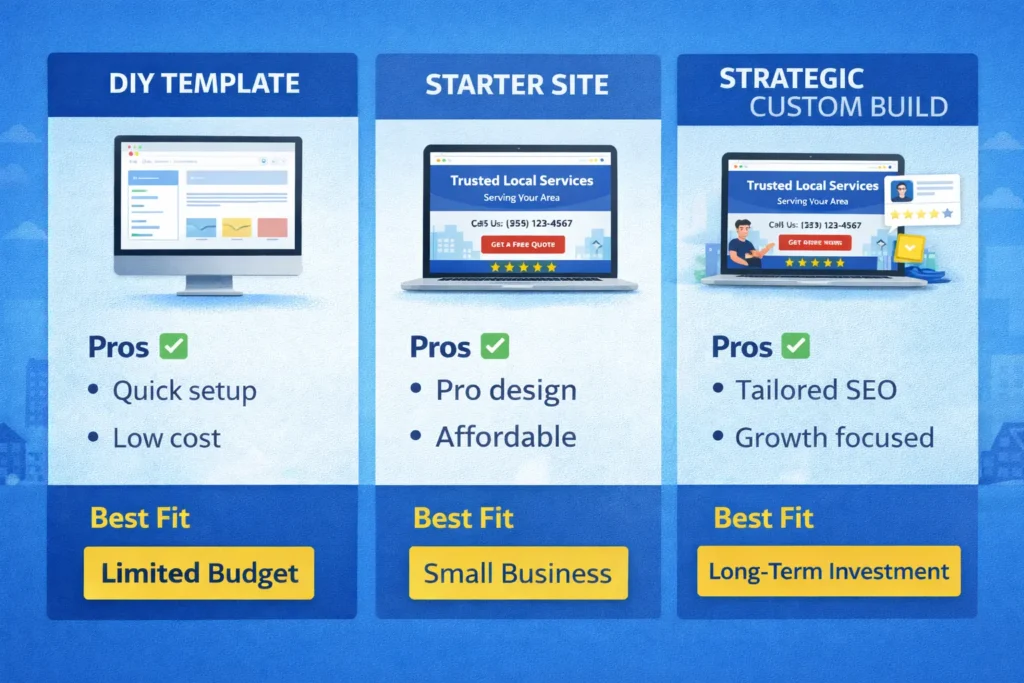
| Website Option | Best For | Pros | Limits |
|---|---|---|---|
| DIY template build | Very early-stage businesses | Low upfront cost, fast launch | Often weak messaging, weak structure, weak conversion flow |
| Done-for-you starter site | Small businesses that need a solid foundation quickly | Faster than custom, better than DIY, easier to manage | May still need stronger SEO depth later |
| Strategic custom build | Businesses that want higher rankings and better lead quality | Best for messaging, conversion paths, and scalable SEO | Higher investment and planning are needed |
For most established service companies, the best choice is usually a strategic build that blends speed, clarity, and room to grow. A template can work for getting online, but once competition rises, the businesses that win are the ones with stronger page intent, stronger proof, and better user flow.
That is especially true in markets where multiple providers look similar. When every competitor says “quality service” and “free estimates,” the site that explains the process better and removes more doubt often wins.
If you are at the stage where your site needs more than a basic refresh, small business web design experts can help shape a structure that supports both rankings and conversions.
Common Mistakes That Hold Service Websites Back
A lot of service sites underperform for very fixable reasons.
The first issue is vague copy. If the headline could belong to any business in any city, it is too generic. Specificity is what turns a page from decorative to persuasive.
The second issue is weak service architecture. When all services are stacked onto one page, the site becomes harder to rank and harder to navigate. Separate service intent deserves separate pages.
The third issue is proof that feels hidden. Reviews, sample work, guarantees, and certifications should support the decision throughout the page, not sit in one isolated section that no one reaches.
The fourth issue is mobile friction. Many local visitors come from a phone. If buttons are too small, text is cramped, or forms are annoying, performance drops fast.
The fifth issue is a disconnected strategy. The blog says one thing, the home page says another, and the quote page barely says anything. Strong service websites feel consistent from search result to final CTA.
A good rule is simple: every important page should answer the visitor’s next question before they have to ask it.
Final Thoughts
The best local service website is the one that makes trusting you and contacting you feel easy in one visit.
That usually means fewer generic claims, more service-specific pages, clearer local relevance, stronger proof, and cleaner calls to action. If you build around those fundamentals, your site has a much better chance of ranking well, supporting AEO visibility, and turning traffic into real leads instead of passive visits.
Frequently Asked Questions
1. What are local websites?
Local websites are websites built to attract customers in a specific geographic area. They usually focus on one town, city, or service region and are designed around local intent. That means the content, service pages, contact details, testimonials, and trust signals all help nearby users feel that the business is relevant to them. A local-focused site is not just about ranking in search. It is about showing visitors that the company actually serves their area and understands what they need.
2. How to use Google local services?
The best way to use Google local services is to keep your profile accurate, complete the required setup, and connect it to landing pages that match the lead intent. Google’s official documentation explains that Local Services Ads can surface important business information and generate calls or messages from potential customers. You improve results by defining the right service areas, choosing the right job types, collecting reviews, and making sure the page visitors land on continues the same message they saw in Google.
3. What is a service website?
A service website is a business website built to sell expertise, appointments, jobs, or project-based work rather than physical products. Instead of product categories and checkout pages, it usually relies on service pages, trust-building sections, quote forms, consultation prompts, FAQs, and proof of results. The main goal is to move a visitor from interest to inquiry. That is why strong service websites focus so heavily on clarity, credibility, and a simple next step.
4. What are the 12 types of websites?
A practical way to group the 12 common website types is by business purpose and user action. The most common categories are business websites, e-commerce websites, portfolio websites, blogs, news websites, membership websites, educational websites, nonprofit websites, community forums, directories, landing pages, and web apps. In real projects, some sites combine several of these. A service business website, for example, may include blog content, landing pages, and portfolio sections all within one larger structure.