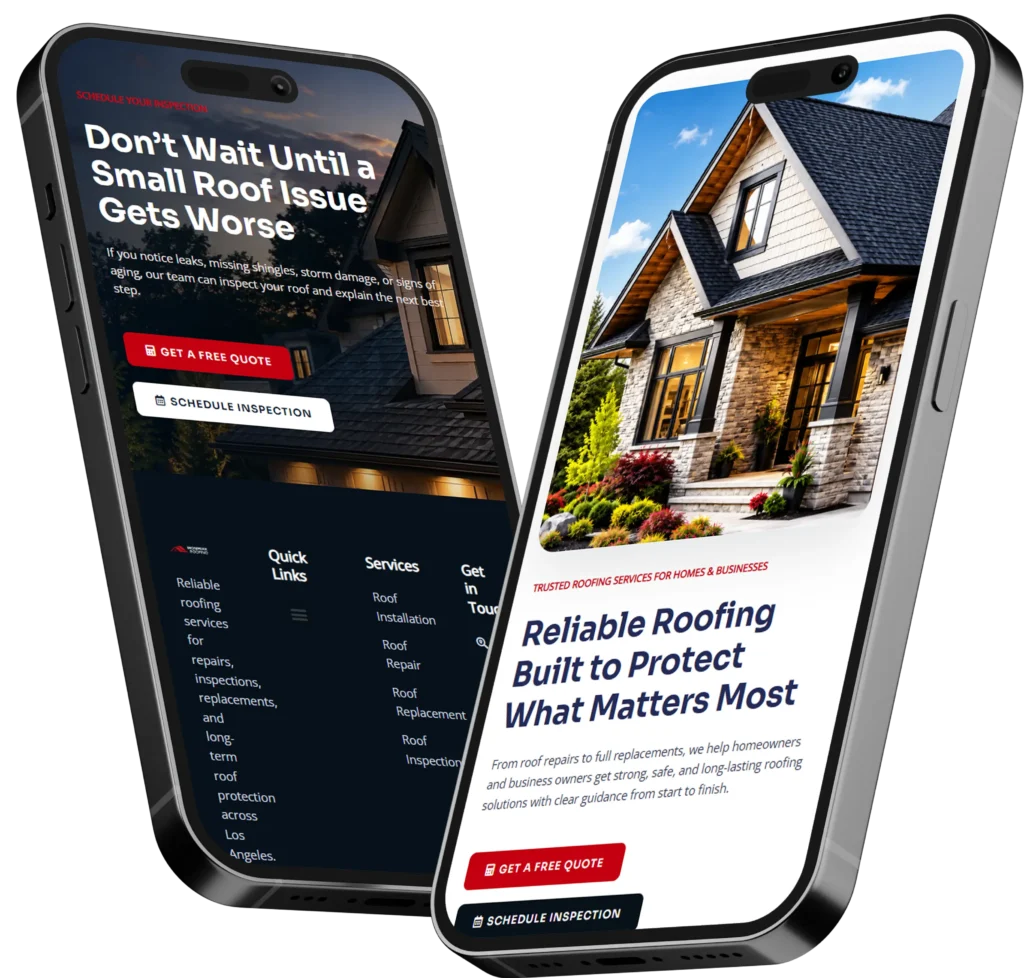
A house cleaning website should make trust, service area coverage, and quote requests obvious within the first screen. The best-performing version is usually the one that answers key homeowner questions fast, proves credibility visually, and removes friction from booking.
Most cleaning brands do not lose leads because people dislike the service. They lose them because the website feels generic, slow, unclear, or incomplete. A visitor lands on the page, cannot confirm what is offered, does not see proof, and leaves before filling out the form.
That is why the right website design is not just about looking polished. It is about making the next step easy. For a local cleaning company, that next step is usually requesting a quote, checking service areas, or deciding whether your team feels trustworthy enough to let into their home.
A strong site should do four things well. It should explain the offer, prove the company is legitimate, guide the visitor toward contact, and support search visibility with a clear page structure. If those four are handled well, the design does more than look good. It starts working like a salesperson that never logs off.
Why this kind of website matters more than most service sites
Cleaning is a high-trust service. A homeowner is not buying a simple product. They are considering who enters their home, how consistent the result will be, and whether the experience will be worth the cost. That means your website has to reduce uncertainty immediately.
A local service business can get away with a thin site for a while, but cleaning brands usually cannot. People want to know what type of cleaning you handle, whether you serve their area, how to get a quote, how often clients book, and whether your team is insured, vetted, and dependable. If those answers are buried or missing, the visitor will compare you against a competitor that makes everything easier to understand.
This is also why templated messaging often underperforms. The copy sounds broad, the photos look stock-heavy, and the visitor feels no connection to the business or its market. A more strategic build with stronger messaging, better calls to action, and a cleaner page flow often does more for conversions than adding extra design effects.
If you are reviewing providers, a partner focused on growth-driven web design usually understands this difference faster than a studio that treats a local service site like a portfolio piece.
What pages a cleaning company site really needs
A lot of owners think the homepage has to do everything. It does not. The homepage should guide, not overload. The site as a whole needs a clean structure so each page carries a specific job.
The homepage should introduce the brand, explain the offer, highlight your core service areas, show social proof, and move the visitor toward a quote request. It should not become a wall of text.
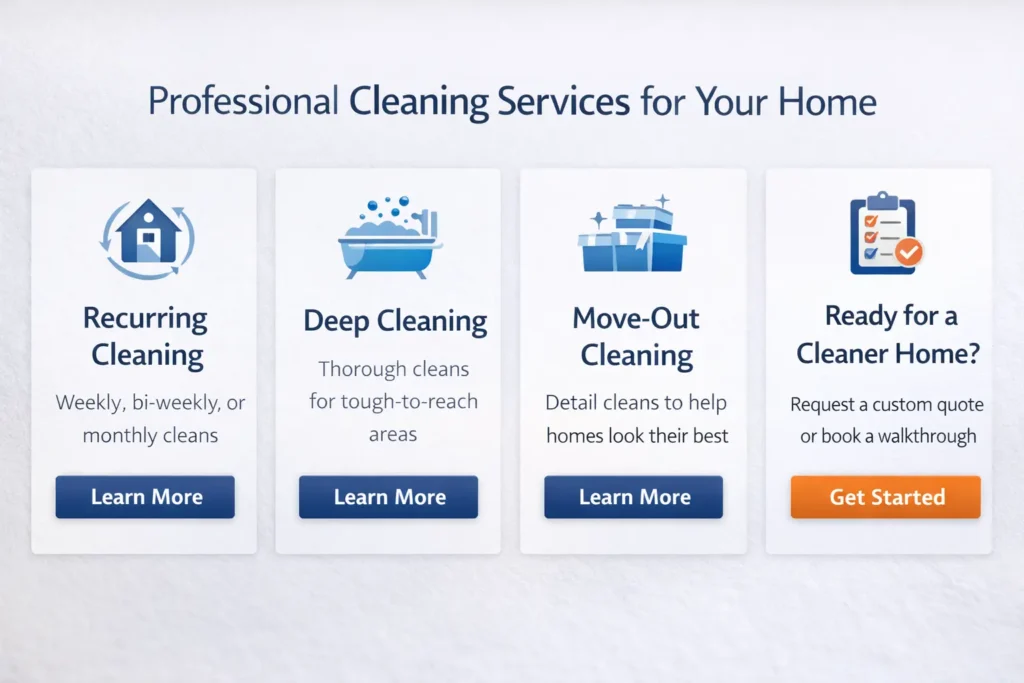
A services page should break down the offer in plain language. That might include standard recurring cleans, deep cleaning, move-in or move-out cleans, apartment cleaning, office cleaning, or Airbnb turnover. The goal is clarity, not a giant list with no explanation. When each service has a short description, a benefit statement, and a related CTA, the page becomes much easier to scan.
Your service area pages matter more than many business owners realize. These pages help both users and search engines understand where you operate. They also give you a place to speak more locally instead of forcing every city into one generic paragraph.
Then you need a trust layer. That can come from reviews, case studies, photo proof, team photos, process explanations, FAQs, and brand details like bonding, insurance, or satisfaction guarantees. Homeowners often make the final decision based on comfort, not features alone.
A sample work or results page can help a lot, too, especially if you show actual projects, real customer outcomes, or detailed website examples. This is where a project gallery becomes useful because it gives people visual confidence before they commit.
Which website option is best for a cleaning business
This is where many owners waste time. They bounce between a cheap template, a DIY builder, or a full custom build without thinking about their stage, goals, and local competition.
The best choice depends on what the business needs right now, but for most cleaning brands that want qualified local leads, a custom strategy-led site usually wins because it gives you better control over messaging, layout, SEO structure, and conversion flow.
| Option | Best For | Main Advantage | Main Limitation |
|---|---|---|---|
| DIY builder | New businesses testing demand | Low upfront cost | Usually weak on conversion structure and local SEO |
| Premium template | Businesses needing a faster relaunch | Better design baseline than DIY | Often still generic and hard to localize well |
| Custom build | Service brands ready to grow leads | Strongest fit for conversion, trust, and search | Higher initial investment |
A DIY website can be enough when the brand is just starting and needs a basic online presence. But once paid ads, SEO, or local referrals start bringing traffic, the weaknesses become more obvious. Generic layouts rarely explain the service well, forms are often poorly placed, and the content sounds interchangeable.
A premium template is the middle option. It can work if it is heavily customized and strategically written. The problem is that many owners stop at the visual edit and never improve the actual user journey.
A custom build is usually the best route when the business is serious about ranking, lead quality, and long-term growth. A proper team will think through the content hierarchy, mobile experience, service pages, form flow, and internal linking, not just colors and fonts. That is where website design & development services become more valuable than a quick cosmetic redesign.
How to structure the homepage so visitors do not bounce
The homepage should answer the visitor’s first questions in the order they naturally ask them.
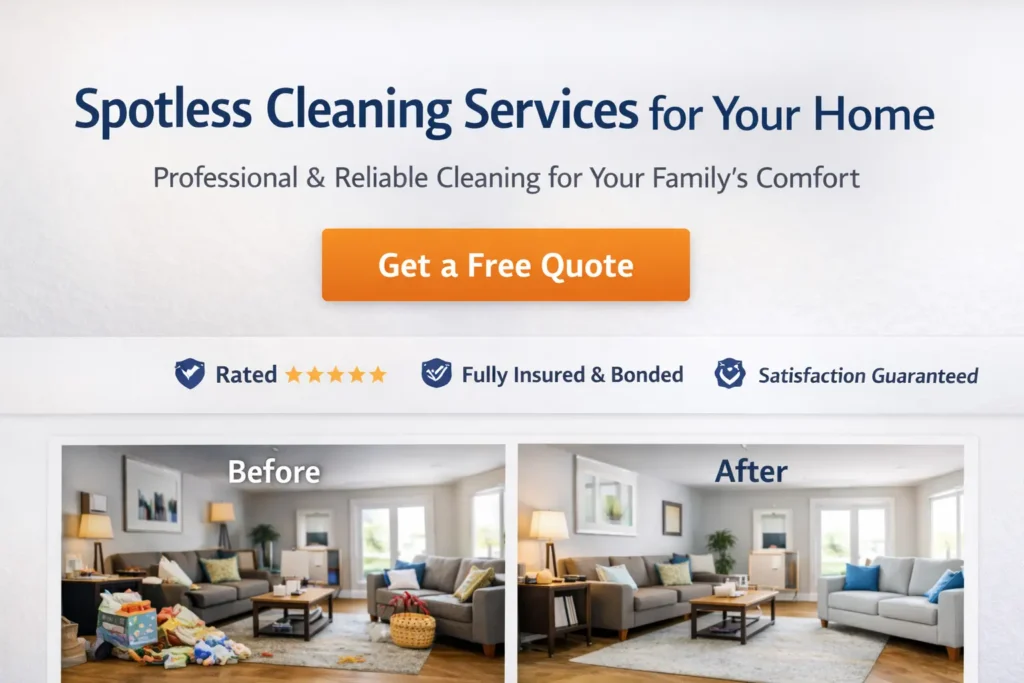
First, what do you do and where do you do it? That belongs in the hero. A vague line like “professional solutions for modern living” says nothing. A much better headline is specific, location-aware, and tied to the outcome. Something like “Reliable recurring and deep cleaning for busy homeowners in Austin” gives the visitor context right away.
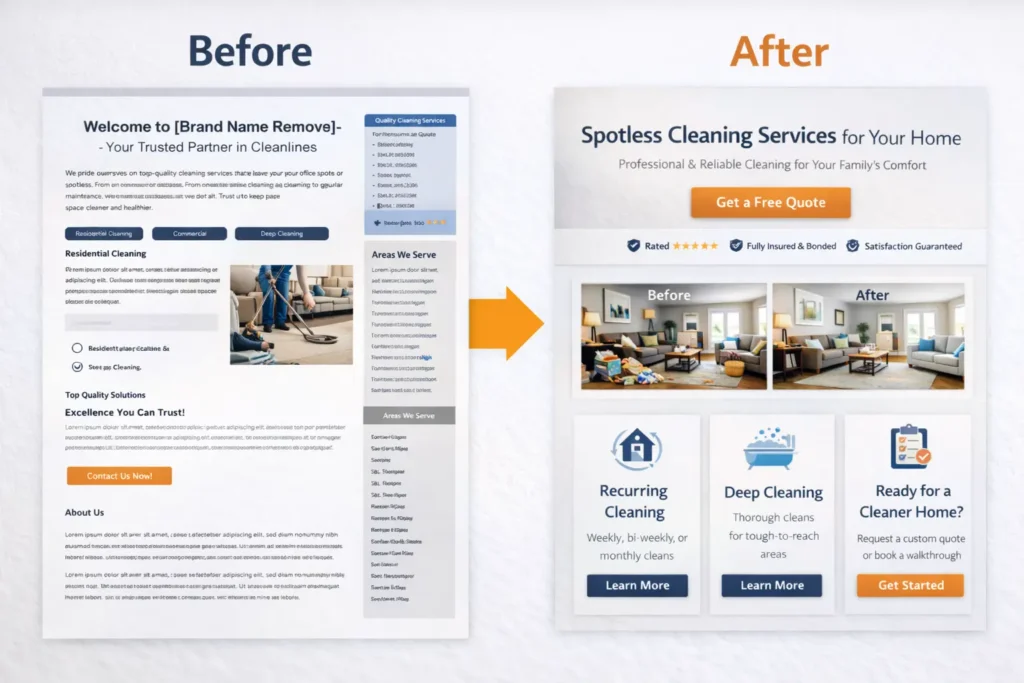
Second, why should they trust you? This is where review stars, years in business, guarantee language, team background, and badges can help. Keep it visible near the top. Trust does not belong at the bottom of the page.
Third, what services do you offer? Use short content blocks, not huge paragraphs. Let the visitor understand the difference between routine cleaning, deep cleaning, move-out cleaning, and specialty services.
Fourth, what happens next? Your CTA should be clear and repeated naturally throughout the page. “Request a quote,” “Check availability,” or “Book a walkthrough” all work better than vague phrases like “Learn more.”
Fifth, what proof can you show? Before-and-after visuals, review snippets, local photos, and a simple step-by-step process often outperform decorative sections.
The trust elements that increase inquiries
The strongest cleaning websites feel calm, clear, and real. That happens when trust is designed into the page instead of added as an afterthought.
Real reviews should be pulled into the design in a visible way. Use short excerpts that mention punctuality, detail, communication, or consistency. These are the buying triggers people care about. A block of five-star icons without real language is weaker than one thoughtful testimonial with a name and location.
Photos matter too. Authentic team images, supplies, uniforms, vehicles, and real homes are stronger than overly polished stock photography. The site should feel local and believable. The more real it feels, the easier it is for a homeowner to imagine hiring you.
Guarantees help reduce hesitation. A satisfaction promise, straightforward cancellation policy, or clear communication about what happens if something is missed gives people confidence. They do not need a legal essay. They need reassurance.
Your process should also be simple to follow. A short three-step section can work very well: request a quote, confirm the plan, and enjoy a cleaner home. That sequence lowers mental friction because the user can picture the path forward.
Local SEO still matters, but it has to support the sale
A site can rank and still fail. That is why local SEO should support conversion, not distract from it. The goal is not stuffing city names everywhere. The goal is to build pages that are useful, clear, and location-relevant.
Your page titles, headings, body copy, image alt text, and internal links should all reinforce what the page is about. Google’s guidance also emphasizes using words people actually search for and placing them in prominent locations such as titles, headings, and link text. It also recommends helpful, people-first content and crawlable links.
For cleaning brands, that usually means building dedicated service pages, location pages, and a homepage that clearly states the market served. It also means keeping the business name, phone, service area, and offering consistent information across the site and your Google Business Profile. Google says businesses with complete and accurate Business Profile information are more likely to show in relevant local search results.
Blog content helps when it supports real search intent. A post about preparing for a move-out clean, choosing recurring cleaning schedules, or what homeowners should expect from a first deep clean can bring qualified traffic if it connects back to service pages naturally. For internal inspiration, a piece like cleaning service website ideas can support your content planning, while contractor lead website strategies can help you think more clearly about lead-focused structure.
What the copy should sound like
The copy should feel specific, not inflated. Cleaning business websites often drift into filler phrases such as “top quality solutions” or “excellence you can trust.” Those lines sound fine until every competitor uses them too.
Stronger copy names the actual result and the actual audience. It explains who the service is for, what problem it solves, and what the process feels like. It also uses plain language because most homeowners are scanning fast.
Good copy sounds like this:
You handle busy households.
You offer weekly, biweekly, and monthly options.
You arrive on schedule.
You use a checklist.
You communicate clearly.
You stand behind the work.
That is more persuasive than trying to sound oversized or corporate. A local cleaning company wins more often by sounding dependable than by sounding grand.
It also helps to write for objections. People often wonder whether supplies are included, whether pets are okay, whether they need to be home, how long a clean takes, and whether the same cleaner returns. When those answers appear naturally in the page content or FAQ, conversion friction goes down.
Design details that quietly improve performance
The visual style should support trust and readability. That means the design should feel fresh, but it should not feel busy.
Use high contrast for buttons and forms. Give sections room to breathe. Keep navigation short. Make phone number and quote actions visible. Use icons sparingly. Keep the mobile menu simple. Use typography that feels clean and easy to scan.
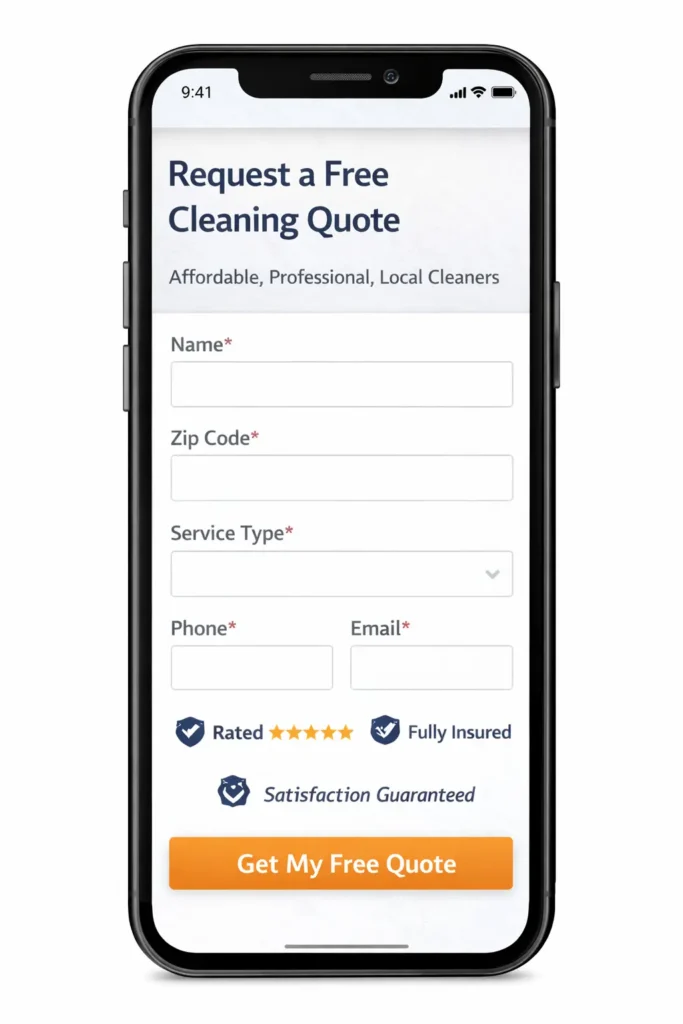
On mobile, the CTA should stay close to the action. A sticky quote button can work well. Long forms usually do not. Ask only for the information needed to start the conversation. Name, ZIP code, service type, email, phone, and preferred date are often enough.
Page speed matters too. Visitors may never mention it, but they feel it. A slow site makes the business feel less established. Google’s PageSpeed Insights is designed to analyze page performance and provide improvement suggestions, which makes it a practical benchmark before and after launch. PageSpeed Insights is one of the best external tools to review during a redesign.
A cleaner page plan that balances SEO and conversions
A strong site structure usually looks like this:
| Page | Primary Goal | What It Should Include | CTA |
|---|---|---|---|
| Homepage | Clarify the offer and move users forward | Headline, service areas, reviews, trust badges, service summary | Request a quote |
| Services | Explain each offer clearly | Service cards, short descriptions, FAQs, proof points | Get pricing or an estimate |
| Location Pages | Rank locally and reassure nearby visitors | City-specific copy, local proof, service fit | Check availability |
| About | Build trust and brand preference | Team story, standards, process, credentials | Meet the team or contact us |
| Reviews / Results | Prove consistency | Testimonials, before-and-after visuals, case examples | See results or request service |
This page plan works because each page has a job. Instead of cramming every keyword and every message into one place, the site becomes easier for users to understand and easier for search engines to crawl.
That is also why internal linking matters. Google recommends descriptive anchor text and crawlable links because it helps both users and Google understand the relationship between pages.
Common mistakes that hold cleaning websites back
One of the biggest mistakes is hiding the CTA. A button at the top is not enough. The CTA should appear again after services, after trust proof, and after FAQs. Not aggressively, just naturally.
Another mistake is using generic stock imagery without any human context. It makes the brand feel interchangeable. One or two stock photos are fine, but the foundation should feel like your company.
The third mistake is writing for the owner instead of the visitor. A visitor cares less about your passion story at first and more about whether you serve their area, whether they can trust your team, and how fast they can get a quote.
The fourth mistake is skipping service area pages. Even a beautifully designed site can underperform in search if it never clearly states where the service is offered.
The fifth mistake is overloading the homepage with text while under-explaining the service pages. Good structure is about page purpose, not page length.
The sixth mistake is treating the website like a one-time brochure. The better approach is to update testimonials, refresh photos, expand city pages, improve FAQs, and tighten forms as the business grows.
Final Take
The best house cleaning website is not the one with the most animations or the most pages. It is the one that answers real customer questions quickly, feels trustworthy on mobile, and guides people from interest to inquiry without confusion.
For most cleaning businesses, the winning option is a strategically written custom site with clear service pages, local relevance, visible proof, and short quote paths. That approach gives you the best mix of search visibility, user trust, and conversion potential. When all three work together, the website stops acting like a placeholder and starts helping the business grow.
Frequently Asked Questions
1. What should a cleaning company website include to attract better leads?
A cleaning company website should include trust, clarity, and a strong next step. That means a clear headline, service breakdowns, local service area details, real testimonials, team or process proof, and a short quote form that is easy to complete on mobile. Better leads usually come from visitors who understand exactly what you offer before they contact you. When the site explains who the service is for, what is included, and what happens after the inquiry, you reduce low-intent messages and increase the chance of qualified bookings.
2. Is a custom design better than using a template for a local cleaning brand?
A custom design is usually the better long-term option when lead quality matters. A template can work for a newer business with a limited budget, but it often leaves you with a generic page structure, weak messaging, and less flexibility for local SEO pages. A custom build gives you tighter control over calls to action, service flow, mobile experience, and page hierarchy. For a cleaning business competing locally, that extra control often makes the difference between a site that looks fine and a site that actually books work.
3. How many pages does a small cleaning business website really need?
A small cleaning business website usually needs fewer pages than people think, but each page has to work harder. A homepage, services page, about page, contact or quote page, and at least a few location pages are often enough to start strong. From there, reviews, FAQs, and helpful blog content can expand the site. The goal is not to publish a large site for the sake of volume. The goal is to build a focused structure that helps visitors find the right information fast and gives search engines a clearer context.
4. How can a web designer help a cleaning business rank higher and convert more?
A web designer helps by improving both search visibility and user behavior on the site. That includes organizing the page structure, making service and location pages clearer, improving mobile layout, shortening forms, strengthening internal links, and designing trust sections that keep visitors engaged. Ranking is only half the job. Once someone lands on the page, the design should guide them toward action. A good designer understands that local SEO, messaging, and conversion flow should support each other rather than compete for space.