Website design pricing for small business usually ranges from a few hundred dollars for a DIY builder to $3,000 to $15,000+ for a professional small business website, depending on pages, features, content, and who builds it. The best choice is not always the cheapest option, but the one that gives your business a clear, trustworthy, and conversion-ready website. Current pricing guides show wide cost ranges because website scope, ecommerce needs, hosting, maintenance, and custom design all change the final price.
For most service-based businesses, a good starter website includes a homepage, services page, about page, contact page, basic SEO setup, mobile-friendly design, and fast loading speed.
If you want a website that looks polished and supports lead generation, work with small business web design experts who understand both design and conversion.

What Affects Small Business Website Design Cost?
Small business website cost changes because not every website has the same job. A simple brochure website only needs to explain who you are, what you offer, and how to contact you. A booking website, ecommerce site, or lead generation website needs more planning, setup, integrations, and testing.
The biggest cost factors are page count, design style, copywriting, SEO setup, forms, speed optimization, accessibility, and whether the site is built from a template or fully custom design. Google also explains that SEO helps search engines understand your content and helps users decide whether to visit your site, so search-friendly structure should be part of the build, not added later. Google SEO Starter Guide
A basic site may only need 5 pages. A more competitive local business may need individual service pages, location pages, blog templates, review sections, call tracking, and stronger conversion elements.
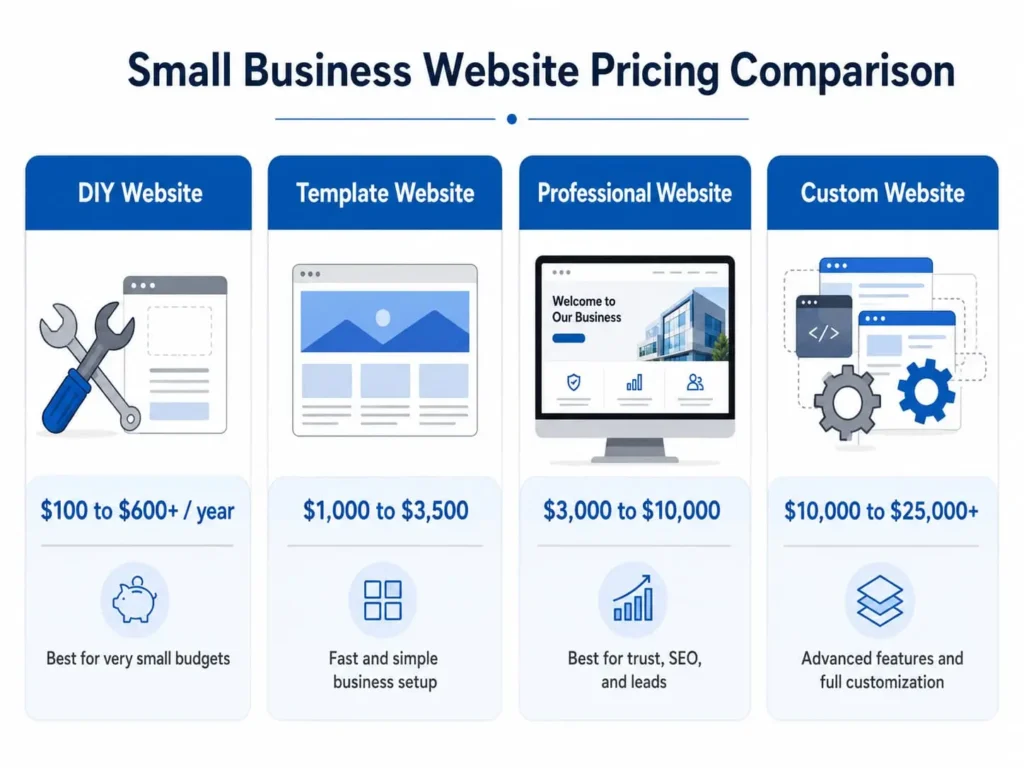
Here is a simple way to think about it:
| Website Type | Best For | Typical Price Range |
|---|---|---|
| DIY website builder | Brand-new businesses with very small budgets | $100 to $600+ yearly |
| Template-based website | Simple service businesses needing a clean online presence | $1,000 to $3,500 |
| Professional small business website | Businesses that need better trust, SEO, and leads | $3,000 to $10,000 |
| Custom website with advanced features | Ecommerce, booking, membership, or multi-location brands | $10,000 to $25,000+ |
These ranges are estimates. A designer may charge less or more depending on experience, location, process, and what is included.
Why Website Pricing Is Different From Just “Making Pages”
Many business owners compare website quotes by page count alone, but that can be misleading. A 5-page website that is planned around conversions can outperform a 15-page site that looks nice but has weak messaging.
Good web design includes strategy before visuals. A designer should understand your offer, target customer, trust signals, local competition, and main call to action. That is why a professional website usually costs more than a DIY template.
A strong website should answer three questions quickly:
✅ What do you offer?
✅ Why should someone trust you?
✅ What should they do next?
If your current website looks outdated or does not explain your value clearly, read this professional website redesign guide before investing in a full rebuild.
How Much Should A Small Business Website Cost?
A practical budget for a small business website is usually between $3,000 and $10,000 when you want a professional result without overly complex features. This range commonly covers strategy, custom layout, responsive design, basic SEO, contact forms, speed setup, and launch support.
If you only need a digital business card, a lower-cost template may work. If your website needs to bring in leads, rank locally, or support paid ads, a professional build is usually the better option.
For example, a local cleaning company may need service pages, before-and-after photos, quote forms, reviews, and city-focused SEO. A law firm may need stronger trust signals, attorney bios, case type pages, compliance-friendly copy, and faster hosting. A boutique ecommerce store needs product pages, checkout, shipping settings, payment setup, and inventory structure.
This is why two websites with the same number of pages can have very different costs.
Which Website Option Is Best For Your Business?
The best option depends on your stage, budget, and growth goals. A DIY builder may be enough when you are testing an idea. A template-based website can work if you need something simple and fast. A professional custom website is better when your business needs trust, better branding, and more qualified inquiries.
If you already have a site but it feels outdated, slow, or confusing, a redesign may be smarter than starting from scratch. You can explore website design & development services to see what kind of support fits your goals.
| Option | Choose This When | Watch Out For |
|---|---|---|
| DIY builder | You need a very low-cost starting point | Limited customization, weak SEO, generic design |
| Freelancer | You want a lower-cost professional touch | Quality and process can vary widely |
| Small agency or studio | You want strategy, design, SEO, and support | Higher upfront cost than DIY |
| Full custom build | You need advanced functions or integrations | Can be overkill for simple businesses |
For most small businesses that rely on leads, the best option is a professional website built around trust and conversion. It gives you more control than a DIY builder and more strategy than a basic template.
What Should Be Included In A Website Design Quote?
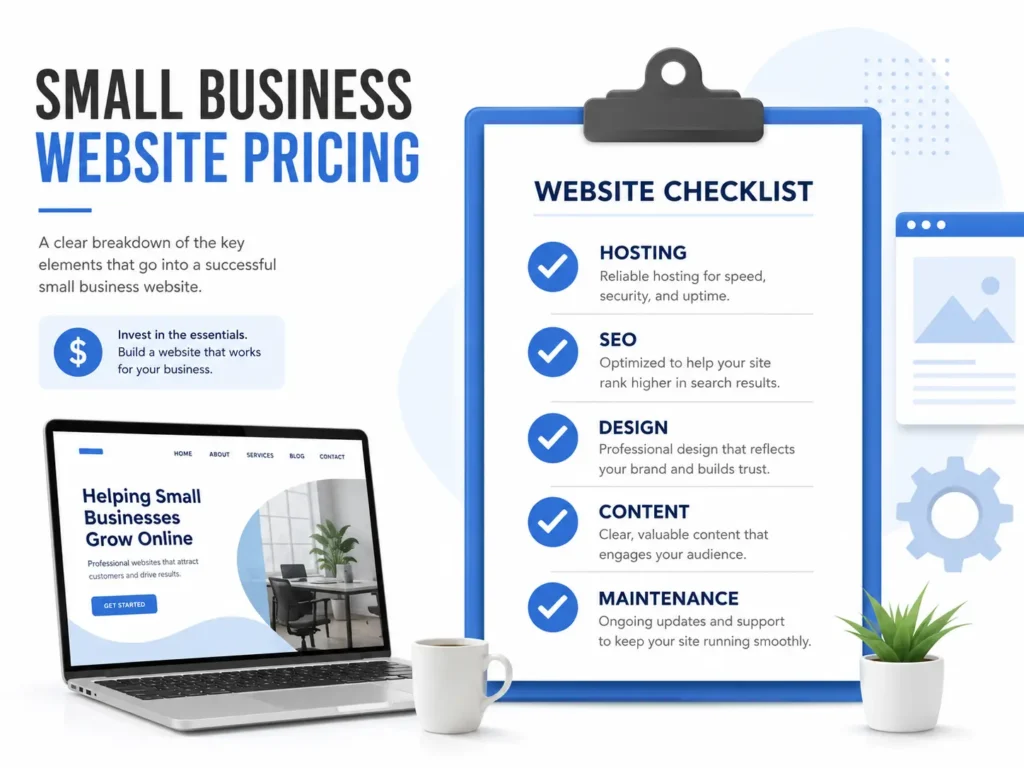
A clear quote should show exactly what you are paying for. If the proposal only says “website design,” ask for more detail. A good quote should include the number of pages, design process, content support, mobile design, SEO basics, forms, launch support, and whether ongoing maintenance is included.
It should also explain what is not included. This can include hosting, domain renewal, premium plugins, copywriting, stock photography, booking software, ecommerce apps, or monthly care plans.
A strong small business quote often includes:
✅ Discovery and website planning
✅ Homepage and inner page design
✅ Mobile-friendly layouts
✅ Contact forms and calls to action
✅ Basic technical SEO setup
✅ Speed and security basics
✅ Launch testing and training
Accessibility is also important. The W3C Web Accessibility Initiative explains that accessibility helps make websites usable for people with disabilities, and better accessibility can support usability for everyone. W3C Web Accessibility Initiative
Hidden Website Costs Small Businesses Often Miss
The design fee is only one part of the total website cost. Many owners forget about ongoing expenses, which can create surprise bills later.
Common recurring costs include domain renewal, hosting, SSL, email, plugins, website maintenance, security updates, backups, SEO tools, and content updates. These may be small monthly costs, but they matter when planning your yearly budget.
For example, a website may cost $4,500 to build, then $50 to $300 per month to host, maintain, update, and protect. Ecommerce sites often cost more because they may need paid apps, payment processing, product management, and extra testing.
If your site is already live but not performing well, this business website makeover tips guide can help you spot what may need improvement before you spend more money.
How To Know If A Website Quote Is Fair
A fair website quote should match the value, deliverables, and expected outcome. A $500 website may be fair if it is a simple one-page template. A $7,000 website may be fair if it includes strategy, custom design, content structure, SEO setup, speed optimization, and launch support.
A quote may be too low if it skips planning, mobile testing, content structure, SEO basics, or post-launch help. A quote may be too high if it includes advanced features your business does not need yet.
Ask these questions before choosing a designer:
✅ What pages are included?
✅ Is copywriting included or only design?
✅ Will the site be mobile-friendly?
✅ Is basic SEO included?
✅ Who owns the website after launch?
✅ What happens after the site goes live?
You can also compare real examples by checking portfolio highlights before deciding who to hire.
Website Design Pricing For Small Business: Practical Budget Examples
Here are realistic examples to help you plan.
A solo consultant may need a 5-page website with a homepage, about page, services page, testimonials, and contact page. A fair budget may be $2,500 to $5,000 if the design is clean and the copy is simple.
A local home service company may need 8 to 12 pages, service pages, location targeting, review sections, quote forms, and stronger calls to action. A fair budget may be $5,000 to $10,000.
A small ecommerce store may need product pages, payment setup, shipping rules, category pages, email integration, and more testing. A fair budget may start around $6,000 and go much higher depending on product count and complexity.
For a deeper cost comparison, read this small business website cost guide.
How To Save Money Without Getting A Cheap-Looking Website
You can lower your website cost without hurting quality if you prepare well. Before hiring a designer, gather your logo, brand colors, photos, testimonials, service details, and examples of websites you like. This reduces back-and-forth time and helps the project move faster.
You can also start with fewer pages and expand later. For example, launch with your homepage, services, about, contact, and one strong landing page. Then add blog posts, case studies, location pages, and advanced features as your budget grows.
Do not cut corners on mobile design, speed, contact forms, or clear messaging. These are the parts visitors notice quickly. A beautiful website that loads slowly or hides the phone number can lose leads.
If your priority is leads, invest in strong service pages first. If your priority is trust, invest in good photos, testimonials, and case studies. If your priority is SEO, invest in content structure and helpful pages that answer customer questions.
When Should You Hire A Professional Website Designer?
Hire a professional when your website needs to support real business growth. If customers compare you with competitors online, your site needs to look credible and answer questions fast.
A professional designer is useful when you need a better layout, stronger branding, service page structure, local SEO planning, conversion-focused calls to action, and technical setup. They can also help avoid mistakes like cluttered navigation, weak copy, slow pages, confusing forms, or generic template design.
DIY is fine for testing. Professional design is better when your website becomes part of your sales process.
Smart Takeaway: Website Design Pricing For Small Business
Website design pricing for small business depends on what your website needs to do. A basic online presence can be affordable, but a lead-generating website needs planning, design strategy, mobile optimization, SEO structure, and ongoing care.
The best investment is the website that helps visitors trust you and take action. Start with the pages your customers need most, choose a designer who explains the process clearly, and make sure your quote includes the essentials before you compare prices.
Ready to plan a better website? Review pricing & service plans and choose the support that fits your business goals.
Frequently Asked Questions
1. How much does a website designer cost for a small business?
A website designer for a small business can cost anywhere from $1,000 to $10,000+, depending on the scope and quality of the project. The most practical budget for many small businesses is usually $3,000 to $10,000 if you want a professional site with mobile design, basic SEO, contact forms, and a clear conversion path. Lower-cost designers may use templates, while higher-cost studios often include strategy, custom design, content structure, launch support, and ongoing guidance.
2. What are the 7 C’s of a website?
The 7 C’s of a website are commonly known as context, content, community, customization, communication, connection, and commerce. The most important C for a small business website is usually content, because your words explain your services, build trust, and guide visitors to take action. Context handles layout and design, communication covers forms or contact methods, and commerce applies when you sell online. Together, these ideas help create a website that is useful, clear, and customer-friendly.
3. Which is cheaper, Wix or GoDaddy?
Wix and GoDaddy both offer low-cost website builder plans, but the cheaper choice depends on the exact plan, renewal price, apps, ecommerce features, and support needed. GoDaddy can be cheaper for a very basic website, while Wix often gives more design flexibility and app options. For a simple online presence, either can work. For a business that needs stronger branding, SEO planning, custom layouts, or long-term growth, a professionally built website may offer better value than choosing only by monthly price.
4. How much should you pay someone to build your website?
You should pay based on the job your website needs to do. A fair professional small business website budget is often $3,000 to $10,000, while simpler template sites may cost less and advanced ecommerce or custom builds may cost more. Before paying, check what is included: strategy, design, copy support, mobile optimization, SEO basics, speed setup, forms, revisions, launch help, and ownership. The right price should match the deliverables, business goal, and expected value.