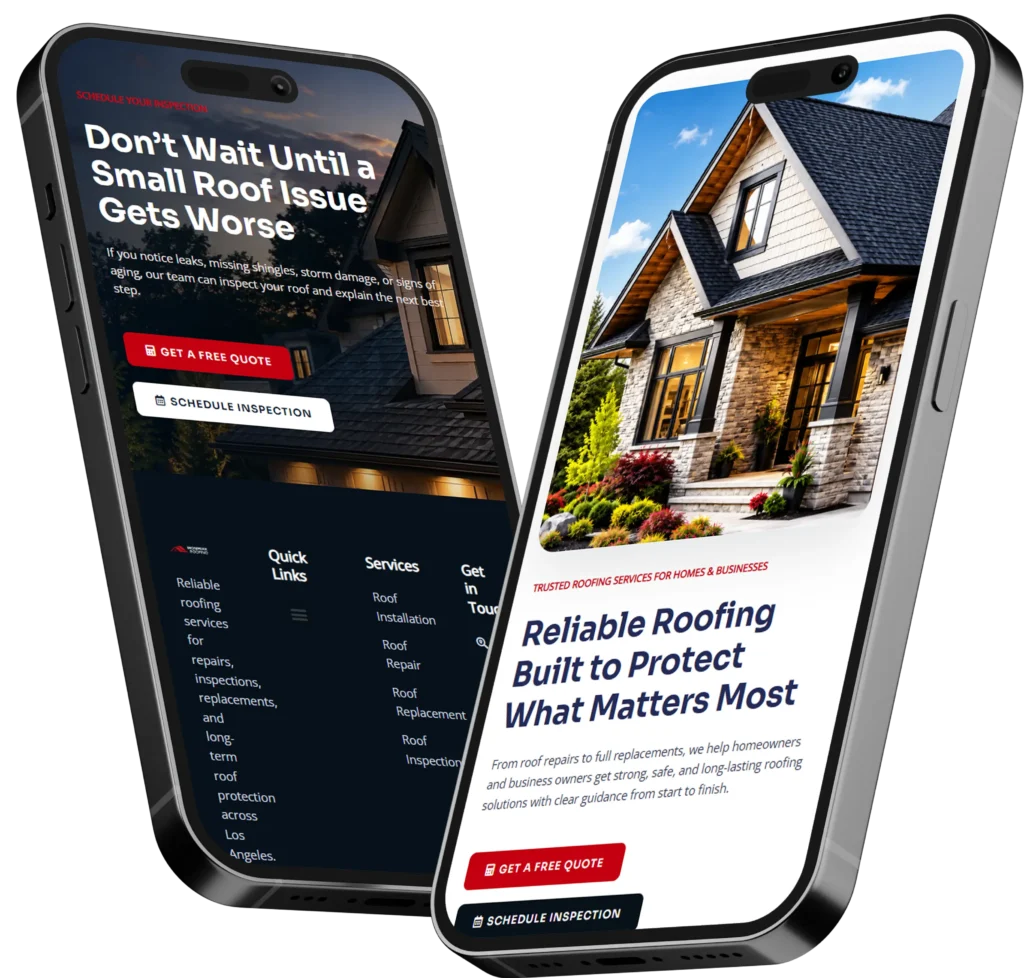
how to write website copy that sells means matching your buyer’s problem, your best solution, and one clear next step on every important page. The best website copy is specific, easy to scan, trust-building, and written around calls, bookings, purchases, or quote requests.
For small businesses, copy is not just text on a page. It is the conversation your website has before a visitor decides to trust you. If your homepage, service pages, or landing pages sound vague, visitors may leave even if your offer is strong.
Google also recommends creating helpful, reliable, people-first content, which is why your copy should answer real customer questions instead of only stuffing keywords. Google’s people-first content guidance explains this approach clearly.
Need a stronger website around your message? Work with conversion-focused web design for a cleaner path from visitor to lead.
What Makes Website Copy Sell
Website copy sells when it makes the visitor feel understood. A person lands on your website with a question in mind, even if they do not type it out. They may be wondering:
✅ Can this business solve my problem?
✅ Do they work with people like me?
✅ Can I trust them?
✅ What should I do next?
Good copy answers those questions quickly. It does not make people dig through long paragraphs to understand your value. It places the strongest message near the top, explains the benefit clearly, and supports the claim with proof.
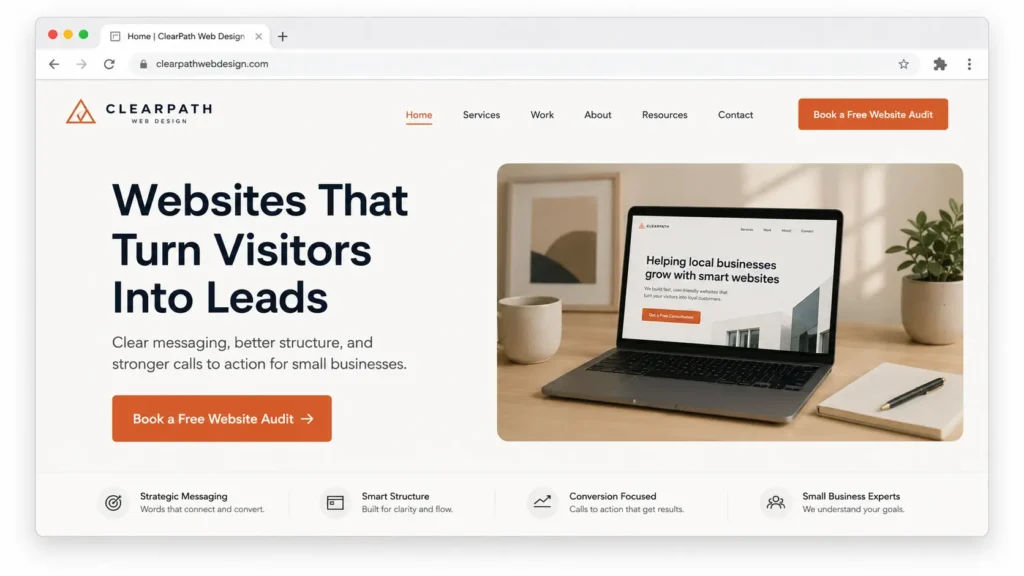
A weak headline says, “Welcome to our website.” A stronger headline says, “Websites built to help local businesses get more calls, leads, and bookings.” The second option works better because it tells the visitor what result they can expect.
Why Website Copy Matters Before Design
Many business owners think their website problem is only design. Sometimes it is. But often, the real issue is the message.
A beautiful website with unclear copy can still fail. Visitors may like the layout, but they will not take action if they do not understand the offer. This is why copy and design should work together.
Your design helps people move through the page. Your copy tells them why they should care.
If you are planning a redesign, start by reviewing your current pages. Look at your homepage, service page, contact page, and landing pages. Ask whether each page clearly explains who you help, what you offer, why it matters, and what step the visitor should take next.
For a deeper content review, read this website content checklist for small business.
How to Build a Clear Website Message
A strong website message has three parts: the problem, the promise, and the path.
The problem shows that you understand what the customer is dealing with. For example, “Your website looks outdated and visitors are not turning into leads.”
The promise explains the result they want. For example, “We redesign your site with clearer messaging, stronger calls to action, and a layout built for conversions.”
The path tells them what to do next. For example, “Request a website audit” or “Book a design consultation.”
This format works because it removes confusion. People are more likely to act when the message feels simple and relevant.
| Website Section | What It Should Do | Example Copy Direction |
|---|---|---|
| Hero Section | Explain the main value fast | “Websites designed to turn visitors into leads” |
| Service Section | Show what you offer | “Website redesign, landing pages, SEO setup, and maintenance” |
| Proof Section | Build trust | “See recent client projects and before-and-after improvements” |
| CTA Section | Guide the next step | “Book a free website audit today” |
Which Pages Need the Strongest Copy
Not every page needs the same type of copy. Your homepage needs broad clarity. Your service pages need more detail. Your landing pages need focus. Your contact page needs reassurance.
The homepage should quickly explain your business, who you help, and why your service is worth considering. It should guide visitors to your service pages, portfolio, or contact form.
Service pages should answer buying questions. These include pricing expectations, process, timeline, what is included, and why your approach is better than a basic template. For help with this, check out this guide on service page copy for small business.
Landing pages should focus on one offer. They should not distract visitors with too many options. If the goal is booking a call, every section should support that one action.
The Best Website Copy Framework
A simple website copy framework can make the writing process much easier.
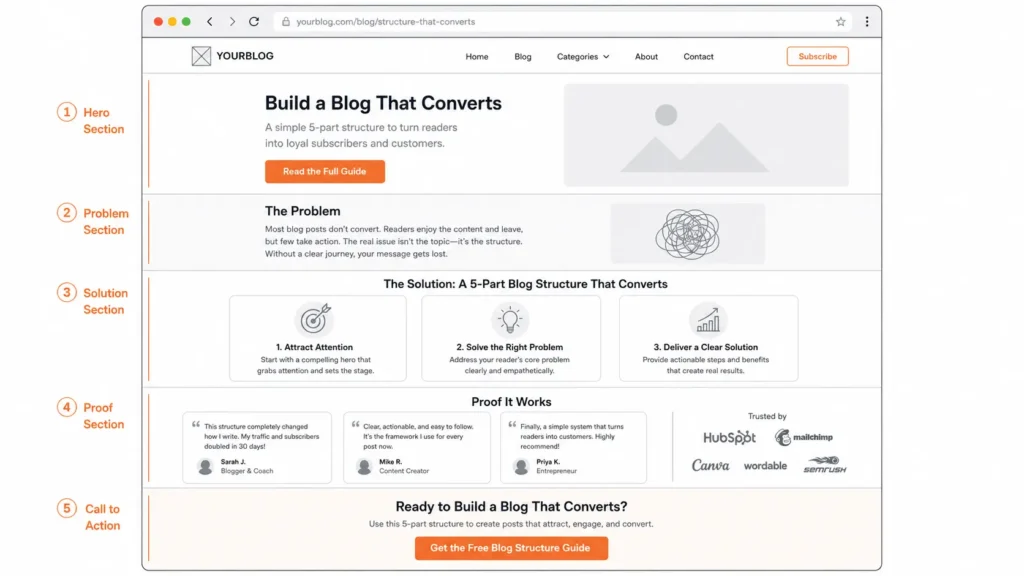
Start with the hero section. This is where visitors decide whether to stay or leave. Your hero copy should include a clear headline, a benefit-driven subheadline, and one main CTA.
Then add the problem section. This helps visitors recognize that they are in the right place. Keep it specific. Instead of saying, “We know business is hard,” say, “If your website gets traffic but not leads, your message may not be clear enough.”
Next, explain your solution. Show how your service helps. Use plain language and avoid industry jargon.
After that, add proof. This can include testimonials, project examples, reviews, business years, certifications, or results. Nielsen Norman Group notes that trustworthy websites often communicate credibility through design quality, disclosure, current content, and connection to the rest of the web. NN/g’s trustworthiness guide supports this idea.
Finally, repeat the CTA. Do not assume visitors will scroll back to the top. Give them a clear next step after they understand the value.
How to Write Headlines That Get Attention
Your headline should not try to be clever first. It should be clear first.
The best headlines usually answer one of these:
✅ What do you do?
✅ Who do you help?
✅ What result do you create?
✅ What problem do you solve?
For example, “Custom Websites for Small Businesses” is clear, but it can be stronger. “Custom Websites That Help Small Businesses Get More Leads” adds a result.
Avoid generic headlines like “We Build Digital Experiences” unless your audience already understands what that means. Small business owners usually respond better to direct language.
Your subheadline can add detail. If the headline gives the result, the subheadline can explain how you deliver it.
Example:
Headline: “Websites Built to Turn Local Visitors Into Customers”
Subheadline: “We design, write, and launch conversion-focused websites for service businesses that need more calls, bookings, and quote requests.”
How to Write Calls to Action
A call to action tells visitors what to do next. If your website has weak CTAs, people may leave even when they are interested.
A good CTA is specific and low-friction. “Submit” is weak because it does not explain what happens. “Request a Free Website Audit” is stronger because it tells visitors what they receive.
Use CTAs that match the buying stage. A visitor who is ready to hire may click “Book a Consultation.” A visitor who is still comparing options may prefer “View Our Work.”
You can also use softer CTAs throughout the page. For example:
✅ View recent projects
✅ Get a free website audit
✅ See service options
✅ Request a redesign quote
Want visitors to take action faster? Explore website design & development services built around clearer messaging and stronger CTAs.
Website Copy Mistakes That Hurt Leads
Many websites lose leads because the copy is too general. It talks about the company instead of the customer. It lists services without explaining outcomes. It hides the CTA. It uses long paragraphs that are hard to scan.
Visitors do not want to work hard to understand your offer. They want quick answers.
| Common Mistake | Why It Hurts | Better Option |
|---|---|---|
| “We offer quality services” | Too vague | Explain the specific result customers get |
| No CTA above the fold | Visitors may not know what to do | Add one clear action near the top |
| Too much company history | Slows down the buying decision | Lead with customer problems and outcomes |
| No proof | Visitors may hesitate | Add reviews, projects, testimonials, or guarantees |
| Keyword stuffing | Sounds unnatural | Use keywords where they fit naturally |
How to Make Website Copy SEO Friendly
SEO-friendly copy should help both people and search engines understand the page. That means using clear page titles, helpful headings, natural keywords, internal links, and direct answers.
Do not hide the main answer deep in the article. Put the answer early. This helps readers and supports answer engine optimization.
Use related phrases naturally, such as website copywriting, conversion copy, homepage copy, landing page copy, service page copy, website redesign, and lead generation. These support the main topic without repeating the same phrase too often.
Google’s SEO Starter Guide says SEO helps search engines crawl, index, and understand your content, but it also reminds site owners to focus on what is best for their business area.
For a stronger base, your website messaging should connect SEO keywords with real customer language. This guide on website messaging for small business can help you shape that foundation.
How to Add Trust to Your Copy
Trust is one of the biggest reasons people choose to call, book, or leave.
Your website copy should include proof that your business is real, capable, and helpful. This does not mean bragging. It means giving visitors enough confidence to take the next step.
Good trust signals include testimonials, case studies, before-and-after screenshots, client logos, reviews, years in business, certifications, guarantees, process details, and real photos.
If you design websites, show project examples. If you write copy, show before-and-after messaging. If you offer local service, show areas served and real customer feedback.
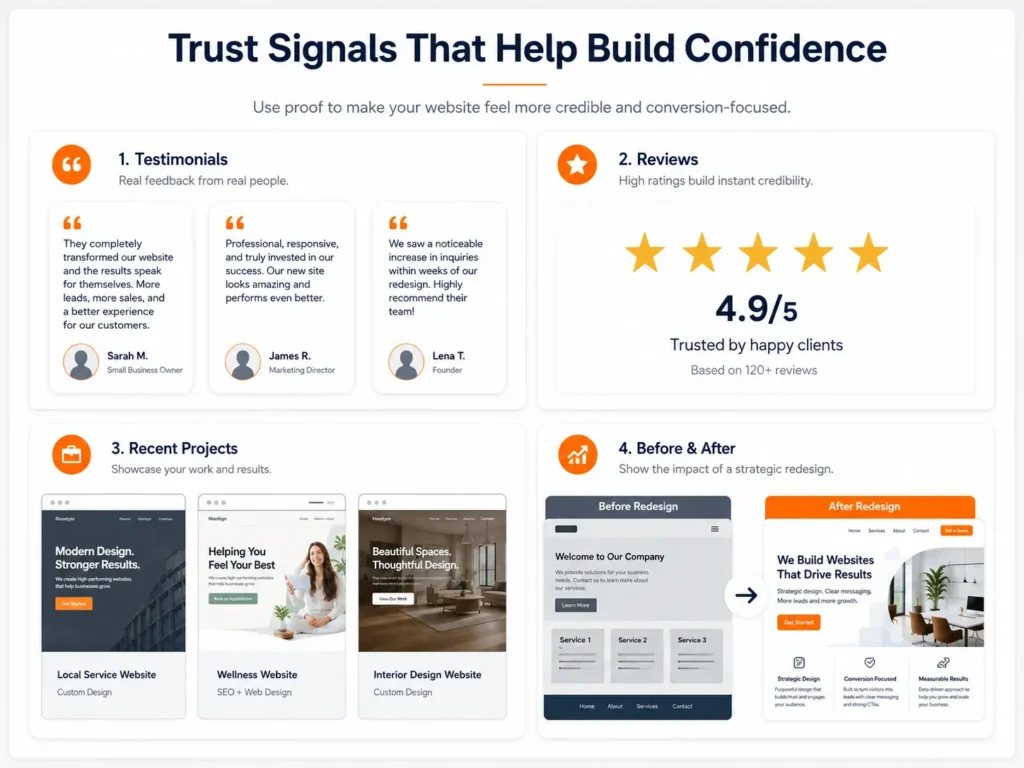
See real examples in the portfolio highlights before planning your own redesign.
Practical Tips for Stronger Website Copy
Write like you are talking to one customer, not everyone. A website that tries to speak to everyone usually sounds weak.
Use short paragraphs. Most visitors scan before they read. Nielsen Norman Group’s UX writing resources explain that good copy starts with understanding who will read it, why they need it, and what they will do next.
Put benefits before features. A feature is “mobile-responsive design.” A benefit is “your site looks clean and works smoothly on phones, where many customers first find you.”
Use customer language. If clients say, “I need more calls,” use that phrase. Do not replace it with complicated marketing terms unless your audience searches that way.
Remove filler words. Phrases like “we are passionate about excellence” do not say much unless they are connected to a real proof point.
Add one main CTA per section. Visitors should never wonder what to do after reading.
Copy Example for a Small Business Homepage
Here is a practical example for a local service business.
Weak copy:
“Welcome to our company. We provide professional services with quality and care. Contact us today to learn more.”
Stronger copy:
“Reliable HVAC Repair for Homeowners in Austin
Fast scheduling, honest recommendations, and repairs done right the first time. Book your service call today and get help from a local team trusted by homeowners across Austin.”
The stronger version works because it names the service, audience, location, benefits, and next step.
This same idea applies to web design, dental clinics, cleaning companies, contractors, coaches, consultants, and local shops. The copy should make the offer obvious and the action easy.
When to Hire a Website Designer
You can write basic website copy yourself, especially if you know your customers well. But hiring a professional website designer can help when your site needs better structure, stronger visuals, SEO setup, and a smoother path to leads.
A designer can help turn your message into a page layout that supports the buying journey. That includes headline placement, CTA sections, trust blocks, mobile spacing, service page structure, and lead form design.
The best option is usually a copy-first redesign. That means the message is planned before the design is built. This prevents the common problem of forcing copy into a layout that does not fit the sales goal.
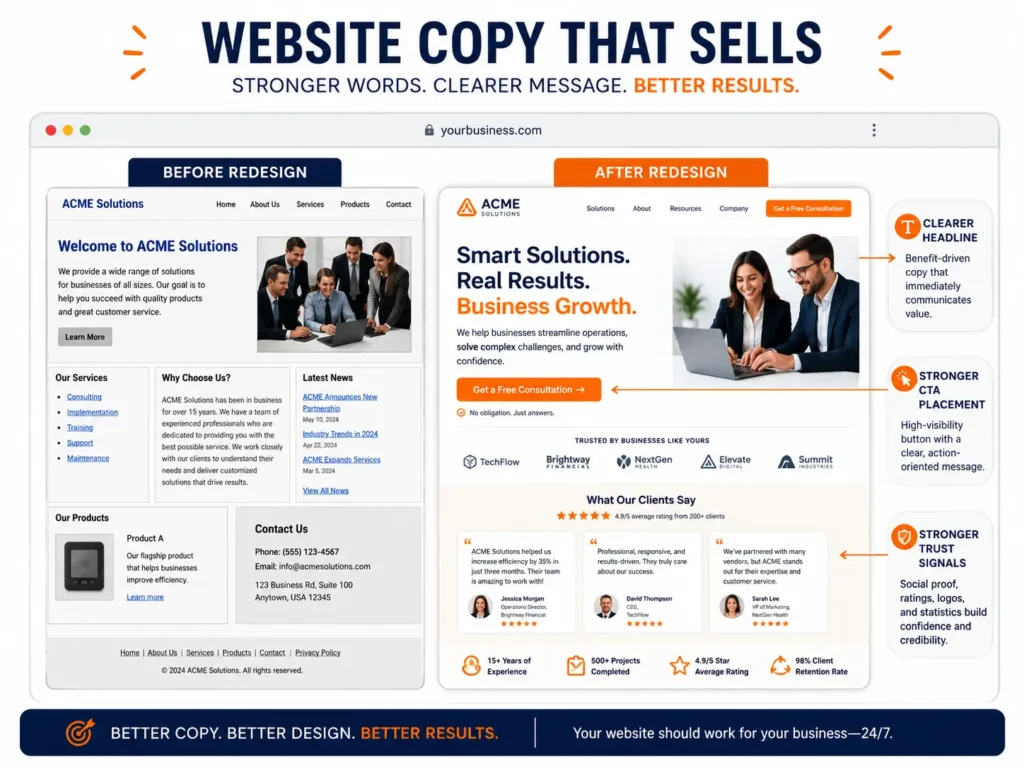
Final Takeaway: how to write website copy that sells
The best website copy is clear, helpful, and focused on the visitor’s next decision. It explains the problem, presents the solution, proves trust, and guides the person toward one simple action.
If your website is not generating enough leads, start with the message before changing colors, fonts, or layouts. Clear copy can make your homepage, service pages, and landing pages easier to understand and easier to act on.
For small businesses, the goal is not to sound bigger than you are. The goal is to sound clear, trustworthy, and useful to the people most likely to hire you.
Frequently Asked Questions
1. What should I write on my small business homepage to get more leads?
Start with a clear customer-focused headline that explains who you help, what you do, and what result visitors can expect. Then add a short subheadline, one main CTA, your core services, trust signals, and a simple explanation of your process. Your homepage should not read like a company brochure. It should guide visitors toward calling, booking, viewing your work, or requesting a quote.
2. How can website copy improve calls and bookings?
Website copy improves calls and bookings by reducing confusion before a visitor takes action. When your page explains the problem, the solution, pricing expectations, service area, trust proof, and next step, people feel more confident reaching out. Strong copy also makes CTAs more specific. Instead of “Contact Us,” use action-focused buttons like “Book a Website Audit” or “Request a Redesign Quote.”
3. Should I redesign my website before rewriting the copy?
Rewrite or plan the copy before the redesign whenever possible. Copy decides what each section needs to say, while design decides how that message is presented. If you redesign first, you may end up forcing important content into the wrong layout. A copy-first approach helps your designer build better page sections, stronger CTAs, cleaner service blocks, and a smoother lead path.
4. Is it worth hiring a web designer for better website copy and structure?
Hiring a professional web designer is worth it when your website is not converting visitors into leads, calls, or bookings. A good designer does more than make the site look modern. They help organize your message, improve mobile layout, place trust signals, structure landing pages, and make CTAs easier to follow. This is especially helpful for small businesses that depend on local leads.