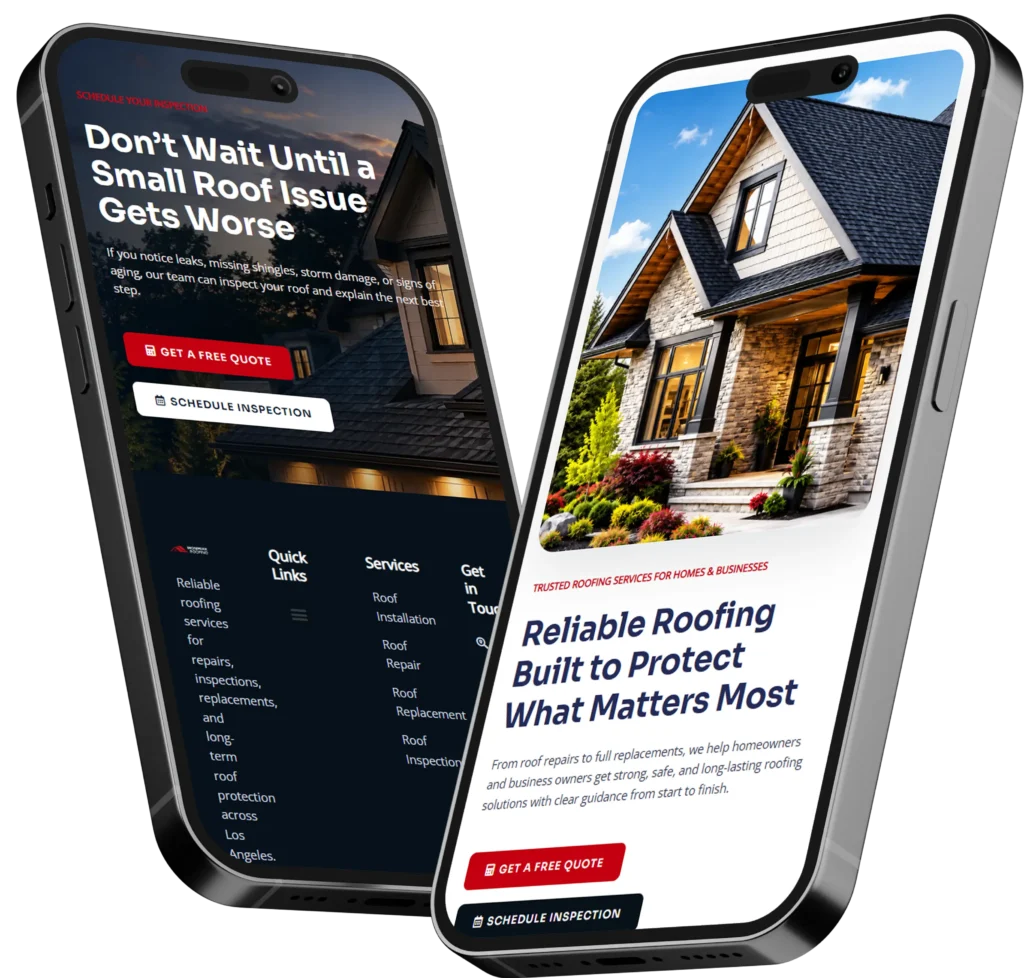
How to get found on Google starts with a crawlable website, clear service pages, and content that matches what real people search for. If Google can understand your pages and users can trust what they see, your chances of appearing in organic results and local results improve.
A lot of business owners think visibility is mostly about posting more blogs or spending on ads. In reality, the foundation matters more: strong page structure, clear service intent, useful internal links, complete business information, and content that answers the question behind the search. Google also discovers most pages automatically through crawling, then evaluates them for indexing and serving in results.
This guide breaks down why visibility matters, how Google finds and understands your pages, and which actions usually make the biggest difference first. If you want a stronger foundation before you scale traffic, start with growth-driven web design and make sure your core pages are worth finding.
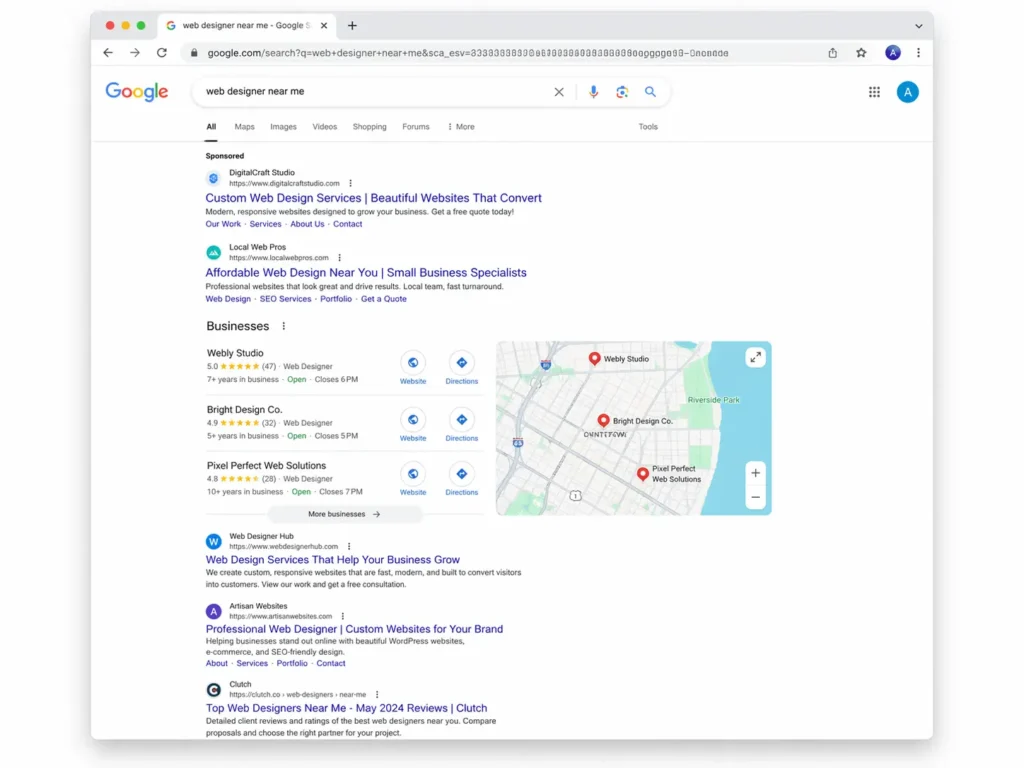
Why getting found matters in the first place
When someone searches for a service, they are often close to making a decision. That is why visibility on Google is not just about traffic. It is about showing up at the moment when intent is already high.
For a small business, the best results usually come from three places working together. Your main website builds trust. Your service pages convert visitors who know what they need. Your local presence helps you appear when someone searches with a nearby or service-based intent. Google’s own documentation explains that Search works through crawling, indexing, and serving, while Google Business Profile guidance shows that complete and accurate local information can improve your chances of showing in local search.
That is also why random content publishing rarely works on its own. If your homepage is vague, your service pages are thin, or your business profile is incomplete, your site may struggle even if you publish often. A better approach is to make your most important pages do the heavy lifting first, then use blog content to support them.
What usually helps and what usually slows you down
| Area | What helps | What slows you down |
|---|---|---|
| Website structure | Clear navigation, linked service pages, strong internal links | Orphan pages, cluttered menus, weak page hierarchy |
| Search visibility | Descriptive titles, helpful content, crawlable pages | Duplicate titles, thin content, blocked pages |
| Local discovery | Verified profile, accurate hours, reviews, photos | Incomplete profile, outdated info, no engagement |
| Conversions | Clear CTAs, proof, examples, FAQs | Generic copy, weak trust signals, confusing next steps |
How Google discovers and evaluates your pages
Google says Search is a fully automated system that uses crawlers to discover pages, analyze them, and store useful content in its index before serving results to users. In practical terms, that means your business has to make it easy for Google to find your pages and easy for users to understand them once they land there.
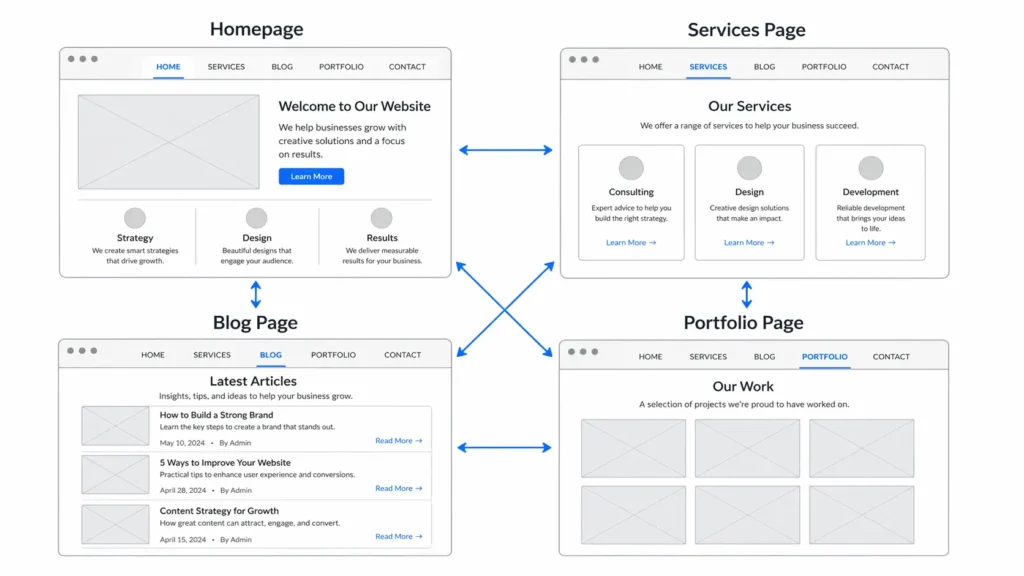
That starts with structure. Important pages should be reachable through your main navigation, supporting links, and a sensible page flow. Google also explains that a sitemap can help search engines crawl a site more efficiently, especially when a site is new, large, or has pages that are harder to discover through normal navigation alone.
Titles matter too. Google’s title link documentation explains that title links are generated automatically and are influenced by on-page content and references across the web. In other words, vague titles like “Home” or “Services” leave too much room for confusion. Clear titles make it easier for both Google and users to understand what the page is actually about.
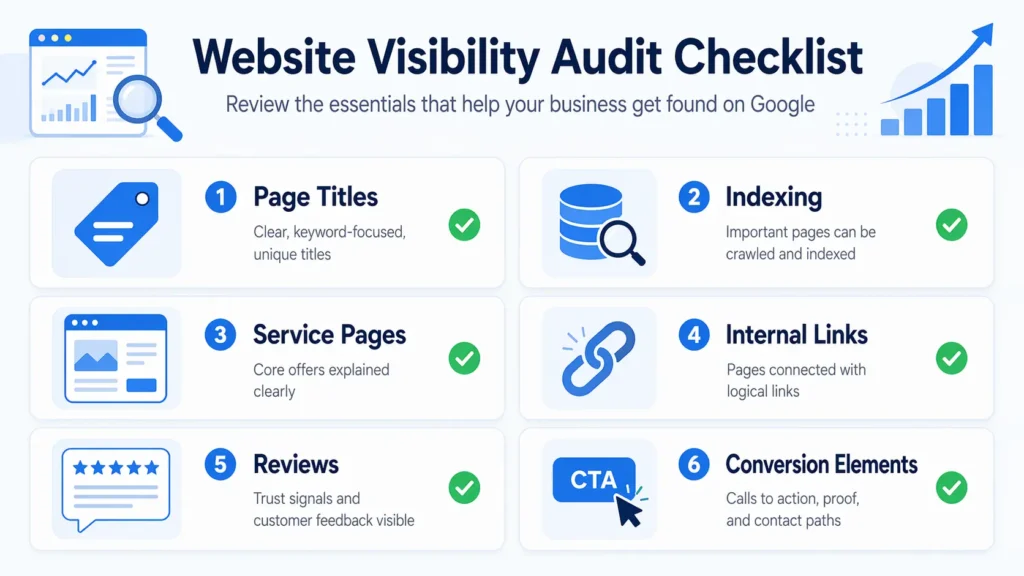
If you want the easiest starting point, review these three things first:
✅ Can users reach every key service page from the main menu or from another strong page?
✅ Does each page clearly say what the service is, who it is for, and where it applies?
✅ Does the page earn trust quickly through proof, examples, and a clear next step?
One smart move is to review your site like a first-time visitor. If the page feels vague to a person, it usually feels vague to search engines too.
Which option is best for your business?
The best visibility channel depends on the kind of business you run. A local service provider should focus heavily on service pages and Google Business Profile. A design studio, consultant, or online-first brand still needs strong service pages, but supporting blog content can expand reach faster over time.
If your goal is more leads, your money pages come first. That means your homepage, service pages, and sample work should be tighter before you worry about publishing a large volume of articles. This is where website design & development services and a polished project gallery can support both trust and search intent.
| Option | Best for | Why it works | What to do first |
|---|---|---|---|
| Service pages | Direct leads | Matches buyer intent closely | Clarify offer, location, proof, CTA |
| Google Business Profile | Local businesses | Helps with map and local visibility | Verify, complete details, add photos |
| Blog content | Long-term growth | Captures informational searches | Build clusters around real questions |
| Portfolio or samples | Trust and conversion | Shows proof of work | Add outcomes, context, service tie-in |
For most small businesses, the winning order is simple. Start with service pages. Strengthen local visibility. Add supporting blog content that links back to your services. That order usually gives better returns than starting with dozens of general posts.
Build pages that deserve to rank
A page has a better chance of performing when it satisfies intent fast. That means the visitor should not need to guess what you do, who you help, or what action to take next.
Your homepage should explain the business clearly. Your service page should go deeper and focus on one main offer. Your portfolio or sample work page should show outcomes, not just images. If you serve multiple areas, your location pages should be genuinely useful and distinct, not thin duplicates with swapped city names.
A strong service page often includes:
A clear headline tied to the actual service, a short opening that explains the value, proof such as examples or results, FAQs that remove objections, and a direct CTA. It should also link naturally to related supporting content. For example, a service page can point readers to how to rank a small business website if they need broader SEO context before they commit.
This is also where on-page clarity helps Rank Math style checks naturally. When the topic is focused, the headings make sense, the intro answers the question quickly, and the internal links are relevant, optimization becomes much easier without stuffing keywords into every section.
Content strategy that supports your core pages
Content works best when it supports commercial intent instead of drifting away from it. Too many sites publish articles that attract curiosity traffic but never connect that traffic to a service or offer.
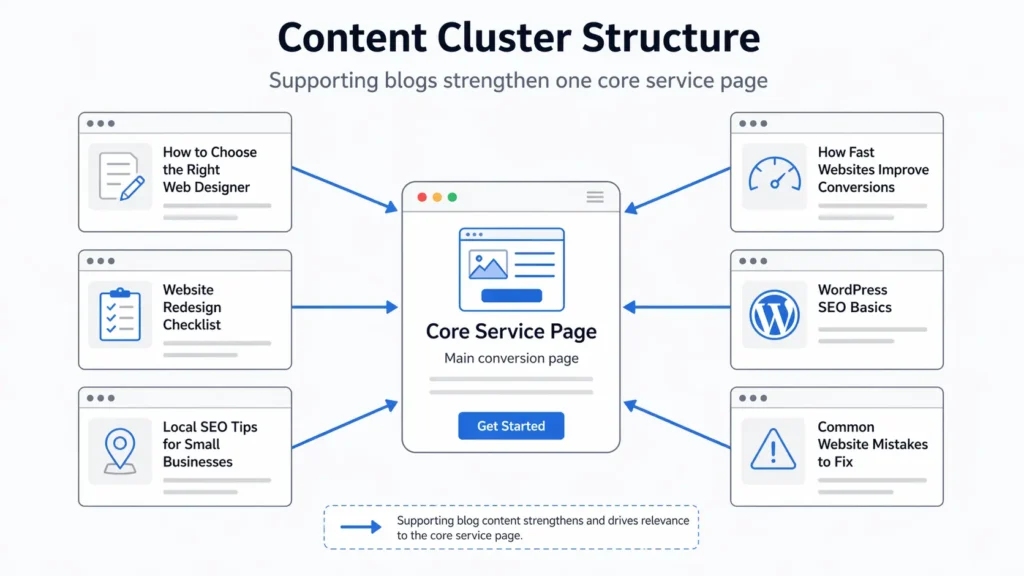
A better model is topic support. Start with one core page, such as website redesign, SEO setup, or local visibility. Then build related content around common questions, beginner concerns, comparisons, cost issues, and practical fixes. Each supporting article should send readers back to the page that can solve the problem.
That is why internal links matter so much. Google can discover pages through links, and good internal linking helps users move through the site with more context. A blog about performance improvements, for example, should naturally point to website optimization for small business if that is the next logical step for the reader.
Content should also be updated when it becomes stale. Google notes that if you have recently added or changed a page, you can request re-indexing for URLs you manage. Google also notes that many hosted CMS platforms, including WordPress-type setups, often submit new content automatically. That means updating important pages is often more valuable than constantly creating brand-new weak ones.
For added reference, blend in only a few useful outside resources. A strong example is Google’s own guide to getting your website on Google, especially if you want to explain indexing basics without sending readers to a generic SEO source.
Local SEO actions that move faster than most people expect
If your business serves a local area, local visibility can move faster than blog SEO when the basics are handled correctly. Google Business Profile guidance says complete and accurate business information, verification, updated hours, review responses, and added photos or videos can all support how a business shows up in local results.
That matters because many service searches are not purely informational. A person looking for a web designer, contractor, cleaner, or clinic often wants a trusted provider near them or one that clearly serves their area. If your profile is incomplete, inconsistent, or inactive, you are making that decision harder.
Keep this part simple:
✅ Use your real business name
✅ Choose the most accurate primary category
✅ Keep your contact details and hours current
✅ Add photos that match the real service experience
✅ Reply to reviews like a real business owner, not with canned text
If you want an official reference for local improvements, Google’s tips to improve your local ranking on Google is the safest source to blend into the article naturally.
Common reasons a business website stays invisible
Many websites are not invisible because of competition alone. They are invisible because the basics were never finished.
One common problem is weak page targeting. If every page sounds similar, Google has no strong signal about which page should appear for which search. Another is thin service content. A page with one short paragraph and a contact form rarely competes well against a page that explains the service, shows proof, answers questions, and offers a clear path forward.
A third issue is broken internal logic. Businesses publish blog posts, but the posts do not support any commercial page. Or they create a services page, but nothing links to it clearly. That disconnect weakens both user flow and discovery.
The last issue is trust. Search visibility and conversion are connected. A page that looks outdated, vague, or unproven may not earn strong engagement, and that makes every traffic source less valuable. Strong design, clear copy, and useful structure do not replace SEO, but they make SEO work much better.
A smarter next step
The easiest way to improve visibility is not to do everything at once. Audit your homepage, tighten your service pages, complete your local profile, and publish supporting content that leads readers toward a real business outcome.
If you want a cleaner path for how to get found on Google, focus first on the pages that sell, then support them with local SEO, internal links, and educational content that answers real questions. That approach is simpler, easier to maintain, and usually stronger for both rankings and conversions.
Frequently Asked Questions
1. How do I get found on Google Search?
The best way to get found on Google Search is to make your pages easy to crawl, useful to visitors, and clear about what they offer. Start by checking whether your main pages are indexed, tighten your titles and headings, improve internal links, and make sure your site includes focused service pages. If you serve a local area, complete and verify your Google Business Profile as well. Google says most sites are found automatically, but strong structure and complete business information improve discoverability.
2. What is the Google 20% rule?
The Google 20% rule is an innovation concept, not a search ranking rule. It refers to Google’s well-known “20% time,” where employees use part of their work time on business-related ideas outside their main assignments. Google sources have described it as time for projects that could add value to the company, and they have tied it to projects like Gmail and Google News. It is useful as a culture example, but it has nothing to do with how your website ranks in Google Search.
3. Who is the #1 Googled person?
There is no permanent #1 Googled person because search interest changes by country, timeframe, and data source. For example, Google’s Year in Search 2025 global trending “People” list placed d4vd first, while an Ahrefs analysis published on January 12, 2026 of U.S. Google search demand ranked Elon Musk first by monthly search volume. So the most accurate answer is always date-specific and source-specific, not universal.
4. Do you have to pay to be found on Google?
No, you do not have to pay to appear in Google’s organic results. Google says it automatically looks for sites to add to its index and does not accept payment to crawl a site more frequently or rank it higher organically. Payment only applies when you choose ads, sponsored placements, or outside help with SEO or web design. Organic visibility still depends on whether Google can crawl, index, and understand your pages well enough to serve them for relevant searches.