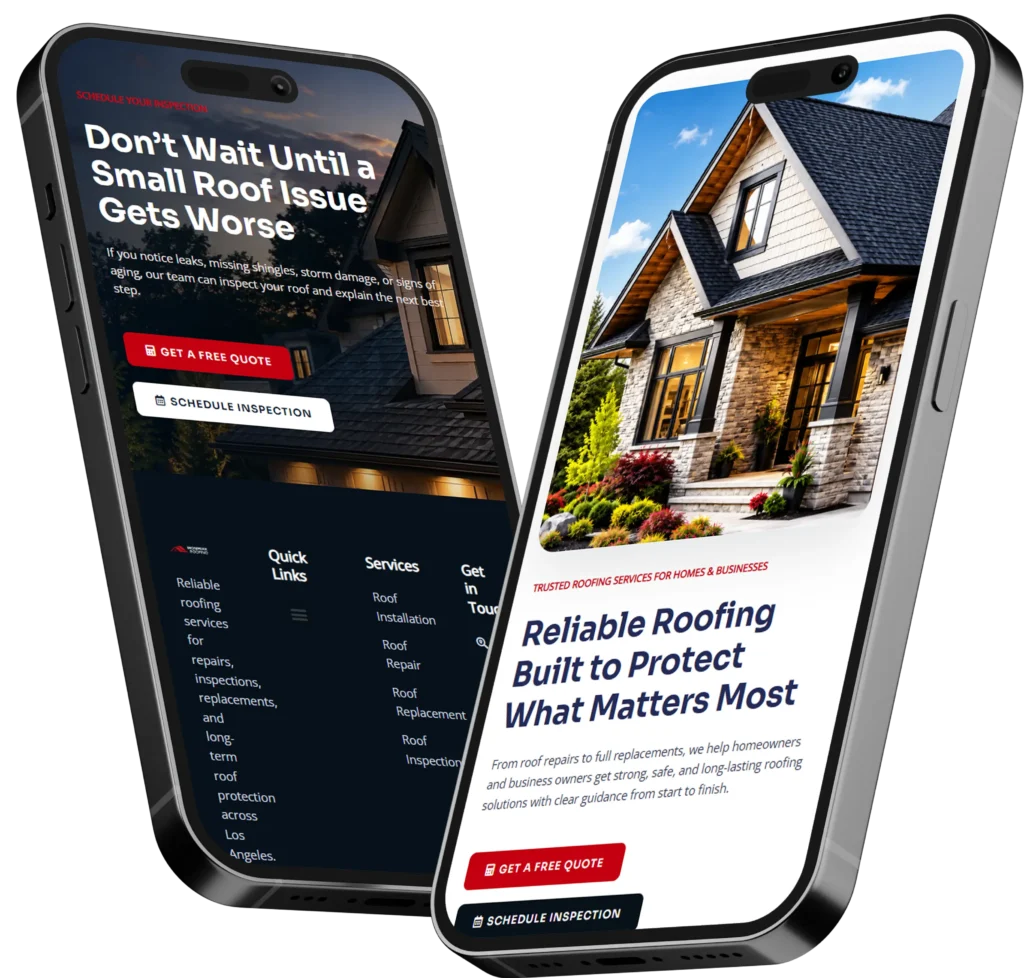
Local SEO for small business website growth starts with a site that clearly shows what you do, where you do it, and why a nearby customer should trust you. The best-performing small business websites combine local relevance, simple structure, mobile usability, and strong conversion design so Google can understand the page and real people can act on it.
A lot of business owners treat local SEO and website design like two different projects. They are not. Your Google Business Profile may help you appear, but your website often decides whether that click turns into a call, form fill, or booking. Google’s own guidance says local results are shaped by relevance, distance, and prominence, and complete business information helps Google understand and match a business to searches.
Why website design matters for local rankings
A small business website does more than look professional. It gives search engines clear signals about your services, service area, and authority, while also giving visitors a fast path to contact you. Google’s SEO documentation explains that SEO helps search engines understand your content and helps users decide whether they should visit your site from search results.
That means a good-looking site is not enough. If the page is vague, thin, slow, hard to use on mobile, or missing location context, it becomes harder to rank and harder to convert. A well-built local website supports visibility and sales at the same time.
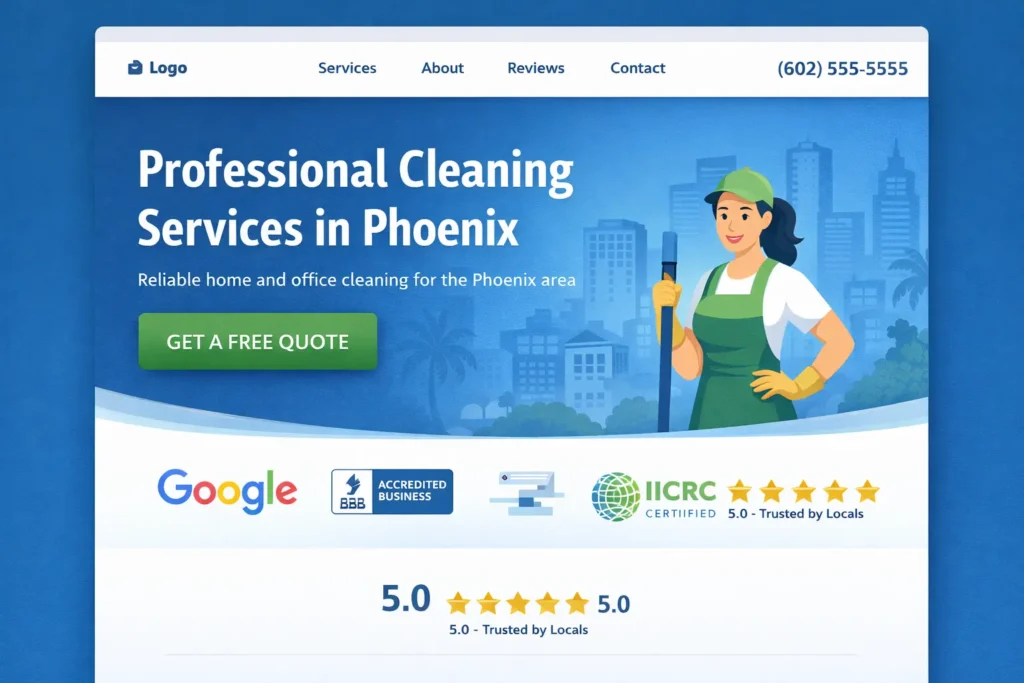
For most service businesses, the best website is not the fanciest one. It is the clearest one. It tells the visitor, within seconds, the service offered, the area served, the proof behind the service, and the next step to take. That is why design decisions like hero copy, heading structure, service pages, trust sections, and internal links matter far more than trendy animations.
If you want a benchmark for how Google wants site owners to think, the Google SEO Starter Guide is a strong external reference because it centers on user-first structure, crawlability, and clear content organization.
| Website element | Why it matters for local SEO | Best option for most small businesses |
|---|---|---|
| Hero section | Tells Google and users what the page is about right away | Service + city/area + clear CTA |
| Navigation | Helps search engines and visitors find key pages | Simple menu with Services, Areas, About, Work, Contact |
| Service pages | Builds relevance for specific search intent | One page per main service |
| Local trust signals | Improves confidence and conversion | Reviews, map, NAP, photos, certifications |
| Mobile layout | Supports both rankings and lead generation | Fast, clean, thumb-friendly mobile design |
| Internal links | Helps distribute context and authority | Link related services, blogs, and proof pages |
How local SEO for small business website strategy should shape your design
The easiest way to think about this is simple: your design should make local relevance impossible to miss.
Start above the fold. A headline like “Custom Website Design for Miami Cleaning Companies” is stronger than “Beautiful Websites That Grow Your Brand.” The second line sounds polished, but the first line gives Google and the visitor real context. Relevance is easier when the page clearly matches what someone searched for. Google specifically says complete and detailed business information helps it understand relevance better.
Next, make your structure easy to crawl and easy to scan. Google explains that its systems crawl pages, index content, and then serve relevant results, and most pages are discovered automatically through links or submitted via sitemaps. That means your core service and location pages should not be buried inside sliders, tabs, or confusing JavaScript-heavy layouts. Your most important content should be readable in the visible page copy, supported by clean headings, and connected through internal links.
A strong local layout usually includes these essentials ✅
- a keyword-aligned hero section
- one short proof section near the top
- a services overview with links to deeper service pages
- service area references that feel natural
- a contact CTA that repeats throughout the page
This is also where web design gives you an edge over basic SEO checklists. A site can have the right title tag and still lose leads because the CTA is weak, the phone number is hard to find, or the design feels outdated. Local search traffic is commercial traffic. People often compare options fast. If your site does not look trustworthy in the first few seconds, rankings alone will not save it.
For that reason, businesses that want better local performance often do better with strategic pages than with generic templates. If you are refining your offer, your website design & development services page should clearly show what is included, who it is for, and how the process works. And if a prospect needs confidence before reaching out, send them to your portfolio highlights so they can see proof before they make contact.
Which website option is best for your type of business
This is where many small businesses go wrong. They copied a site structure from another company that has a completely different service model.
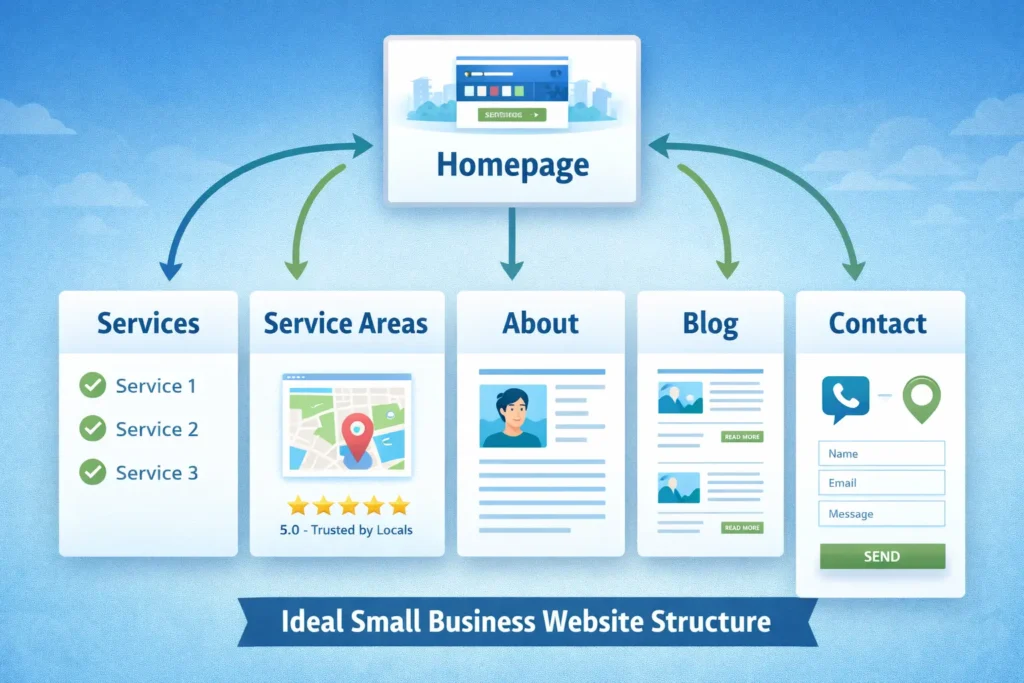
A single-location service business usually needs a focused homepage, separate pages for each core service, a contact page, and a few supporting blog posts. A business serving multiple nearby cities often needs separate location pages only if those pages offer unique value and are not thin duplicates. A storefront business benefits from stronger contact, hours, map, parking, and review visibility because the visit itself is part of the conversion path.
The best option depends on how customers search for you. If most searches combine a service and a city, your website should reflect that pattern. If most searches are broader category searches, your homepage and main service pages should carry more of the load.
| Business type | Best page structure | Why it works |
|---|---|---|
| Single-city service business | Homepage + service pages + contact + 2 to 5 support blogs | Strong relevance without overcomplicating the site |
| Multi-service local business | Homepage + one page per service + strong internal linking | Captures more high-intent search terms |
| Multi-city service area business | Core service pages + carefully written area pages | Helps cover local demand without cannibalizing pages |
| Storefront or office-based business | Homepage + about + services/products + contact/location page | Supports discovery, directions, and trust |
| Niche trade or specialty service | Homepage + service detail + case studies + FAQs | Builds authority and improves conversion |
For example, a cleaning company may need separate pages for standard cleaning, deep cleaning, move-out cleaning, and commercial cleaning. A dentist may need fewer service pages but stronger trust, biography, insurance, and review sections. A local designer or agency may benefit from service pages plus selected case studies. The structure should always match search behavior and buyer intent.
This is one reason content support matters. Related blogs can reinforce service relevance and attract more qualified traffic from niche searches. If you want strong examples in service industries, blend in resources like maid service website design ideas and local cleaning business website examples. These kinds of support pieces help you answer narrower questions while creating useful internal linking paths back to your commercial pages.
The page elements that move both rankings and leads
The strongest local pages usually win because they do many small things well, not because they rely on a single trick.
First, make your title tag and H1 work together. The title tag should help searchers understand the result before they click. The H1 should confirm they landed in the right place. Keep both aligned with the service and area, but do not force them into robotic copy.
Second, make contact details effortless to find. Google’s Business Profile guidance emphasizes accurate and complete business details such as address, phone number, category, and hours. Your website should reinforce those same trust signals, especially in the footer, contact page, and key service pages. Even when a business is service-area-based, there still needs to be clear consistency around service coverage and contact methods.
Third, add proof high on the page. Reviews, awards, accreditations, before-and-after images, and short testimonials reduce hesitation. This is not only good for conversions. It also strengthens prominence in the broader marketing sense because users are more likely to stay, engage, and trust what they see. Google also notes that reviews, positive ratings, and links can support how prominent a business appears in local results.
Fourth, create stronger internal links. Google explains that pages are often discovered when links point to them from known pages. So your blog should not sit in isolation. A post about homepage mistakes should link to your services page. A service page should link to portfolio examples. A local niche article should link back to your main commercial page. This is where thoughtful design supports SEO instead of fighting it.
Fifth, keep your site technically simple enough to be understood. Google says it can render JavaScript, but that does not mean every complex visual effect is helpful. Small business websites often perform better when their core content is plain, visible HTML text with clean layouts, optimized images, and clear navigation. Fancy interactions are only worth it if they do not slow the page or hide essential content.
If you are positioning your brand as a serious local option, linking naturally to small business web design experts can also help users understand who is behind the work and why they should trust the process.
Common website design mistakes that weaken local SEO
One of the biggest mistakes is trying to rank a whole business from one generic homepage. That can work for a very small offer, but it usually becomes limiting quickly. If you provide several distinct services, separate pages are almost always stronger because they match intent more clearly.
Another mistake is writing copy that could belong to any business in any city. Search engines and users both need specificity. Replace vague phrases like “quality solutions” and “tailored excellence” with plain language about what you do, who you help, and where you work.
Thin location pages are another weak point. If every city page uses almost identical text and only swaps the city name, it rarely becomes a lasting asset. Each page should offer real local value, such as area-specific services, nearby landmarks, neighborhood proof, local testimonials, or project examples.
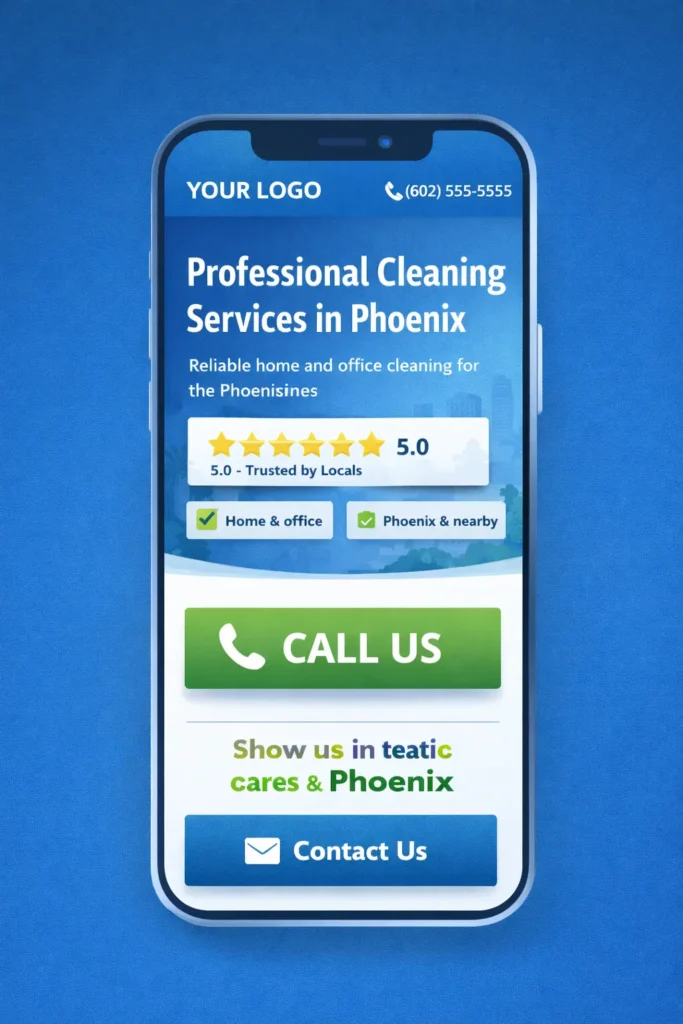
Many sites also hide their best conversion assets. They place the phone number only in the footer, bury the quote form, or use weak buttons like “Learn More” everywhere. A local lead-focused site needs clear CTAs throughout the experience.
A quick audit usually reveals the same issues
- generic hero copy
- no dedicated service pages
- weak internal links
- outdated visuals
- poor mobile spacing
- no proof near the top
- unclear contact path
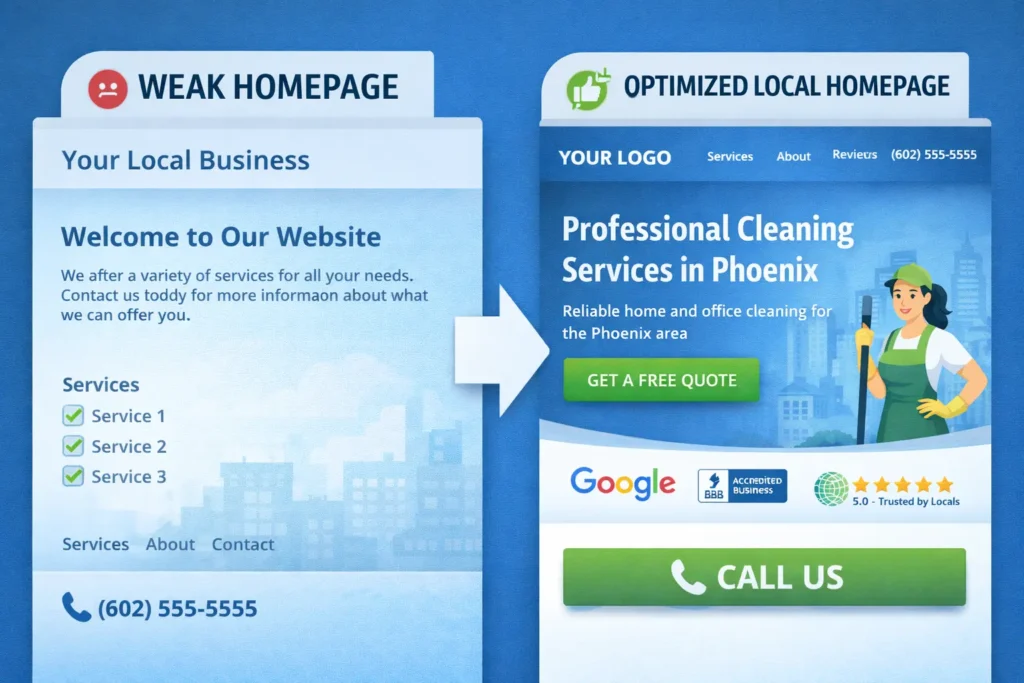
A practical way to build authority without stuffing keywords
A better content strategy is to support your core pages with nearby-topic articles that answer real buying questions. This helps you rank for more natural searches while strengthening the commercial pages that actually close leads.
For example, instead of publishing ten nearly identical city posts, publish a few helpful support articles tied to industries, design decisions, or conversion issues. A web designer could create content around service business website examples, local homepage mistakes, quote form best practices, booking flow design, or why mobile layout affects local leads.
This kind of article also aligns better with Google’s people-first documentation. Google says there are no secrets that automatically rank a site first, and that following best practices helps search engines crawl, index, and understand content more easily. That is the right mindset for sustainable local SEO: clarity, usefulness, and a structure built for both users and search engines.
Your next move for local SEO for small business website growth
If your site is already getting some traffic but not enough leads, the problem is often not just rankings. It is page clarity, trust placement, service structure, or mobile conversion friction. Fixing those issues can make the same traffic work harder.
The best next step is usually to tighten the homepage message, separate your core services into dedicated pages, add visible proof higher on the page, improve internal links, and make your contact path obvious on mobile. Once the site structure is solid, every future blog, service update, and profile improvement becomes easier to turn into real local growth.
A polished website is nice. A strategic local website is better. Build the site around what nearby customers search, what they need to trust, and what helps them act quickly. That is what makes a small business website more visible and more profitable.
Frequently Asked Questions
1. Does website design really affect local SEO for a small business?
Yes, website design directly affects how well your local SEO can perform. A strong design helps search engines understand your services, service areas, and page hierarchy, while also making it easier for visitors to trust your business and contact you. If a website is slow, confusing, or too generic, it can weaken both rankings and conversions. For a small business, the ideal setup is a fast mobile layout, clear service pages, visible trust signals, and strong calls to action that support local intent from the first screen.
2. What pages should a small business website have to rank better locally?
The best local website usually starts with a focused homepage, dedicated service pages, a contact page, and supporting blog content. That structure gives Google more context about what you offer while giving visitors an easier path to the right page. A single-page website often limits your reach because it tries to target too many services at once. If you are a web designer building for local clients, think in layers: homepage for broad positioning, service pages for intent, and blogs for supporting searches and internal links.
3. How can a web designer build a website that helps local customers convert?
A web designer helps local SEO most when the site is built for clarity, trust, and action. That means using a headline with the service and area, placing reviews or proof near the top, keeping navigation simple, and making the phone number or form easy to use on mobile. The goal is not just getting traffic. It is helping the visitor feel confident enough to contact the business without hesitation. A well-designed local site reduces friction and turns search visibility into qualified leads.
4. Is a Google Business Profile enough, or does a small business still need a strong website?
A Google Business Profile helps visibility, but a strong website is still what turns that visibility into revenue. Many people discover a business in Maps or local search and then visit the website to compare options, review services, and decide whether to reach out. If the website looks outdated, lacks service detail, or does not build trust quickly, the click may be wasted. For that reason, web design remains a core part of local SEO because the website supports credibility, relevance, and conversion after the search happens.