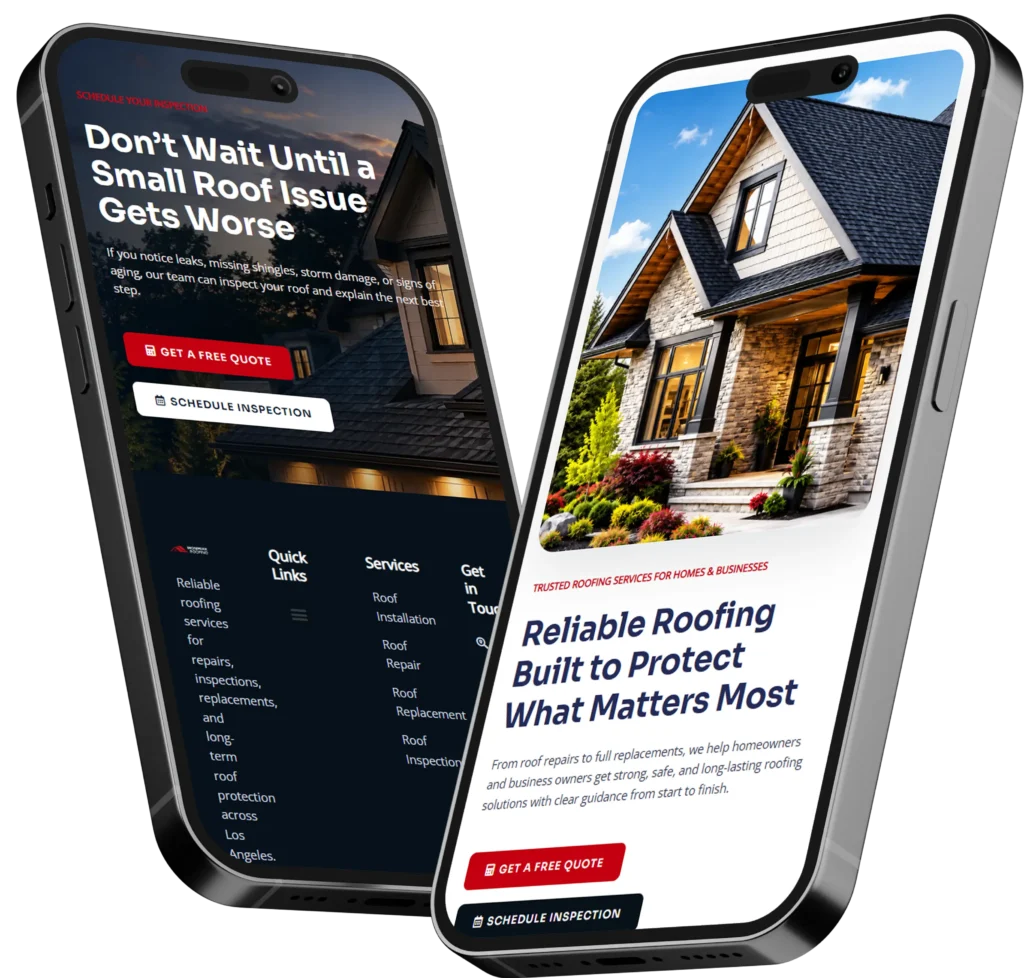
A pet clinic website should make it easy for owners to trust your team, understand your services, and book care without friction. The best-performing clinic sites answer urgent questions quickly, show proof of credibility, and guide visitors toward one clear next step.
Running a veterinary clinic means serving two audiences at once. You care for animals, but you also need to reassure the people making the decisions. That is why a strong site is not just about good design. It is about reducing hesitation.
When someone lands on your homepage, they are usually trying to do one of a few things. They want to book an appointment, check whether you treat a certain pet, find vaccine or wellness information, confirm your location and hours, or figure out whether their situation is urgent. If those answers are not easy to find, they leave.
A high-converting clinic site works because it removes stress. It shows the clinic is legitimate, responsive, and organized. It helps pet owners feel that their dog, cat, or other companion will be treated with care before they even make first contact.

Why Your Clinic Site Matters More Than Ever
Pet owners compare options fast. In many local markets, they open several tabs, scan reviews, glance at service pages, and make a choice in minutes. That means your website has to do more than exist. It has to communicate value quickly.
A strong clinic site supports local SEO, helps Google understand your services, and improves the chances that your pages show up for appointment-driven searches. It also supports GEO and AEO because well-structured answers, clear headings, and FAQ content give AI systems and search engines cleaner information to extract.
More importantly, it improves conversion. People do not want to hunt for basics like whether you accept new patients, what species you treat, or how to reach the clinic after hours. When those elements are obvious, the experience feels safer and more professional.
That is also where trust compounds. A thoughtful homepage, a clean services section, real staff photos, and clear booking CTAs tell visitors that your clinic is prepared. When that impression is backed by smart layout choices, your website starts acting like a full-time front desk assistant.
For inspiration on what strong veterinary-focused layouts can look like, review these related examples: vet website design ideas and animal hospital website design inspiration.
What Pet Owners Expect to See Right Away
Most veterinary sites lose leads for simple reasons. The homepage is vague. The menu is overloaded. The services page reads like a brochure instead of a decision-making tool. Or the call to action is weak.
Pet owners usually expect five things above the fold:
✅ a clear explanation of who you help
✅ visible phone number and location
✅ online booking or appointment request option
✅ proof that the clinic is trusted
✅ service clarity for common needs
That does not mean the homepage should be crowded. It means the homepage should answer essential questions in the right order.
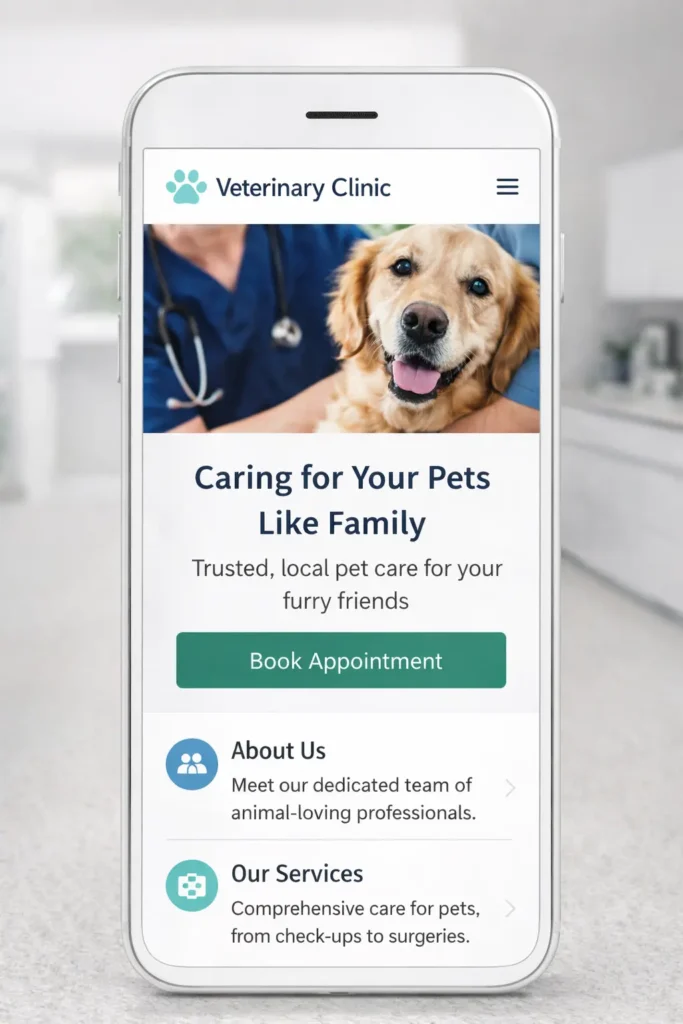
A better structure often starts with a headline that says what the clinic does and who it serves. Under that, a short supporting statement should explain the clinic’s approach, such as same-day appointments, fear-free handling, family-centered care, or preventive wellness. Then the primary CTA should be obvious.
A site visitor should never wonder, “What am I supposed to do next?”
The Pages That Do the Heavy Lifting
Not every page has to work equally hard. In most veterinary websites, a few core pages carry the majority of search visibility and lead generation.
| Page | What it should accomplish | Best practice |
|---|---|---|
| Homepage | Build trust fast and route users | Lead with services, location, and booking CTA |
| Services page | Explain care options clearly | Group by preventive, diagnostic, surgical, and urgent care |
| About page | Humanize the clinic | Show doctors, team photos, philosophy, and credentials |
| Contact page | Remove friction | Add map, hours, phone, emergency steps, and form |
| FAQ page | Capture search intent | Answer real owner questions in plain language |
The services page is especially important. It should not be a wall of short blurbs. It should help owners understand what applies to their pet and when they should act. That is where “why, how, and which option is best” becomes useful.
For example, instead of simply listing wellness exams, dental care, vaccinations, diagnostics, and surgery, explain why each matters, how the process works, and which pets benefit most. That framing helps both users and search engines understand the page more deeply.
If you want a stronger service architecture and conversion path, link naturally to website design & development services within the body of the article or service hub.
How to Structure Service Content So It Converts
A lot of clinic sites make the same mistake. They write for themselves, not for the worried pet owner.
A better approach is to structure service content like this:
What the service is
Start simple. One or two lines are enough.
Why it matters
Explain the consequences of delay or the benefits of prevention.
How it works
Walk through the visit in plain English.
Which pets are the best fit
Mention age, symptoms, lifestyle, or common triggers.
When to book now
Include a practical CTA based on urgency.
This kind of structure works because it matches how people think. They want relevance first, then process, then reassurance.
A wellness exam page, for instance, should not just say your clinic offers checkups. It should explain that routine exams catch subtle issues earlier, help keep vaccines and parasite prevention on schedule, and give owners a chance to discuss behavior, weight, appetite, mobility, or skin changes before they become more expensive problems.
Trust Signals That Actually Influence Bookings
Trust is not built by saying “we care.” Every clinic says that. Trust is built by proof.
The strongest trust elements for a veterinary clinic website usually include:
✅ real photos of the clinic and team
✅ doctor credentials and short bios
✅ review snippets with context
✅ accreditations, memberships, or certifications
✅ transparent contact and booking information
✅ emergency or urgent care instructions
This matters because people are often making a decision under emotional pressure. Their pet may be limping, vomiting, itching, or suddenly not acting normally. In that moment, a polished but generic website feels empty. A clear and human site feels dependable.
Add credibility near key decision points, not only on the About page. A testimonial under the homepage CTA, a doctor note beside dental or surgery content, and a reassuring line on the contact page can all reduce drop-off.
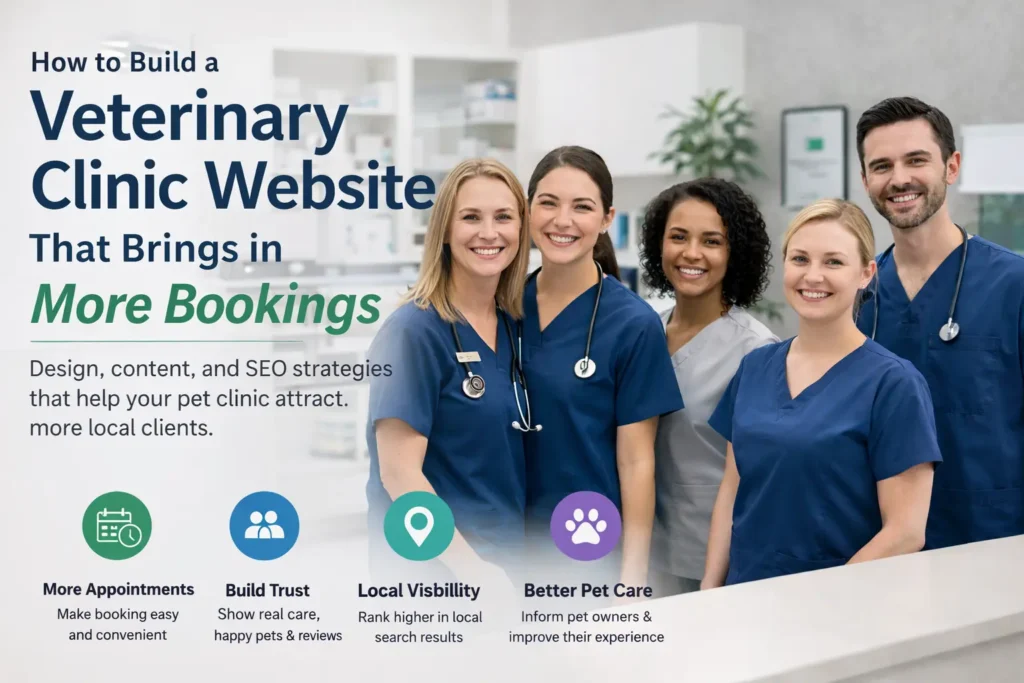
Which Site Features Are Worth Prioritizing First
Not every clinic needs the same website setup. A single-doctor neighborhood practice will not have the same priorities as a multi-location animal hospital.
| Clinic type | Features to prioritize first | Best fit |
|---|---|---|
| New or smaller clinic | Fast homepage, service pages, trust signals, and contact clarity | Best for building credibility quickly |
| Established local clinic | SEO landing pages, review integration, online booking, FAQs | Best for steady local lead growth |
| Multi-doctor or multi-location clinic | Location pages, doctor bios, advanced navigation, structured content | Best for scale and search coverage |
| Urgent care or emergency-focused clinic | Immediate phone CTA, emergency guidance, hours visibility, triage content | Best for high-intent visitors |
If the budget is limited, start with clarity over complexity. A fast, easy-to-navigate site with strong content usually outperforms a flashy site with weak messaging.
That is also why good planning matters more than extra features. Before adding chat widgets, pop-ups, or animations, make sure the essentials are strong. Homepage clarity, service depth, mobile usability, and calls to action should come first.
You can also review broader brand and layout ideas through our studio and compare finished work inside the project gallery.
Content Angles That Help You Rank Better on Rank Math
To push this kind of article higher, the content should match the intent closely and stay easy to scan. Rank Math tends to reward pages that are structured well, internally connected, and rich in useful detail without sounding bloated.
That means your article should include:
a concise answer at the top
clear subheadings tied to real search intent
helpful internal links to service and blog pages
external references that support trust
tables that improve readability
FAQ content written in plain, direct language
action-oriented conclusion copy
It also helps to cover adjacent questions naturally. Instead of writing only about web design, bring in topics that pet owners actually search for, like vaccines, appointment expectations, emergency warning signs, and the cost of a basic visit. That broadens semantic relevance while keeping the article useful.
One smart way to do this is by connecting website strategy with owner behavior. For example, a strong clinic homepage should link out to trustworthy resources that support care decisions. Helpful examples include the AAHA canine vaccination guidelines and the ASPCA emergency care guide for pets, both of which reinforce medical trust and give readers credible next steps.
The Layout Approach That Usually Works Best
The best option for most clinics is a clean, conversion-focused layout with clear sections, not a trendy design that hides information. That means generous spacing, easy mobile buttons, and service content written for real questions.
A homepage structure that often performs well looks like this:
hero section with clear CTA
quick trust strip with reviews or credentials
featured services section
why choose us block
doctor or team highlight
FAQ section
contact and map block
That order works because it mirrors the visitor’s thought process. First, they orient themselves. Then they evaluate trust. Then they look for relevance. Finally, they decide whether to contact you.
Small details matter here, too. Button copy like “Book an Appointment” usually performs better than vague labels like “Learn More.” A sticky mobile call button can help urgent users. A simple contact page with hours, directions, and emergency instructions often converts better than an overloaded multi-step form.
Common Mistakes That Quietly Hurt Performance
Many clinic sites look fine on the surface, but still underperform because of structural problems.
One common issue is weak navigation. If users cannot find wellness exams, vaccinations, dental care, diagnostics, surgery, or urgent care in seconds, they lose patience.
Another issue is generic content. Search engines and AI systems prefer pages with distinct, specific information. If every service page sounds interchangeable, ranking becomes harder.
A third issue is poor local trust. Missing location details, outdated hours, or no visible reviews create doubt. Even small uncertainties can stop someone from calling.
Then there is mobile friction. Since many pet owners are searching from a phone, forms need to be short, phone numbers should be tappable, and page speed has to stay strong. If the booking flow is clumsy, conversions drop.
Finally, some sites forget the emotional side of the visit. Owners are not just buying a service. They are looking for reassurance. That should come through in the wording, visuals, and page structure.
Practical Tips to Make Your Site Feel More Helpful
The most useful clinic sites feel like they were built by people who understand the pet owner journey. You can create that feeling with simple content decisions.
Add brief “When to book” sections to your services pages.
Use real photos instead of stock images when possible.
Include species-specific details if you treat more than dogs and cats.
Show first-visit expectations so new clients know what to bring.
Add a short urgent care note explaining what symptoms require immediate action.
Those details make the site more actionable. They also give you more opportunities to rank for long-tail searches.
For example, a dental page can mention bad breath, tartar buildup, loose teeth, chewing changes, and annual exam timing. A wellness page can mention puppy and kitten schedules, senior screenings, and parasite prevention. These specifics help the content sound experienced instead of generic.
Final Take on a Pet Clinic Website
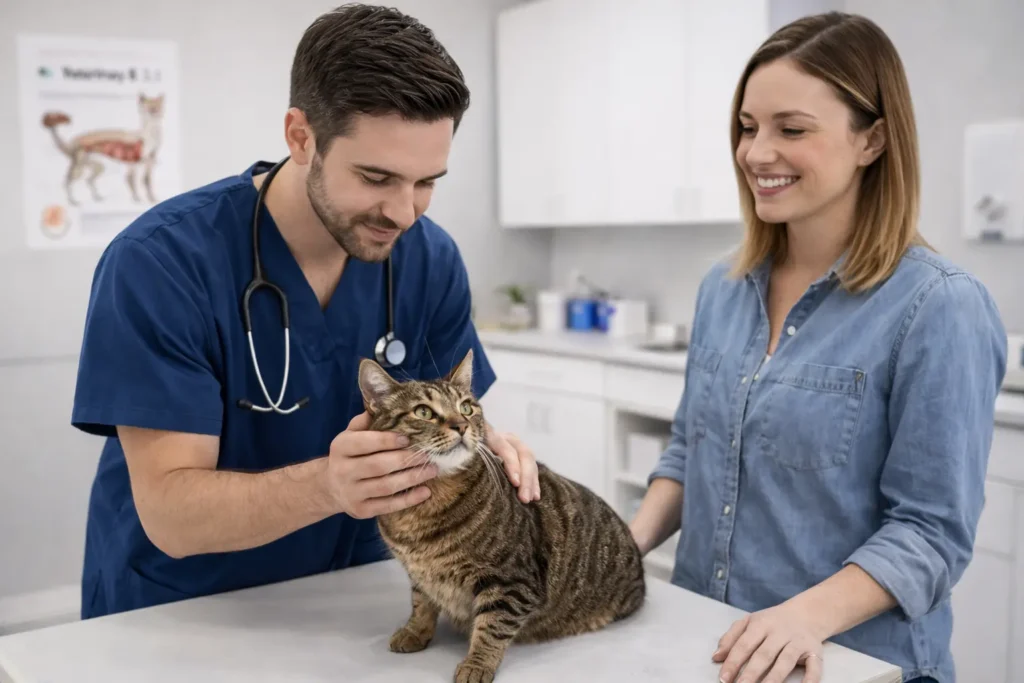
A great pet clinic website does not win because it looks modern. It wins because it answers questions fast, builds trust, and makes booking easy for stressed pet owners. When the structure is clear, the service pages are useful, and the calls to action are obvious, the website becomes a growth tool instead of a digital brochure.
For a stronger ranking and better conversion, focus on clarity first, then strengthen internal links, trust signals, FAQ content, and local relevance. That combination gives you a better shot at improving visibility in traditional search, AI-generated answers, and local decision-making moments.
Frequently Asked Questions
1. Do I need an appointment to bring my pet to the clinic in the USA?
In most cases, yes, it is best to book an appointment first. Many general veterinary clinics in the United States work on scheduled visits for wellness exams, vaccines, dental checks, and non-urgent concerns. Some clinics also reserve a few same-day slots for sick pets, but availability varies by location and staffing. If your pet is having trouble breathing, collapsing, bleeding heavily, or showing seizure activity, do not wait for a routine appointment. Contact an emergency veterinary hospital right away. The ASPCA lists trouble breathing, seizures, unresponsiveness, unconsciousness, and significant bleeding among signs that need immediate veterinary care.
2. What vaccines does my dog or cat need in the United States?
Core vaccines are the starting point, but the exact plan depends on species, age, lifestyle, and local risk. For dogs, core vaccines generally include rabies, distemper, parvovirus, and adenovirus, while some guidance now also highlights leptospirosis as important in many risk profiles. For cats, rabies and FVRCP are commonly considered core, with FeLV often recommended based on age and exposure risk. The AAHA canine vaccination guidelines and feline professional guidance both emphasize individualized plans rather than one identical schedule for every pet. That is why your veterinarian may recommend more or fewer non-core vaccines depending on boarding, travel, outdoor exposure, and regional disease patterns.
3. How much does a vet visit usually cost in the USA?
A routine vet visit in the U.S. can vary a lot, but many pet owners should expect a general exam to fall around the low hundreds before added tests, medications, or vaccines. Pricing changes by region, clinic type, and the reason for the visit. AVMA reporting noted that the average reported cost of the last veterinary visit was about $200 in 2025, which reflects how quickly costs can rise once diagnostics, treatment, or urgent care are involved. A standard wellness visit may be lower than that, while sick visits, imaging, lab work, and emergency appointments can be much higher.
4. When should I take my pet to the clinic right away?
You should seek immediate veterinary care when symptoms look sudden, severe, or life-threatening. That includes difficulty breathing, seizures, collapse, unconsciousness, major bleeding, suspected poisoning, repeated vomiting with weakness, or a situation where your pet is in clear distress and not acting normally. The ASPCA also advises urgent action if you suspect toxic ingestion, and it offers a poison control line for emergencies. When in doubt, call the nearest emergency clinic and describe the symptoms clearly so the team can guide you on what to do next.