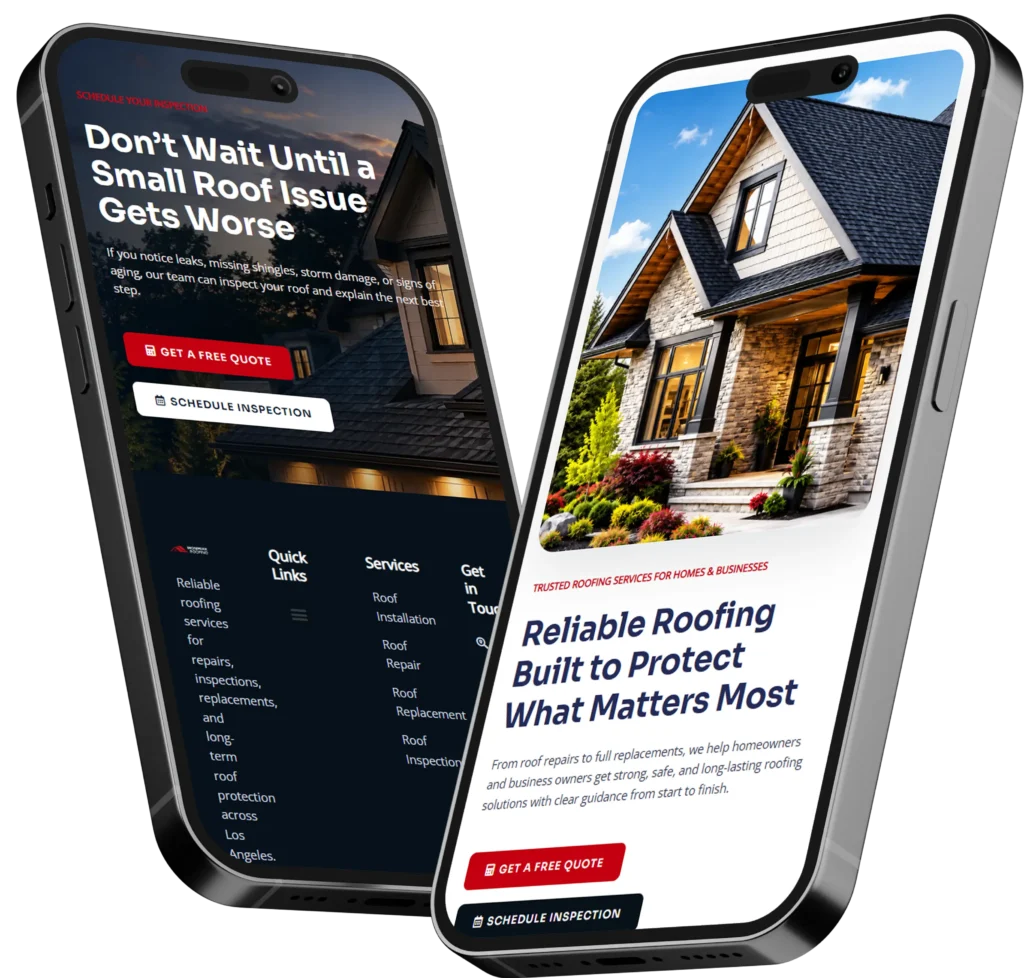
A website content strategy for small business is a plan for what pages, messages, keywords, calls to action, and proof your website needs to turn visitors into leads. The best strategy connects your offer to the buyer’s question, then guides them toward a call, booking, form, or quote request.
For most small businesses, a good website is not just a digital brochure. It should answer what you do, who you help, why people should trust you, and what they should do next.
A strong content plan also helps Google understand your website. Google’s own SEO Starter Guide explains that SEO improvements help search engines crawl, index, and understand your content better.
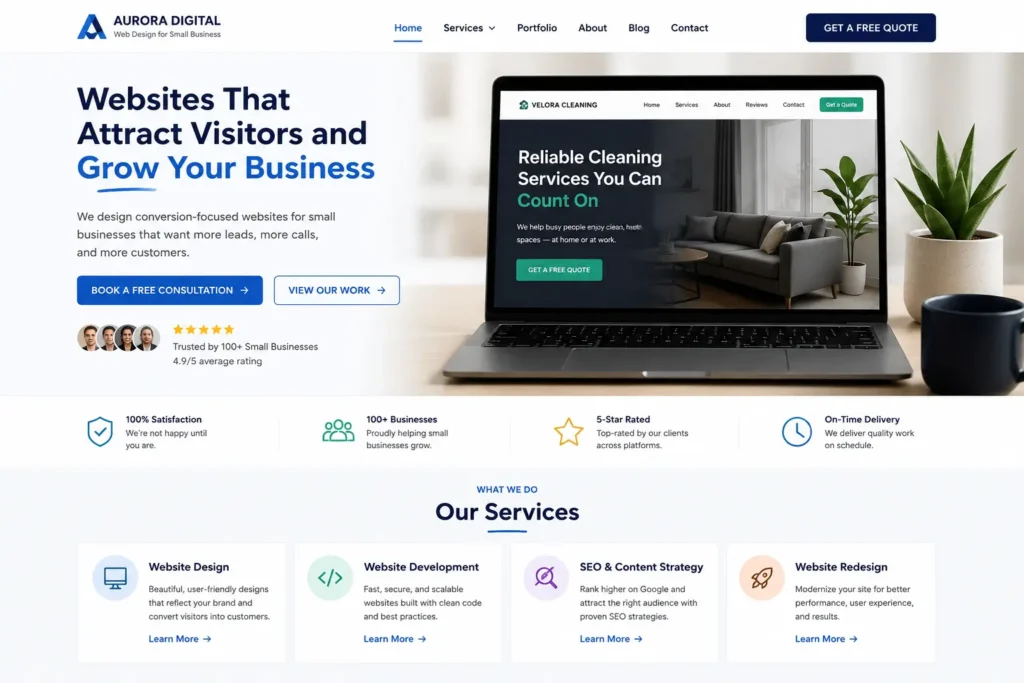
Why Your Website Content Needs a Strategy
Many small business websites look nice but do not bring enough leads. The problem is usually not only the design. It is often the message, page structure, proof, and call to action.
A visitor lands on your website with one question: “Can this business solve my problem?” If your website makes them work too hard to find the answer, they leave.
Your content strategy fixes that by giving every page a clear job. Your homepage builds trust quickly. Your service pages explain your offer. Your landing pages focus on one action. Your blog posts answer search questions. Your portfolio proves you can deliver.
This is why working with small business web design experts can help. A professional website is not just about colors and layout. It is about organizing information so visitors feel confident enough to contact you.
What Makes a Small Business Website Content Strategy Work
A useful website content plan starts with your audience. Before writing pages, you need to know what customers care about, what makes them hesitate, and what information they need before buying.
The SBA’s market research and competitive analysis guide explains that market research helps businesses understand customers, behavior, and trends so they can reduce risk and improve decisions.
That matters because your website should not be written from the business owner’s point of view only. It should be written from the customer’s point of view.
Here is what your strategy should answer:
✅ What problem does the visitor have?
✅ What service or solution fits that problem?
✅ What proof removes doubt?
✅ What action should they take next?
✅ What page should help them make that decision?
When those answers are clear, your website becomes easier to use, easier to rank, and easier to trust.
The Core Pages Every Small Business Website Needs
Not every small business needs a huge website. However, most need a simple structure that supports search, trust, and conversions.
| Website Page | Main Purpose | What to Include | Best CTA |
|---|---|---|---|
| Homepage | Explain who you help and what you offer | Main message, services, proof, locations, CTA | Book a call |
| Service Page | Sell one clear offer | Benefits, process, pricing cues, FAQs, proof | Request a quote |
| About Page | Build trust | Story, values, team, credentials | Meet the team |
| Portfolio or Work Page | Show proof | Before and afters, case studies, project photos | View similar work |
| Contact Page | Make action easy | Form, phone, email, map, hours | Send a message |
| Blog | Answer search questions | Helpful guides, comparisons, tips | Read related service |
Your homepage should not try to say everything. It should quickly direct visitors to the right next step. Your service pages should carry the heavier explanation.
For example, if you offer website design, SEO, and landing pages, each service should have its own page. This helps customers understand the offer and helps search engines understand what each page is about.
Need help planning those pages? Review your options through website design & development services so your website structure supports both user experience and lead generation.
How to Build Content Around Buyer Intent
Buyer intent means the reason someone searches. Some people are just learning. Some are comparing options. Some are ready to hire.
Your website should serve all three.
A visitor searching “why is my website not getting leads” may need an educational blog. A visitor searching “website redesign for small business” may need a service page. A visitor searching “web designer near me” may be ready for a consultation.
This is where many small businesses make a mistake. They write every page like a sales pitch. But not every visitor is ready to buy right away.
A better approach is to create content for each stage:
| Customer Stage | What They Search | Best Content Type | Why It Works |
|---|---|---|---|
| Problem aware | “Why am I not getting website leads?” | Blog post | Explains the issue and builds trust |
| Solution aware | “Website redesign for small business” | Service page | Shows your offer as the solution |
| Comparison stage | “Web designer vs DIY website builder” | Guide or comparison page | Helps them choose confidently |
| Ready to act | “Hire a small business web designer” | Landing page | Focuses on booking or inquiry |
| Trust check | “Web design portfolio examples” | Portfolio page | Proves experience and quality |
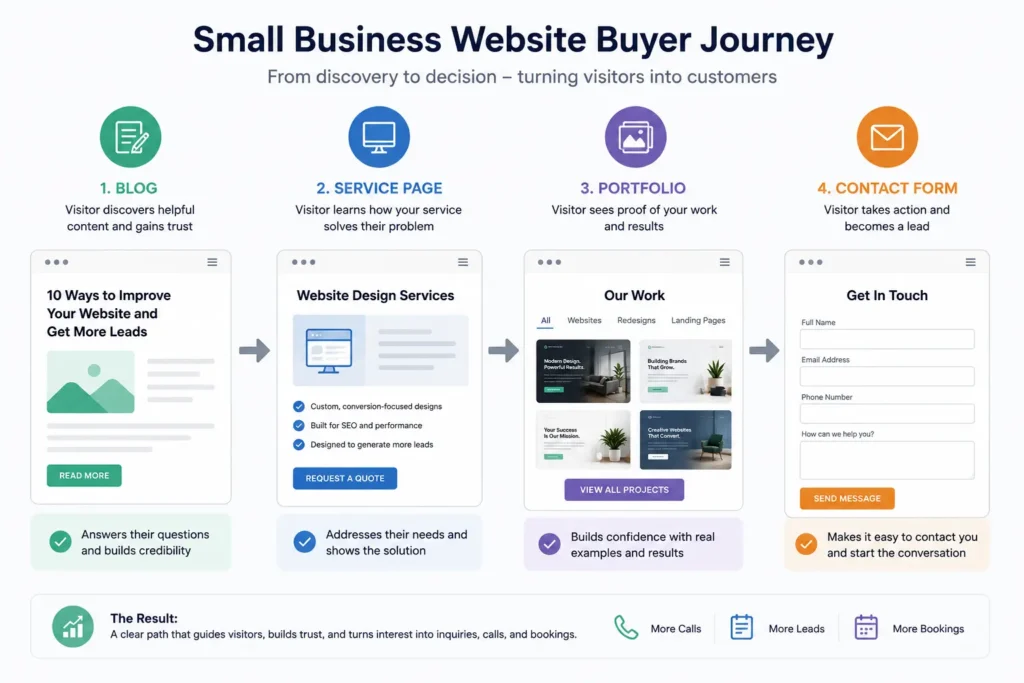
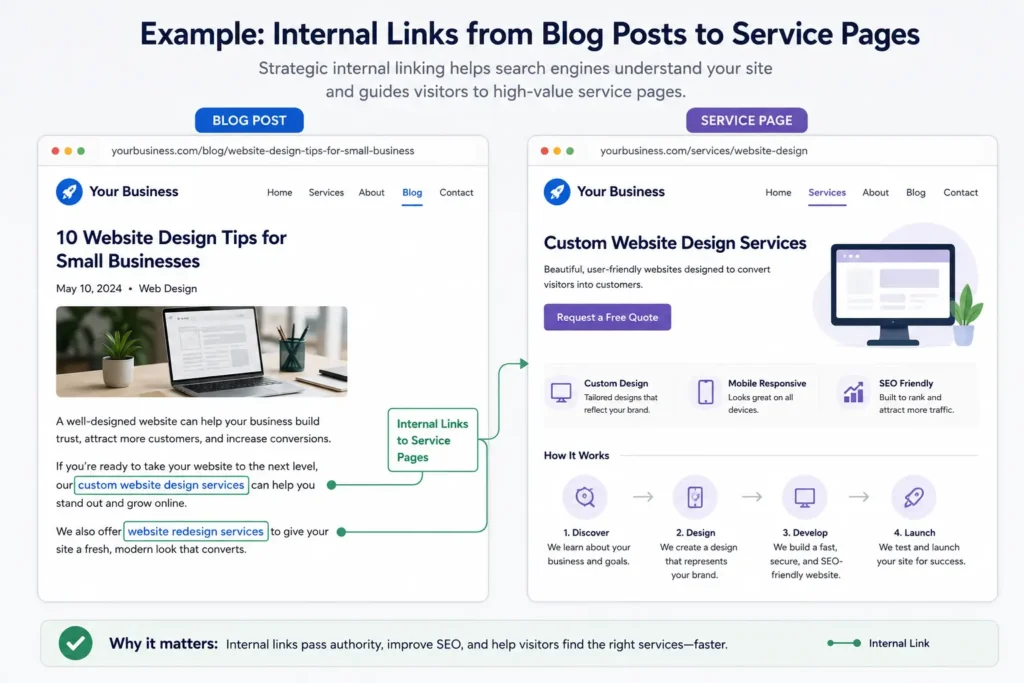
This is also where internal links help. A blog post can educate visitors, then guide them to a service page. A service page can link to portfolio examples. A portfolio page can link to a contact page.
For deeper messaging help, read website messaging for small business before writing your main pages.
What to Put on Your Homepage
Your homepage has to work fast. Visitors should understand your business within a few seconds.
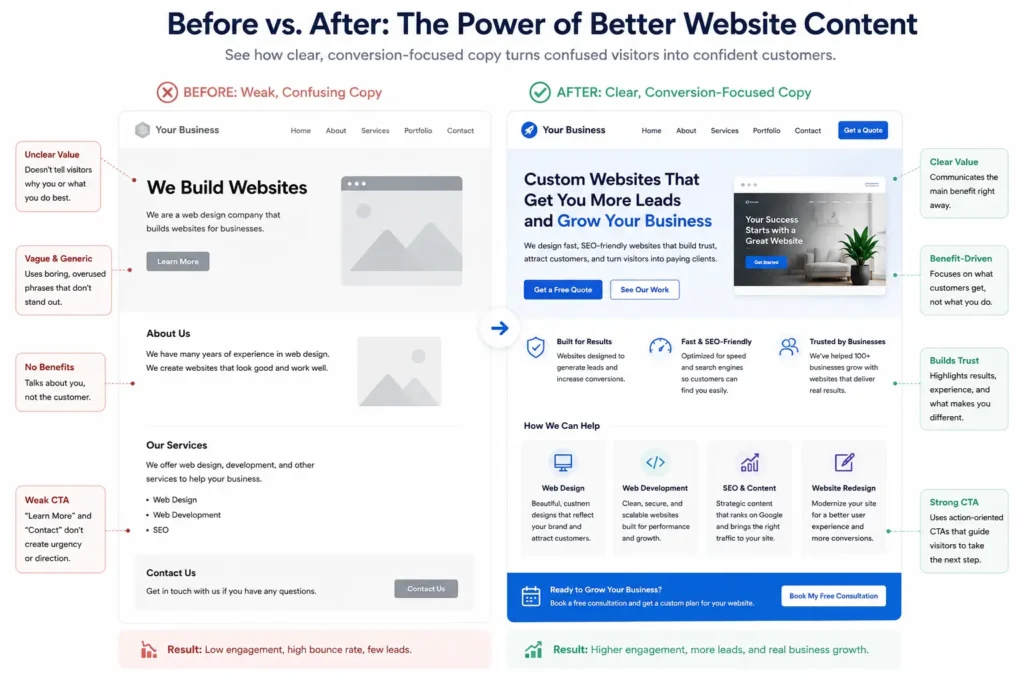
Start with a clear headline. Say what you do and who you help. Avoid vague lines like “We bring your vision to life” unless you also explain the specific service.
A strong homepage usually includes:
✅ A clear hero section
✅ A short explanation of services
✅ Trust signals like reviews or years of experience
✅ A simple process section
✅ Featured work or results
✅ A strong call to action
The best homepage content is simple but intentional. It should help visitors say, “This is for me.”
For example, a weak hero message says:
“Creative digital solutions for modern brands.”
A stronger version says:
“Custom websites for small businesses that need more calls, bookings, and qualified leads.”
The second version works better because it names the audience, the service, and the result.
If your homepage does not make your value clear, visitors may never reach your service pages. This is why homepage content should be written before final design decisions are made.
How Service Pages Should Be Written
Your service pages are where serious buyers make decisions. These pages should explain what you offer, who it is for, what is included, and why your business is the right choice.
A good service page should not only describe the service. It should also remove hesitation.
For example, if someone is considering a website redesign, they may worry about price, time, SEO loss, content writing, or whether the new site will actually bring leads. Your page should answer those concerns before they have to ask.
A strong service page usually includes:
✅ Clear service headline
✅ Who the service is for
✅ Problems it solves
✅ What is included
✅ Process or timeline
✅ Proof, examples, or testimonials
✅ FAQ section
✅ CTA to book or request a quote
If your service pages feel too thin, start with service page copy for small business and improve each page with better benefits, proof, and calls to action.
Which option is best? If your business has multiple services, create one page per main service. If you only have one core offer, create one detailed service page and support it with blog posts and landing pages.
When to Use Landing Pages
A landing page is best when you want visitors to take one specific action. This could be booking a consultation, downloading a guide, requesting an estimate, or signing up for a local offer.
Landing pages work well for ads, seasonal campaigns, email promotions, and specific services. Unlike a homepage, a landing page should not give people too many paths. It should focus on one goal.
For example, a general web design homepage can link to many areas of your site. A landing page for “restaurant website redesign” should focus only on restaurant owners who need better menus, online ordering, local SEO, and reservations.
Use a landing page when:
✅ You are running paid ads
✅ You want to promote one service
✅ You are targeting one audience
✅ You need a focused booking page
✅ You want to test a specific offer
Do not use landing pages as a replacement for your full website. Use them as focused conversion tools.
If your current website looks outdated or does not support clear lead paths, consider a website redesign that converts instead of simply adding more pages.
How Blog Content Supports SEO and Leads
Blog content helps your website answer questions customers search before they are ready to hire. For small businesses, blogs should not be random updates. They should support your services.
For example, a web design business may publish posts about homepage mistakes, service page copy, website redesign signs, landing page tips, local SEO basics, and trust-building website elements.
Each blog should connect to a business goal. If a post teaches visitors how to improve website copy, it can naturally link to a design or redesign service. If a post explains why a website is not converting, it can guide readers to a website audit or consultation.
Good blog content does three things:
✅ Answers a real search question
✅ Builds trust with practical advice
✅ Sends readers to the next helpful page
This is how blogs support both SEO and conversions. They bring in visitors, educate them, and create a path toward hiring you.
For writing support, use website copywriting tips for small business to make your pages clearer and more persuasive.
Trust Signals That Make Website Content Stronger
Trust is one of the biggest conversion factors for a small business website. People want to know if you are real, reliable, and capable.
Your content should show proof throughout the site, not only on one testimonials page.
Useful trust signals include reviews, project photos, case studies, certifications, client logos, guarantees, clear contact information, and honest process details. Even small proof points can make a difference.
For example, instead of saying “we build great websites,” show a project before and after. Explain what changed, why it mattered, and what result the client wanted.
You can also send visitors to portfolio highlights so they can see the quality of your work before making contact.
The best trust signals are specific. “We helped a local service business simplify its homepage and increase quote requests” feels more believable than “we deliver amazing results.”
How to Choose the Best Content Option
The best content option depends on your business goal. Do not create pages just because competitors have them. Create pages because they serve a purpose.
If you need more local visibility, prioritize service pages and location-focused content. If you need more trust, improve your portfolio and testimonials. If you need better ad results, build dedicated landing pages. If your website gets traffic but no leads, improve messaging and calls to action.
Here is a simple way to choose:
✅ Need more Google traffic? Build SEO service pages and blogs.
✅ Need more leads? Improve CTAs, forms, and trust sections.
✅ Need better ad results? Create focused landing pages.
✅ Need more credibility? Add portfolio, reviews, and case studies.
✅ Need clearer offers? Rewrite service pages first.
For most small businesses, the best first move is improving the homepage and core service pages. These pages affect every visitor and every marketing channel.
After that, add blog content that supports your main services.
Practical Tips for Better Website Content
Start by reading your website like a customer. Ask yourself: Is the offer clear? Is the next step obvious? Is there enough proof? Are the pages easy to scan?
Your content should sound human, not corporate. Small business buyers usually want clarity and confidence. They do not want to decode buzzwords.
Use short paragraphs. Add helpful headings. Keep calls to action visible. Replace vague claims with specific benefits.
For example:
Weak: “We provide innovative website solutions.”
Better: “We design websites that help small businesses get more calls, bookings, and quote requests.”
Also, make sure every important page has one main CTA. Too many choices can slow people down. A service page can still include supporting links, but the main action should be clear.
Use buttons like:
✅ Book a Free Consultation
✅ Request a Website Quote
✅ View Our Work
✅ Get a Website Audit
The easier you make the next step, the more likely visitors are to take it.
Common Website Content Mistakes to Avoid
Many small businesses lose leads because their website content is too vague. It talks about the business but not the customer’s problem.
Another mistake is hiding important information. If visitors cannot find your services, location, process, or contact details, they may choose a competitor.
Thin service pages are also a problem. A page with only a few sentences does not give Google or customers enough information. Add helpful details, but keep the page easy to read.
Avoid these mistakes:
✅ Using unclear headlines
✅ Writing only about your company
✅ Having weak or hidden CTAs
✅ Forgetting proof and testimonials
✅ Making every service share one page
✅ Publishing blogs with no internal links
✅ Ignoring mobile readability
A good website should feel helpful from the first scroll. It should answer questions before visitors feel confused.
Final Thoughts on website content strategy for small business
A strong small business website is built on clear messaging, helpful pages, trust signals, and easy next steps. When each page has a purpose, your website can support SEO, ads, referrals, calls, bookings, and long-term growth.
Start with your homepage and service pages. Then improve trust sections, landing pages, and blog content. If your current site looks good but does not bring results, the issue may be your structure and message, not only the design.
For a site that feels clear, credible, and built to convert, explore conversion-focused web design and plan your next step with a professional website designer.
Frequently Asked Questions
1. What pages should a small business website have to get more leads?
A small business website should usually have a homepage, service pages, about page, portfolio or proof page, contact page, and helpful blog content. The most important pages are the homepage and service pages because they explain what you offer and guide visitors toward action. If you want more leads, each page should have a clear CTA, trust signals, and simple copy that helps visitors decide quickly.
2. How does website content help a small business rank on Google?
Website content helps Google understand what your business offers, who it serves, and which searches your pages should appear for. Helpful content improves SEO by matching real customer questions with clear answers. Service pages can target buyer keywords, while blogs can answer early-stage questions. The key is to write for people first, then structure the page with clear headings, internal links, and useful details.
3. When should I redesign my small business website instead of just updating the copy?
You may need a redesign if your website looks outdated, loads slowly, is hard to use on mobile, or does not guide visitors toward calls, bookings, or quote requests. A redesign is best when design, structure, and content are all hurting conversions. If the layout is already strong, copy updates may be enough. If the site feels confusing or unprofessional, redesigning it can create a better foundation.
4. Should I hire a web designer or write my website content myself?
You can write your own content if you clearly understand your audience, offers, SEO goals, and conversion path. However, hiring a professional web designer is often better when your website needs to look trustworthy and generate leads. A designer can help organize pages, improve user experience, place CTAs correctly, and make sure the content works with the layout instead of feeling added later.